What a bear with very little brain can teach us about consciousness, mindfulness, and the ethics of care
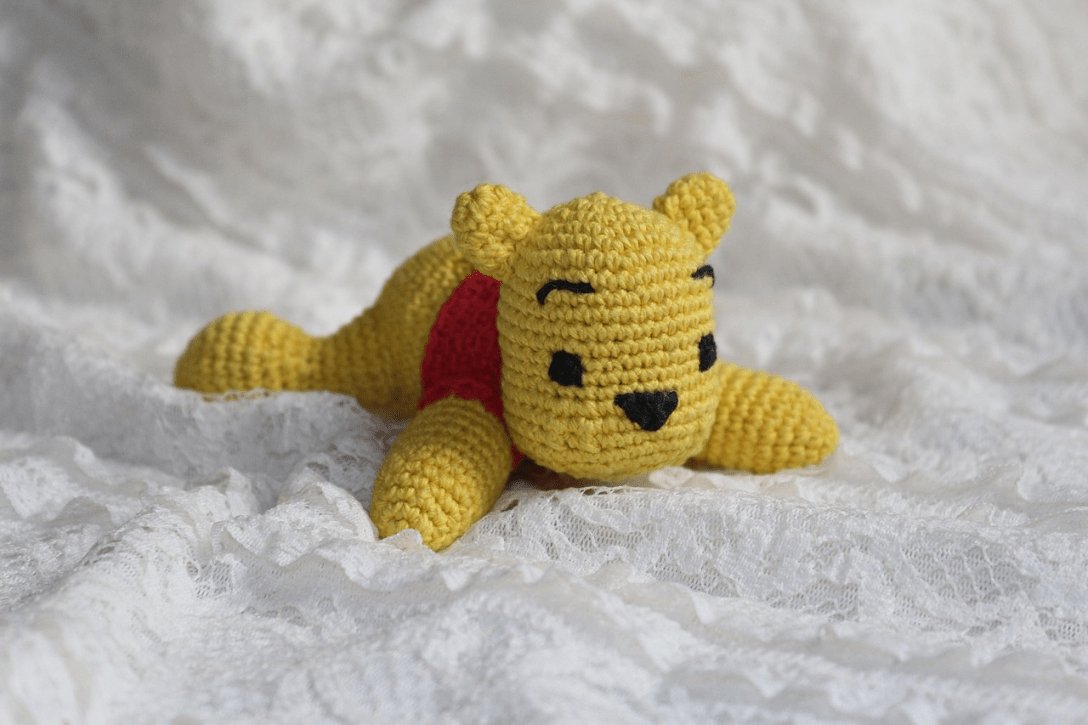
At first glance, Pooh Bear seems simple. He walks slowly, he loves honey, and he forgets things. That’s it. Nothing complicated, nothing dramatic. And yet, the more you watch him, the more you notice: there’s a quiet wisdom in the way he inhabits his world.
Not wisdom in the “sage on a mountaintop” sense. Wisdom in the way he pays attention. The way he interacts with friends or navigates the small ups and downs of life.
The Power of Paying Attention
Pooh’s adventures are funny, but they also reveal a surprising truth about attention. Floating on a balloon to steal honey, he’s completely absorbed in the task, oblivious to how absurd it looks. Neuroscience tells us that attention is a finite resource.
We can’t multitask perfectly, and our brains are constantly prioritizing what matters. Pooh doesn’t “practice mindfulness” or meditate; he just throws himself into what’s in front of him. And he doesn’t overthink it. In doing so, he shows us how simple focus makes life richer.
And then there’s his forgetfulness. When Pooh tries to help Eeyore find his tail, he forgets details and causes a small ruckus. According to cognitive science, forgetting is normal. Research suggests that our brains prune memories to prevent overload and allow for more mental bandwidth for other things.
Care Without Drama
Pooh’s ethics are quiet. Checking on Piglet during a storm or helping friends in small ways, he makes the most of small actions rather than grand gestures.
Philosophers call this relational ethics, or care practiced in the moment rather than in theory. Pooh isn’t a moral model; he’s just kind because it feels natural. His friendships emphasize that being a good person is about the tiny, consistent ways we attend to others.
The Simple Joy of Desire
Pooh loves honey. It’s intense, sometimes compulsive, and it drives many of his adventures. From the perspective of affective neuroscience, desire and reward shape mood.
By grounding his happiness in something that he can get everyday (honey!), he lives a steady and reliable existence; he avoids the entrapment of the novel and the grand. In a world obsessed with achievement, Pooh’s satisfaction is a call to anchor our emotional lives in something familiar.
Lessons Without Preaching
Pooh, to put it simply, lives. The Hundred Acre Wood shows us that small acts of attention and care matter, that imperfection is human. And above all, that ordinary life can be magical.
You don’t think of a sage or an ideal when you think of Pooh Bear. But he sure is a good guide, a reminder that contentment often comes not from striving to be perfect, but from noticing the little things and caring too.
In his gentle simplicity there lies a lesson modern life sometimes makes us forget: you don’t need a lot to live well, you just need to be fully present for the small, sweet moments that surround you.
I never make wishes. Not because I lack desire, or because I am practical in a boring sense, but because I want the arc of my life to emerge from my choices and mistakes, not from a free handout from the universe. A wish, by its nature, is a shortcut. An attempt to acquire a future without traversing the path that shapes the self along the way. I am more interested in that shaping than in the outcome itself.
Neuroscience
Neuroscience gives a strange kind of validation to this intuition. The brain learns most deeply through effort through what researchers call prediction error, the moment when expectation meets reality and the system adapts. Dopamine spikes which respond to effortful achievement serve to reinforce connections in the prefrontal cortex and striatum, helping us encode both skill and memory. If wishes were real, they would bypass that process. In a sense, it deprives the nervous system of experience, its most potent teacher.
Consider the subtle difference between a student who struggles for months to master a piece of music and one who magically acquires the ability with a single wish. Both may be able to play the notes, but only the first has undergone the kind of plasticity that transforms the mind. The hippocampus consolidates memories, the motor cortex refines its output, and the brain’s error-monitoring circuits, especially in the anterior cingulate cortex, learn to adapt. The journey, not the shortcut, builds agency. The wish, however tempting, is neurologically inert. Sorry, Aladdin. It asks nothing and returns nothing of value beyond the superficial.
Philosophy
Philosophically, my aversion to wishing aligns with existentialist thought. Kierkegaard wrote about authentic existence as reliant on decision, risk, and reflection. To hand over the authorship of your future, even symbolically, to some external wish is to abdicate the very process that makes life meaningful. Wishing collapses experience into instant gratification; it divorces outcome from effort, action from responsibility. And the self, stripped of its formative trials, becomes lighter, but also emptier.
Stories like Aladdin illustrate a subtle truth about wishing and effort. Aladdin becomes wealthy, meets the princess, and transforms his life, but only because the narrative allows him access to opportunity. In real life, outcomes are far less generous. Contemporary philosophy and social thought remind us that effort alone does not guarantee escape from suffering. Structural barriers, resources, and circumstance shape who can act on their potential and who remains constrained, no matter how hard they try. Refusing shortcuts or wishes is therefore a personal ethical choice because it shapes the kind of person you become, but it cannot erase the imbalances of reality. What we gain from experience is valuable, but it is never distributed evenly.
Therefore, this is not to romanticize suffering or struggle. I am not advocating for unnecessary pain or the glorification of difficulty. But I do believe that real growth requires living inside the friction of consequence and choice.
Ethics
There is also a subtle ethical dimension. When we wish for unearned advantages, we are implicitly saying that we value our own gain above the discipline of learning or merit. By refusing to wish, I am also, in a small way, refusing to outsource my development to luck. I am committing to a life where reward is proportional to engagement, where consequence is respected, and where experience remains my guide.
The Reality
Sometimes life is harder, slower, and less immediately satisfying than it would be if wishes were real. I miss opportunities that might have arrived on a whim. I watch others take shortcuts and sometimes envy their efficiency.
And yet, I want my story written in synapses that were built in response to challenge, not circumstantial fortune. I want my character shaped by choices that left a mark both on my mind and on my life. The wish tempts me with speed, but I choose depth. I choose learning. I choose experience.
Because in the end, it is experience, not magic, that teaches us who we are.
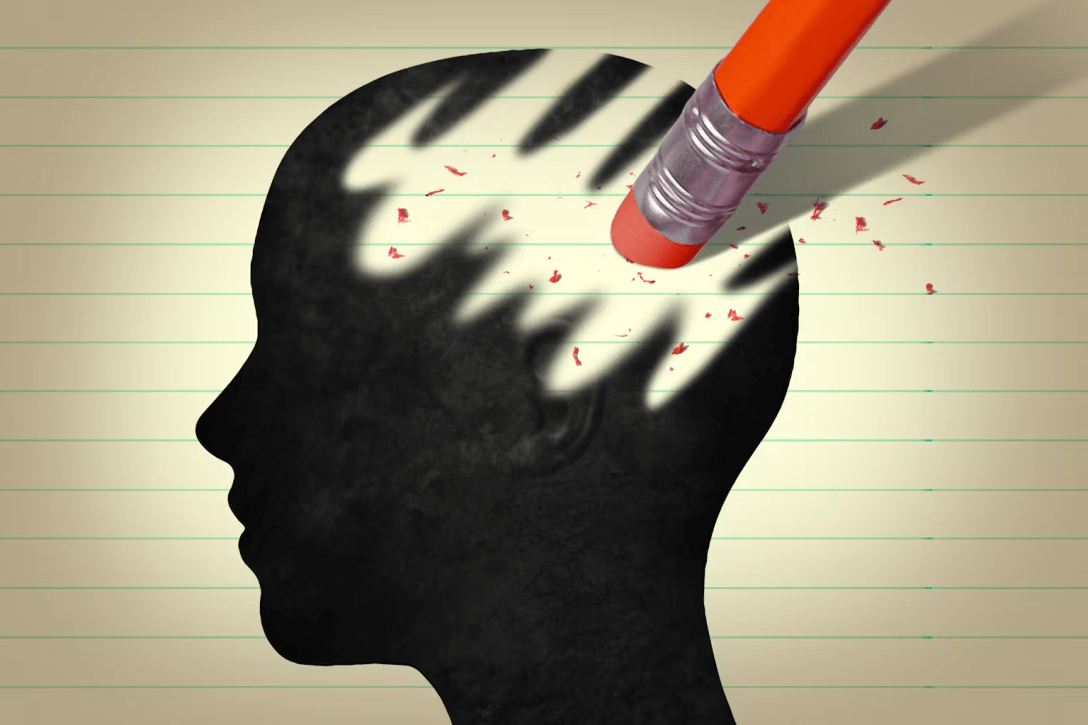
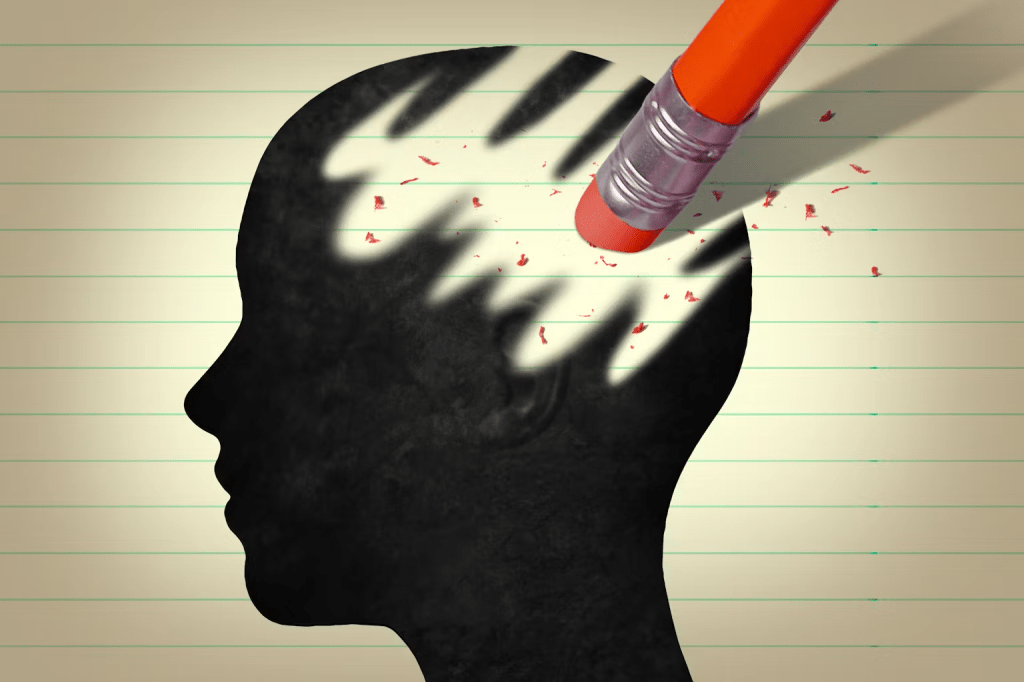
Memory-editing research is advancing fast. But removing our pain may also remove the person we became because of it.
There’s a question that keeps surfacing in neuroscience labs and ethical journals alike: If we had the power to soften or erase painful memories, should we?
Researchers already know how to disrupt memory reconsolidation, which is the process by which a recalled memory becomes flexible before being stored again. Beta-blockers like propranolol have been shown to dampen the emotional intensity of traumatic recall in PTSD patients. Optogenetics experiments in mice have altered fear memories by re-tagging them with different emotional associations. Even human trials are exploring noninvasive stimulation to interrupt unwanted memories during sleep.
We are, quietly, entering an age where pain is editable.
But the more I read about these findings, the more a different question forms underneath the scientific one. Not Can we edit memory? But What happens to the self if we do?
The Problem with a Pain-Free Self
Memory is a fragile process, forever rewriting itself. Every time we remember something, we alter it slightly. Neuroscientists call this reconsolidation, but even without jargon, most of us know the feeling: a memory that once hurt becomes softer; another becomes sharper for reasons we can’t explain.
This plasticity is what makes memory-editing plausible, but it’s also what makes identity complicated. A life without painful memory might be easier, but would it still be yours?
Where Identity Lives
One of the more haunting ideas in cognitive science is that memory is less about accuracy and more about coherence. Rather than storing experiences like files; we reconstruct them to match who we believe we are now. The philosopher Daniel Dennett once suggested that the self is the “center of narrative gravity”, like a stabilizing illusion that helps us make sense of flux.
If that’s true, altering memory, scarily enough, changes the storyteller as much as the story itself.
A person who erases the memory of a betrayal becomes someone who never had to learn trust again. A person who erases the memory of failure becomes someone without the quiet resolve that follows. A person who erases grief becomes someone untouched by the shape love leaves behind.
One thing I continue to wonder is whether the edited self still be continuous with the original, or if the break in memory creates a break in identity too.
The Ethics of “Improvement”
There’s a moral seduction in self-editing. We are obsessed with optimization. Think better bodies, better habits, better productivity, everything in modern life. Why not better memories?
We know how important pain is, though. The fear of loss teaches us to hold people closer, and failure teaches us resilience. Even the most painful moments, those we’d give anything to erase, become part of how we find meaning again.
Neuroscientist Karim Nader, one of the pioneers of reconsolidation research, once said that memory’s primary function, surprisingly, is not to preserve facts, but to help us adapt. By that logic, even painful memories are functional. They help us navigate danger by recognizing patterns.
So when we “improve” ourselves by removing them, we risk becoming someone optimized, perhaps, but hollowed, a self that is easier to carry but harder to recognize.
The Risk of Losing the Lessons Without the Pain
The most compelling counterargument to memory-editing is not that it’s unnatural or reckless. It’s that we might remove the pain without keeping the wisdom.
In one study at NYU, rats whose fear memories were disrupted no longer avoided dangerous cues. They walked into places where they had once been shocked, oblivious to the threat. When we erase hurt, we erase the part of ourselves that learned how to endure.
A Different Kind of Healing
This isn’t an argument against treatment. For example, PTSD is more than just a memory; PTSD is a nervous system in overdrive, a life paused inside an unrelenting moment. In this case, damping the emotional intensity of those memories is more a form of liberation.
The ethical line appears not at the removal of unbearable pain, but at the removal of meaningful pain, a subtle difference.
So, scientific interventions can help us loosen trauma’s grip, but perhaps they should not offer us amnesia.
What We Stand to Lose
Every once in a while, when I think about memory alteration, I imagine a version of myself who never had to rebuild after loss. Someone lighter, less afraid, unburdened.
But that person would not know why loyalty matters, they would not understand the texture of fear or the softness that follows grief, and they would not know the cost of love. They would be me without the evidence that I have lived.
Maybe the Goal Isn’t Erasure
The goal is not to extract a memory as if it were a stain that can be lifted. Perhaps the goal is to reinhabit it in a new way, so that its emotional weight is redistributed and its meaning evolves rather than disappears. To reshape the experience without erasing the fact that it occurred.
Neuroscience may eventually offer the ability to select what we carry forward. Yet meaning is something we craft through engagement, not something we inherit passively or delete at will. The self grows through reinterpretation, revision, and integration, not through subtraction.
So, Is a Life Without Painful Memory Better?
It might be simpler, or lighter, but what makes a life whole is rarely what makes it easy. Pain itself is not the adversary. What harms us is the sense of being imprisoned by it, unable to move beyond its earliest form.
A life without painful memory may shield us from suffering, but one shaped through painful memory gives rise to everything that matters.
Most of us live somewhere between those two possibilities. We carry moments that hurt but keep learning how to carry them differently. In that ongoing process, memory acts as a teacher, and the self becomes something we build rather than something we escape.
That is where the story, no matter how tragic, ends, and growth begins.
You open your phone to check one thing. Fifteen minutes later, you’ve replied to two texts, saved a recipe, watched half a video, and somehow never done what you meant to do in the first place. When you finally put it down, your mind still hums with half-formed tasks.
Our brains were never built to live in open tabs.
Psychologists call this the Zeigarnik Effect: the tendency to remember unfinished or interrupted tasks more vividly than completed ones. It’s why a forgotten to-do list nags at you more than the dozens of items you’ve already crossed off. The mind craves closure the way the lungs crave air.
But because our world never truly ends, that craving becomes a quiet torment.
II. The Zeigarnik Effect: The Brain’s Unfinished Symphony
In the 1920s, psychologist Bluma Zeigarnik noticed something curious: waiters remembered unpaid orders better than completed ones. Once the bill was settled, the details seemed to vanish from memory.
Modern neuroscience has since confirmed her insight. Our brains generate dopaminergic tension when something is incomplete, which is a kind of cognitive itch that pushes us toward resolution. Completion relieves the tension, but only for a moment. Soon the mind looks for the next unfinished thing to chase.
The internet runs on this loop. “Next episode” buttons, red notification dots, infinite scrolls, and each one a tiny cliffhanger engineered to keep us suspended in the half-finished.
III. Decision Fatigue: The Cost of Constant Choice
Every unfinished thought competes for energy. Add a thousand small choices, what to wear, text, eat, or watch, and the brain begins to tire. The result is decision fatigue, the invisible tax of modern life.
Research by Roy Baumeister and colleagues shows that every decision draws from the same cognitive pool we use for focus and self-control. As the day goes on, that pool drains.
We call it burnout or lack of motivation, but really it’s just the cost of too many open tabs. Every half-done task is a leak in the mind’s attention, and we are slowly running dry.
IV. The Digital Age: Infinite Loops, Finite Minds
Our devices have become machines for fragmentation.
Psychologists describe something called cognitive residue, the trace of attention left on a task even after we’ve moved on. Each switch between apps or thoughts leaves behind a faint echo, blurring our focus until nothing feels whole.
This state of half-presence has a name: psychological entropy. It’s the discomfort that arises when the mind’s order dissolves into chaos. Modern media feeds that entropy, keeping us suspended in the tension of what’s next.
In the economy of attention, our unfinished thoughts have become the most valuable commodity.
V. Creativity and the Gift of the Unfinished
Not all incompletion is a curse. The same tension that drives distraction can also spark creativity.
Writers, scientists, and musicians have long relied on the “productive pause”, defined as the act of stepping away to let the subconscious take over. Neuroscience calls this the incubation effect, and it’s tied to the default mode network, the system that activates when we rest, wander, or daydream.
Unfinished ideas incubate. They evolve in silence. They grow roots while we sleep or walk or stare into space. To pause is to make room for the unseen work of the mind.
VI. The Youth Paradox: Overstimulated and Underslept
For teens and young adults, this cycle is especially intense. School, social media, and constant performance pressure combine into a mental marathon without finish lines. Every notification and assignment becomes another open loop.
This chronic stimulation bleeds into sleep, disrupting the brain’s nightly ritual of sorting, storing, and restoring. During REM and slow-wave sleep, the brain organizes memory, cleanses itself of metabolic waste, and closes the loops we left open during the day.
When sleep is cut short, those loops remain unclosed. We wake up cluttered and foggy in a generation living in mental overdrive yet feeling perpetually unfinished.
We fall asleep simply to tidy the chaos our waking minds cannot.
VII. Closing the Loop: The Art of Choosing Less
The great misconception, especially among the young and ambitious, is that mental toughness means constant motion. In reality, clarity often comes from subtraction.
Choosing less doesn’t equate to caring less. It is just to care more precisely.
We can’t close every loop, nor should we. The goal is to know which ones deserve our attention and which can remain gracefully unfinished. The brain, after all, thrives on both tension and rest. One highly effective habit you can try is to establish some sort of “second brain” for yourself; a notebook, a note-taking app, or a post it that holds all the daily scribbles you realize you must accomplish at some point.
To live deliberately is to choose which threads to tie and which to let drift, trusting that some of life’s most meaningful work happens in the quiet space between.
In a world obsessed with doing more, perhaps the wisest act is simply to finish less, but in doing so, finish more fully.
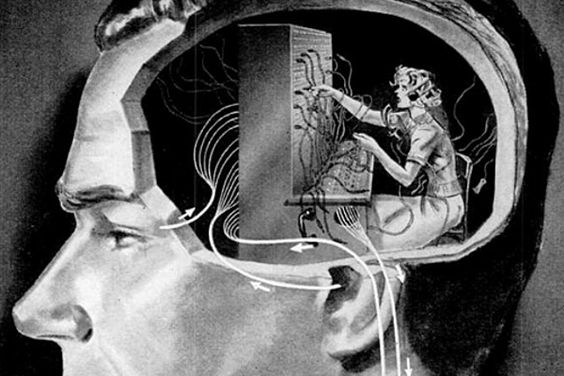
Every night, while the world fades into quiet, your brain gets to work. Far from idle, it runs a shift that scientists are still trying to understand: sorting, repairing, and processing the fragments of the day into something coherent.
The Science of Sleep and Memory
Sleep is not passive rest. It’s a complex biological process with stages as distinct as scenes in a film. During slow-wave sleep (SWS), the brain replays recent experiences, transferring short-term memories from the hippocampus to the neocortex (Rasch & Born, 2013). This “neural replay” consolidates learning, preserving only what matters most and pruning what doesn’t.
Then comes REM sleep, where neurons fire in irregular bursts, the amygdala lights up, and logic takes a backseat. This is the stage of vivid dreaming, where emotions, creativity, and subconscious processing take center stage. REM doesn’t just solidify memories; it integrates them, connecting new information with old to form insight (Walker & Stickgold, 2010).
In short, your dreams might be your brain’s way of telling stories about who you’re becoming.
Why Dreams Feel So Real
During REM, the brain’s prefrontal cortex, responsible for logic and self-awareness, quiets down. Meanwhile, visual and emotional centers fire intensely, creating immersive experiences that feel convincing even as they defy physics. This is why you can fly, cry, or argue with someone who doesn’t exist.
Neurologically, dreams may serve as emotional regulation. They allow us to revisit unresolved experiences in a safe mental space. Matthew Walker calls it “overnight therapy,” where the brain softens emotional edges while preserving the memory itself (Walker, 2017).
When the Night Shift Is Cut Short
The problem is that modern life interrupts this process. Teens and young adults (like me), those who need deep sleep most, are sleeping less than ever. Tell me about it. School starts early, screens glow late, and the myth of productivity glorifies being tired by giving your all every day. Yet chronic sleep deprivation can reduce hippocampal function, impair decision-making, and weaken emotional control (Curcio et al., 2006).
Without enough REM and deep sleep, the brain’s night shift never finishes its work, resulting in fuzzier memories, mood swings, and a subtle sense of disconnection.
What It Means for Young Minds
For high schoolers and college students, sleep is often treated like a luxury, not a necessity. But neuroscience argues the opposite. The hours you spend asleep aren’t wasted. They’re when your brain learns and grows. Every dream, no matter how strange, reflects a network of neurons trying to make sense of you and your world. And there are so many more benefits outside of what sleep does to your brain that should be emphasized.
The takeaway isn’t to chase every dream for meaning. It’s to respect the process that creates them. Let your brain do its night shift. Turn off the lights. Trust that in the quiet, it’s still working. Because it is organizing, remembering, and rebuilding who you’ll be when you wake.
References
Curcio, G., Ferrara, M., & De Gennaro, L. (2006). Sleep loss, learning capacity, and academic performance. Sleep Medicine Reviews, 10(5), 323–337.
Rasch, B., & Born, J. (2013). About sleep’s role in memory. Physiological Reviews, 93(2), 681–766.
Walker, M. P., & Stickgold, R. (2010). Overnight alchemy: Sleep-dependent memory evolution. Nature Reviews Neuroscience, 11(3), 218–226.
Walker, M. P. (2017). Why We Sleep: Unlocking the Power of Sleep and Dreams. Scribner.
Written by Mason Lai, a high schooler from California who wishes he let his brain do the night shift more.
You open the fridge, determined to make something healthy. Ten minutes later, you’re staring at leftovers, wondering if cereal counts as dinner.
It’s not laziness or indecision, it’s biology. Every choice you make throughout the day, from what to wear to which email to answer first, draws from a limited supply of mental energy. By evening, your brain is running on fumes.
This invisible drain, known as decision fatigue, reveals something fascinating about how the human brain works. At it’s core, decision fatigue is not a failure of willpower but a natural consequence of how our neurons process choices. The problem is that modern life was not built with that biology in mind.
Understanding decision fatigue is not simply about improving productivity; it is about recognizing the biological limits of human cognition in a world that demands constant engagement.
The Brain’s Energy Economy
The human brain weighs roughly three pounds but consumes nearly 20% of the body’s energy at rest (Raichle & Gusnard, 2002). Most of this energy supports synaptic activity, which is the electrochemical communication between neurons we need for thought and judgement.
The prefrontal cortex, responsible for executive functions such as reasoning and self-control, is particularly energy-intensive. When glucose levels decline in this region, the brain’s capacity for self-regulation and decision-making drops sharply (Gailliot et al., 2007). Neuroscientist Matthew Lieberman describes this as a “neural budget” that depletes with use. Neural budget is a concept that many struggle with because they believe willpower will be enough for difficult tasks and maintaining drive throughout extended periods.
Every choice, even trivial ones like selecting a meal, engages these same neural pathways. As the day progresses, neurons in the prefrontal cortex communicate less efficiently, and the brain shifts from deliberate reasoning to what psychologists call heuristic processing, defined as simpler, faster decision-making strategies (Kahneman, 2011).
The Psychology of Overchoice
Furthermore, modern environments amplify this biologically induced limit of decision-making capacity. Psychologist Barry Schwartz famously described this as “The Paradox of Choice”. Essentially, the more options we face, the more anxious and dissatisfied we become (Schwartz, 2004).
Research at Stanford University found that individuals confronted with extensive choices, such as 24 flavors of jam, were significantly less likely to make a purchase than those offered only six options (Iyengar & Lepper, 2000). Each additional alternative increases cognitive load and prolongs the decision process, drawing more energy from an already taxed brain.
Unlike physical exhaustion, decision fatigue builds invisibly. It often manifests as irritability, procrastination, or emotional numbness. These are the quiet symptoms of a brain that has simply made too many choices.
The Dopamine Trap
Dopamine, the neurotransmitter responsible for motivation and reward, also plays a role in this cycle. Each decision completed, no matter how small, triggers a small release of dopamine, reinforcing the behavior (Berridge & Kringelbach, 2015). But when the brain faces an unrelenting stream of micro-decisions (for me, notifications, texts, playlists, which task to start first), its dopamine system becomes desensitized.
This desensitization blurs the line between meaningful and trivial choices, flattening emotional reward and leaving us less motivated. Satisfaction flatlines to dull routine, an effect researchers call hedonic adaptation (Brickman & Campbell, 1971). Thus, even enjoyable activities, like choosing what to eat out, begin to feel burdensome.
Modern Life as a Cognitive Overload Experiment
From an evolutionary perspective, the human brain evolved for scarcity, not abundance. Early humans only had to make a few high-stakes decisions per day: when to hunt, where to seek shelter, whom to trust. But today, an average person makes hundreds of decisions before noon. (Albeit not very high-stakes ones, but we are fooled into believing that they are.)
Cognitive neuroscientist Daniel Levitin argues that “each shift in attention sets off metabolic processes that deplete the brain’s neural resources.” (Levitin, 2014) In essence, the constant switching of modern life between countless microtasks induces a continuous state of mental taxation.
Modernity, then, has become a sort of cognitive overload experiment with us as the subjects. As a result, we are fatigued, less creative, less empathetic, and less patient overall. Our higher-order cognition is becoming subtly eroded.
The Case for Cognitive Minimalism
Emerging research suggests that the antidote to decision fatigue is not more efficency, but fewer choices. Cognitive minimalism, the deliberate simplification of daily decisions, conserves neural energy for more meaningful cognitive work (Goyal et al., 2018).
Small interventions, such as automating low-stakes tasks, like Einstein or Steve Jobs wearing the same outfits every day, can significantly reduce cognitive load. This aligns with neural conservation theory: the idea that the brain strategically limits effort to preserve long-term function (Kurzban et al., 2013).
Conclusion: When Simplicity Becomes Intelligence
In popular culture, especially among teenagers and young adults, mental endurance is often glorified as a sign of strength. The ability to “push through” fatigue, multitask endlessly, and make rapid decisions is frequently mistaken for resilience. Yet neuroscience paints a different picture.
Decision fatigue is more than a productivity challenge; it is a reflection of how our cognitive systems evolved. The mechanisms that once helped us survive now collide with an environment of endless stimulation.
This misunderstanding matters. Many young people internalize the idea that slowing down is a weakness, that stepping back means falling behind. In reality, the opposite is true. Rest, constraint, and deliberate choice are not escapes from mental rigor but expressions of it. Each time we choose less, whether by limiting options, simplifying routines, or pausing before the next decision, we conserve cognitive energy and restore clarity.
Ultimately, the neuroscience of decision fatigue reveals an overlooked truth: wisdom is not measured by how much we do, but by how thoughtfully we choose what to do next.
References
Berridge, K. C., & Kringelbach, M. L. (2015). Pleasure systems in the brain. Neuron, 86(3), 646–664. Brickman, P., & Campbell, D. T. (1971). Hedonic relativism and planning the good society. Adaptation-level theory, 287–302. Gailliot, M. T., Baumeister, R. F., DeWall, C. N., et al. (2007). Self-control relies on glucose as a limited energy source. Journal of Personality and Social Psychology, 92(2), 325–336. Goyal, M., Singh, S., Sibinga, E. M. S., et al. (2018). Meditation programs for psychological stress and well-being. JAMA Internal Medicine, 174(3), 357–368. Iyengar, S. S., & Lepper, M. R. (2000). When choice is demotivating. Journal of Personality and Social Psychology, 79(6), 995–1006. Kahneman, D. (2011). Thinking, Fast and Slow. Farrar, Straus and Giroux. Kurzban, R., Duckworth, A., Kable, J. W., & Myers, J. (2013). An opportunity cost model of subjective effort and task performance. Behavioral and Brain Sciences, 36(6), 661–726. Levitin, D. J. (2014). The Organized Mind: Thinking Straight in the Age of Information Overload. Dutton. Raichle, M. E., & Gusnard, D. A. (2002). Appraising the brain’s energy budget. PNAS, 99(16), 10237–10239. Schwartz, B. (2004). The Paradox of Choice: Why More Is Less. HarperCollins.
Written by Mason Lai, a student researcher exploring the intersection of neuroscience, psychology, and modern life. Passionate about translating complex ideas into clear, human insights.








 Mason Lai