Winnie the Pooh and the Art of Being Fully Alive

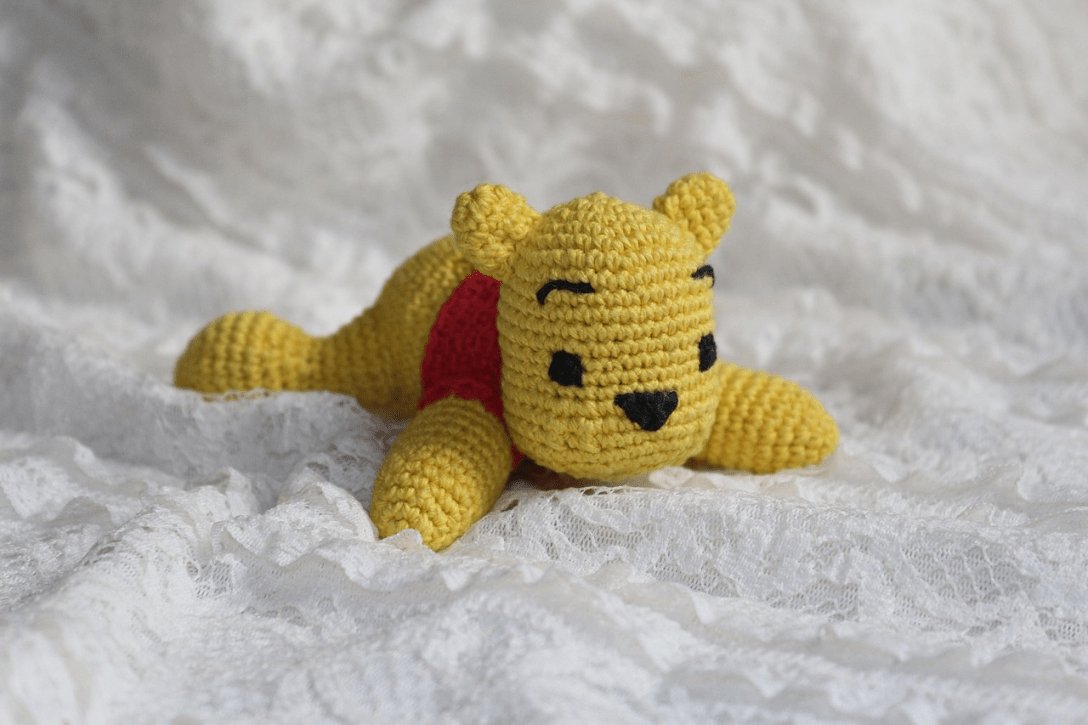
https://pixabay.com/photos/bear-winnie-the-pooh-toy-2982809/

Daily writing prompt
What’s your favorite cartoon?

What a bear with very little brain can teach us about consciousness, mindfulness, and the ethics of care

At first glance, Pooh Bear seems simple. He walks slowly, he loves honey, and he forgets things. That’s it. Nothing complicated, nothing dramatic. And yet, the more you watch him, the more you notice: there’s a quiet wisdom in the way he inhabits his world.

Not wisdom in the “sage on a mountaintop” sense. Wisdom in the way he pays attention. The way he interacts with friends or navigates the small ups and downs of life.

The Power of Paying Attention

Pooh’s adventures are funny, but they also reveal a surprising truth about attention. Floating on a balloon to steal honey, he’s completely absorbed in the task, oblivious to how absurd it looks. Neuroscience tells us that attention is a finite resource.

We can’t multitask perfectly, and our brains are constantly prioritizing what matters. Pooh doesn’t “practice mindfulness” or meditate; he just throws himself into what’s in front of him. And he doesn’t overthink it. In doing so, he shows us how simple focus makes life richer.

And then there’s his forgetfulness. When Pooh tries to help Eeyore find his tail, he forgets details and causes a small ruckus. According to cognitive science, forgetting is normal. Research suggests that our brains prune memories to prevent overload and allow for more mental bandwidth for other things.

Care Without Drama

Pooh’s ethics are quiet. Checking on Piglet during a storm or helping friends in small ways, he makes the most of small actions rather than grand gestures.

Philosophers call this relational ethics, or care practiced in the moment rather than in theory. Pooh isn’t a moral model; he’s just kind because it feels natural. His friendships emphasize that being a good person is about the tiny, consistent ways we attend to others.

The Simple Joy of Desire

Pooh loves honey. It’s intense, sometimes compulsive, and it drives many of his adventures. From the perspective of affective neuroscience, desire and reward shape mood.

By grounding his happiness in something that he can get everyday (honey!), he lives a steady and reliable existence; he avoids the entrapment of the novel and the grand. In a world obsessed with achievement, Pooh’s satisfaction is a call to anchor our emotional lives in something familiar.

Lessons Without Preaching

Pooh, to put it simply, lives. The Hundred Acre Wood shows us that small acts of attention and care matter, that imperfection is human. And above all, that ordinary life can be magical.

You don’t think of a sage or an ideal when you think of Pooh Bear. But he sure is a good guide, a reminder that contentment often comes not from striving to be perfect, but from noticing the little things and caring too.

In his gentle simplicity there lies a lesson modern life sometimes makes us forget: you don’t need a lot to live well, you just need to be fully present for the small, sweet moments that surround you.


Written by Mason Lai, a California high schooler.
Frames of Identity

Hurca! - Stock Adobe
Daily writing prompt
What’s the first impression you want to give people?
Hurca! - Stock Adobe
The first impression you give someone feels simple.

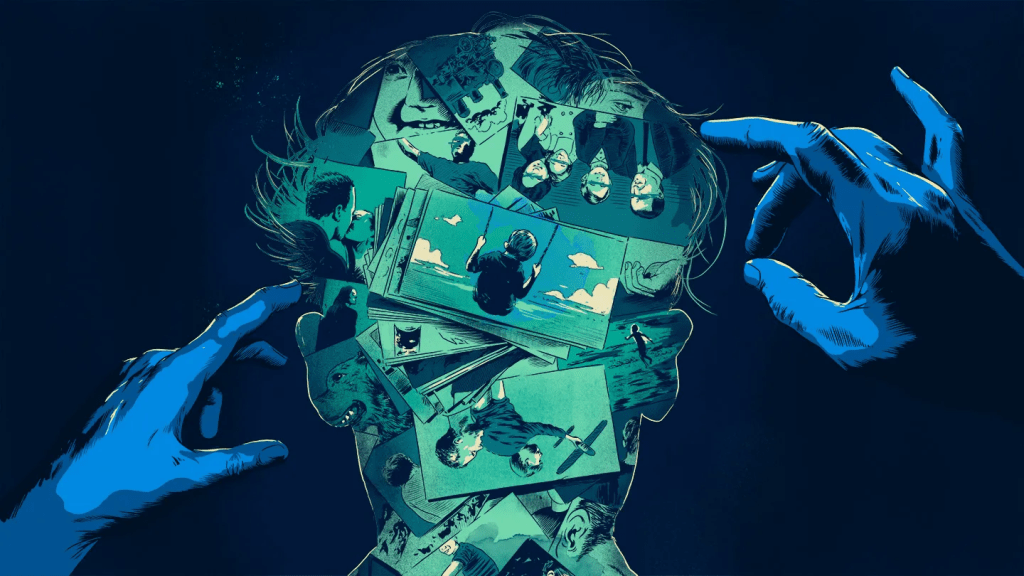
A glance, a phrase, the slight tilt of your voice as it tries to decide whether to sound confident or careful. But beneath that moment sits a truth most people never notice. It may be easy forget that others never gain awareness of the full architecture you are. Rather, a moment of awareness is simply one frame in a long sequence, and your brain rushes to stitch these frames together so you can believe there is a solid self living behind your eyes.

Identity is not what we think. I understand it as a continuity the brain desperately creates from separate moments to make sense of the movement of our lives. Neuroscientist Anil Seth calls this a controlled hallucination. The mind fills the gaps so you do not feel the gaps. It connects the flicker of one second to another until the whole thing seems unbroken, like a film reel running just fast enough to appear real.

We like to believe we are consistent people. Yet the research on memory says otherwise. We are creatures of reconstruction. Every remembered version of yourself is edited, packaged for memory, and rearranged. The brain rewrites the story so you can wake up each morning and believe today follows yesterday. This introduces a unique conundrum. Rather than storing identity, we regenerate it every day.

So when someone asks what first impression you want to give, the real question is much, much stranger, and it sounds something like this:

Which version of yourself do you choose to step into the next moment of your life? Which frame do you choose as the doorway?

This is where things shift from science to philosophy. Time feels like a flowing river, but psychologists who study chronostasis suggest that much of time is perception layered on top of uncertainty. The brain inserts its own continuity to prevent us from feeling the world as a collection of tiny, isolated pulses. If we experienced pure discontinuity, we would lose our sense of self within days.

Identity is the story your brain tells so you can stay afloat.

And yet there is something quite beautiful in that. If the self is an invention, it means you are not trapped by whatever story you once believed. You have a say in how the next frame develops. The first impression you offer someone is a creative act rather than a performance. It is the moment you decide which what stays, and what goes.

The poet Ocean Vuong once wrote that memory is a story we carry in order to survive. I think identity is similar. A living thing. An ongoing choice. A narrative held together not by perfect accuracy but by the desire to be understood.

So when someone meets you for the first time, they encounter a glimpse. A soft outline of a self that is always shifting. You might wish people could see the fuller version of you, the one that carries all your experiences and contradictions and small private joys. But this gentle incompleteness is part of what makes human connection meaningful. We meet one another through keyholes. We will never know the full interior, so we stay curious, listening. We keep evolving our impression of each other.

The mind protects us from the terror of a fractured reality by mashing together all the sense-datum we receive each day into something that seems continuous. Our task is just to participate in that creation with care and to let ourselves change while accepting that others will only ever see fragments.

Identity behaves a little like starlight. From a distance you see a single shimmer and assume it is the whole story. If you could travel closer, you would find a roaring furnace made of collisions, and pressure, and centuries of change. The light you see from afar, while seemingly false, is simply the only version that can cross the distance. It gives you a place to aim your attention.

A first impression works the same way. It is the part of you that travels. The part that reaches others first. The person you are is not the glow but the whole constellation of experiences that shaped it. And the self beneath all of that, the one even you struggle to map, is the vast system of forces and history that the mind is still learning to name.

The good thing about all this is that identity does not need to be solved. You do not have to know exactly who you are to live as someone real. You can be in motion, gathering pieces, setting others down, changing shape without warning. For you were never meant to be a statue.

Even scientists who study memory admit that the brain edits and revises and rearranges our story. If the mind keeps rewriting you, then you are allowed to participate in that creation. You are allowed to change your mind about yourself. You are allowed to hold uncertainty without feeling lost.

There is nothing weak about that. There is nothing broken about being unfinished.

Identity is a conversation between what made you and what you choose next. It is a bridge you are always building, even when the blueprint is unclear. The gaps are not failures. The gaps are invitations. They ask you to imagine, to choose, to become.

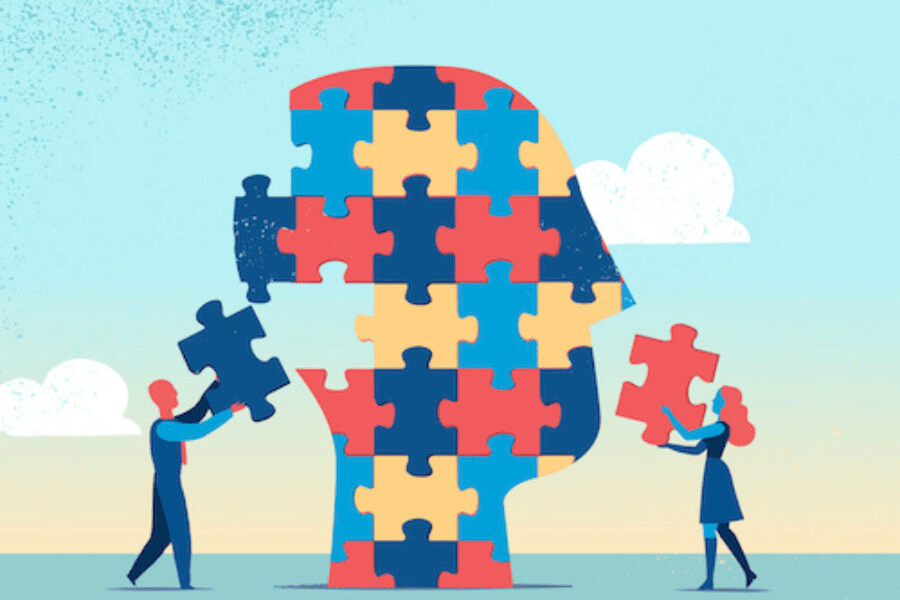
And maybe that is the real beauty. We are not defined by the parts we cannot explain. Instead, we are defined by the meaning we learn to create from them. Every time you step forward, you add a piece to your ever-growing puzzle. It does not matter if you don’t see the full picture yet, because, truth is, life wasn’t made to make sense from the inside.

So if you feel unfinished, good. It means there is space to grow toward a self that feels honest. It means you still have room for new light. It means the story is unfolding and you are awake inside it.

You are allowed to be a work in progress. You are allowed to be a constellation still forming. You are allowed to discover who you are by living, not by knowing.

And that is enough.


Written by Mason Lai, a California high schooler.

Why Forgetting Might Be the Most Human Thing We Do

We like to think of memory as proof of who we are. The things we remember become the architecture of our identity, yet beneath that structure lies something quieter, more fragile, and perhaps more vital: the things we forget.

Forgetting has always been treated as the mind’s flaw. A smudge in the lens. But what if it’s the very process that keeps the lens clear?


The Brain’s Gentle Refusal

Neuroscience describes memory as a process of constant revision. The hippocampus stores and reshapes what we take in, then loosens its grip when something no longer serves the present (Squire, 2009).

Researchers in Toronto proposed that the brain forgets to survive. Without that ability, consciousness would collapse under its own weight (Bjork, 1975). We would be unable to tell what matters. The mind that never forgets cannot change its mind.

Every day, thousands of synaptic connections fade, but traces remain as pathways that strengthen when we return to them. The rest dissolve into the white noise of experience, making room for new learning, new meaning, and new selves (Kandel, 2006).


The Poetry of Impermanence

When we revisit a memory, we rewrite it. The scene shifts, colors dull or brighten, dialogue rearranges itself (Loftus, 2005). What we call memory is really imagination tethered to a few truths.

There is something sacred about this impermanence. It protects us from being trapped in yesterday’s version of ourselves. It allows pain to lose its sharpness, allows love to change shape without vanishing. Forgetting is not the opposite of remembering; it is how remembering stays bearable (Hardt, 2008).


A Mind that Learns to Release

To live fully may mean learning to let thoughts fade without resistance. We do not abandon what we forget; we carry the echo of it. The brain understands this long before we do. It edits with care, choosing what we are ready to carry forward (McGaugh, 2000).

Some cultures have long understood this rhythm. The Japanese concept of mono no aware—the bittersweet awareness of impermanence—captures the beauty of forgetting. The ancient Greeks linked memory to Mnemosyne, the mother of the Muses, yet they also revered Lethe, the river of forgetting, as the path to peace (Assmann, 2011).

The self that remembers everything would have no room to grow, and the one who forgets too easily would lose coherence. So we exist between the two in a delicate equilibrium of holding and release.


The Human Art of Letting Go

Forgetting is not a failure of intellect but a condition of grace. It gives us the courage to begin again, to rebuild understanding without the burden of total recall. The mind renews itself in the spaces it empties.

Perhaps this is what it means to be human: to remember just enough to love the world, and to forget just enough to forgive it.


References

Squire, L. R. (2009). Memory and Brain. Oxford University Press.

Assmann, J. (2011). Cultural Memory and Early Civilization: Writing, Remembrance, and Political Imagination. Cambridge University Press.

Bjork, R. A. (1975). Retrieval as a memory modifier: An interpretation of negative recency and related phenomena. In J. Brown (Ed.), Recall and Recognition (pp. 123–144). London: Wiley.

Hardt, O., Nader, K., & Nadel, L. (2008). Decay happens: The role of reconsolidation in memory. Trends in Neurosciences, 31(8), 374–380.

Kandel, E. R. (2006). In Search of Memory: The Emergence of a New Science of Mind. W. W. Norton & Company.

Loftus, E. F. (2005). Planting misinformation in the human mind: A 30-year investigation of the malleability of memory. Learning & Memory, 12(4), 361–366.

McGaugh, J. L. (2000). Memory–a century of consolidation. Science, 287(5451), 248–251.

Schacter, D. L. (2001). The Seven Sins of Memory: How the Mind Forgets and Remembers. Houghton Mifflin.


Written by Mason Lai, a California high schooler.