

The Philosophy of Calvin and Hobbes

Daily writing prompt
What’s your favorite cartoon?

Calvin doesn’t so much move across the page as erupt onto it. Like a small cyclone with boundless imagination and a staggering refusal to conform. Hobbes, on the other side, meets him with wit and affection and a philosophical steadiness that Calvin never quite attains. Their world often flashes to and fro between their backyard and the cosmos, between quiet suburbia and impossible fantasy, from nostalgia for a simpler time to the familiar anxieties of the modern psyche. Reading Calvin and Hobbes as a grade schooler, I treated the strip as pure fun and entertainment. But since then I’ve found it to be an unexpectedly rich index of the human condition refracted through Watterson’s lens of ink, play, and the irreverent honesty of a child.

To read the strip carefully is to see ourselves more clearly. To sit with it is to recognize the strange mixture of wonder and failure that defines humanity. And along the way, one gains appreciation for the fact that the most complex issues can sometimes be explained best in the simplest ways.

I. Daring to Imagine

Children imagine constantly, but Calvin imagines with unusual density and velocity. He becomes Spaceman Spiff, fleeing a pop quiz by recasting his teacher as an alien despot. He marshals snowmen into moral allegories and tiny apocalypses, like sculptures of doubt, dread, and delight that speak when he cannot. He turns a cardboard box into a transmogrifier, duplicator, time machine, and philosophical device depending on his mood.

His inner life becomes a kind of atlas for the rest of us. All his shenanigans remind us that our minds are a borderland where both truth and delusion reside. Watterson skips the lengthy dissection of this duality and instead illuminates it through a boy who cannot stop making worlds and a tiger who loves him enough to question each one.

II. Hobbes

Hobbes’s ambiguity is not a gimmick but a crack in the frame through which possibility spills. To adults he is cotton and stitching; to Calvin he is full of pulse and mischief. The strip leaves the interpretation open: imaginary friend, inner voice, independent soul, or evidence of how little adults understand the secret languages of children.

What matters is that Hobbes behaves like someone with a center of gravity all his own. Wry, affectionate, predatory in bursts, he occupies the space of a true companion. He spars verbally, punctures Calvin’s conceits, offers moral hesitation when it’s needed, and leaps into joy without hesitation.

Their relationship rejects the notion that children grow only under adult tutelage. Instead, it suggests that selfhood is a duet formed with the million interactions one has with others. If Calvin is the force of aspiration and unruliness, Hobbes is the counterforce that gives those energies shape.

Identity, the strip suggests, is not born alone.

III. Improvisation

Calvin is not on a quest to discover a “true self”; he is busy inventing one, then discarding it, then inventing again. Tracer Bullet, Stupendous Man, dinosaur, philosopher—each identity a doorway out of confinement and into possibility. Developmental psychology frames this as exploration, but Watterson frames it as resistance, as a refusal to be caught in the nets of labels and expectations. And Calvin is allergic to containment. His improvisational selves critique a culture devoted to categorization and clarity of purpose.

IV. Morality

Calvin’s morality varies in a polar manner. He’s cruel one moment, tender the next, and always capable of mischief. Hobbes compliments him by meeting Calvin where he is rather than where adults believe he should be. This flexible, relational ethics stands in contrast to the rigid structures Calvin resists: punitive school routines, arbitrary rules, the moralism of adults who cannot articulate their own logic.

The strip also subtly challenges the idea that morality should be instilled through rigid rules and external discipline. Calvin resists systems that feel hypocritical or authoritarian, becoming the vessel of Watterson’s critique, aimed not at morality itself but at the ways society attempts to impose it.

V. Emotion

Calvin experiences emotion with almost no moderation. A math test becomes a Lovecraftian nightmare. A snowy hill becomes a site of ecstatic danger. A family camping trip becomes an existential crisis about bugs, cold, and mortality.

Hobbes helps navigate this turbulence all the time. He mocks Calvin’s exaggerated fears, saying, “If you can’t stand the pressure, don’t be a kid”. He acknowledges Calvin’s genuine dread, and dives headlong alongside him into joy, like during their sled rides that inevitably end in catastrophe.

The strip thus critiques a society that rewards emotional suppression. Rather than simply dismissing them for their drama, Calvin’s extremes give insight into the intensity of human feeling, because we were all kids once too.

VI. Critique

Watterson uses Calvin’s world as a mirror held up to our own. School becomes a factory of compliance. Consumer culture turns imagination into merchandise. Suburban repetition blurs days into sameness. The media’s drone replaces attention with noise.

Calvin resists instinctively, questioning rules that feel hollow or hypocritical. His rebellion is imperfect and sometimes destructive, yet it serves to reveal how often adults surrender to systems simply because it is comforting to in their familiarity.

The strip’s critique is timeless not because it predicts the future but because it understands the present. It reminds us to regain some more creativity and sparks in our lives.

VII. What Each Last Panel Leaves Behind

Calvin and Hobbes endures because it captures a surprisingly wide span of human experience through the lens of childhood without romanticizing it.

Yet the strip’s critique of humanity is tempered by its affection for humanity. Yes, we standardize what should remain flexible. We suppress curiosity to maintain order. We abandon play for productivity.

But Watterson’s final panels remind readers that wonder is always recoverable. A sled ride through fresh snow, a philosophical aside about stars, or a simple moment of companionship between boy and tiger reopens the possibility of joy.

Humanity is flawed, and in that, it is—we are—magnificent. In their mischief, in their arguments, in their invented worlds, and in their shared astonishment at being alive, Calvin and Hobbes transports into a realm where we can see our limits, yes, but also respect the forgiveness that encourages us to try again.
Winnie the Pooh and the Art of Being Fully Alive

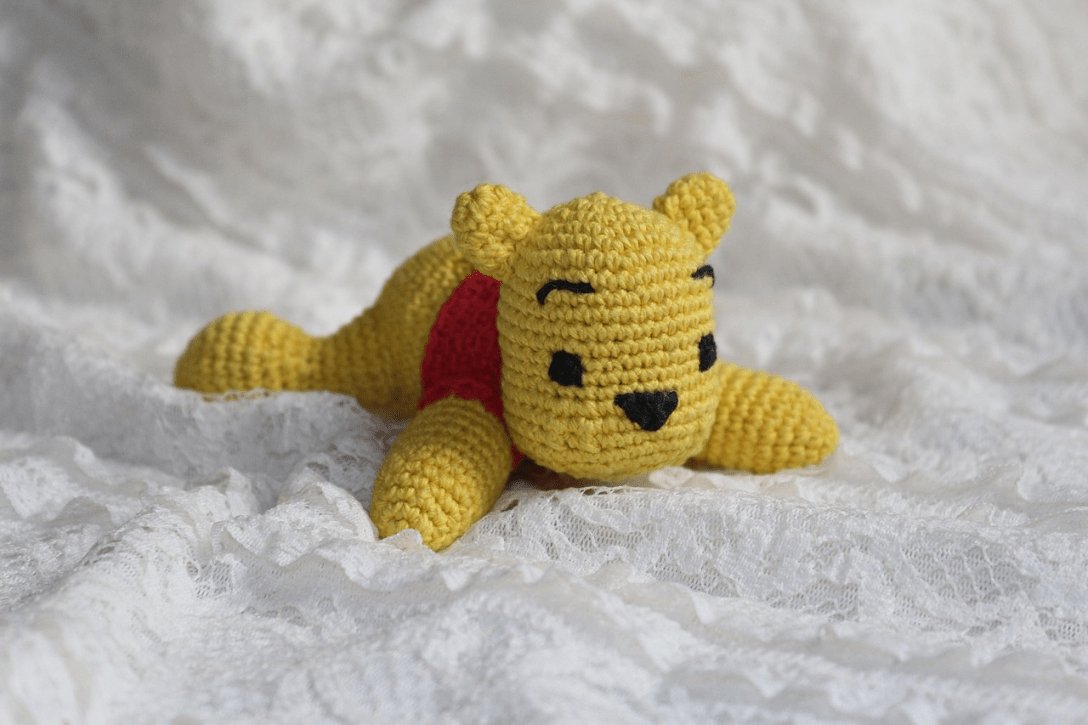
https://pixabay.com/photos/bear-winnie-the-pooh-toy-2982809/

Daily writing prompt
What’s your favorite cartoon?

What a bear with very little brain can teach us about consciousness, mindfulness, and the ethics of care

At first glance, Pooh Bear seems simple. He walks slowly, he loves honey, and he forgets things. That’s it. Nothing complicated, nothing dramatic. And yet, the more you watch him, the more you notice: there’s a quiet wisdom in the way he inhabits his world.

Not wisdom in the “sage on a mountaintop” sense. Wisdom in the way he pays attention. The way he interacts with friends or navigates the small ups and downs of life.

The Power of Paying Attention

Pooh’s adventures are funny, but they also reveal a surprising truth about attention. Floating on a balloon to steal honey, he’s completely absorbed in the task, oblivious to how absurd it looks. Neuroscience tells us that attention is a finite resource.

We can’t multitask perfectly, and our brains are constantly prioritizing what matters. Pooh doesn’t “practice mindfulness” or meditate; he just throws himself into what’s in front of him. And he doesn’t overthink it. In doing so, he shows us how simple focus makes life richer.

And then there’s his forgetfulness. When Pooh tries to help Eeyore find his tail, he forgets details and causes a small ruckus. According to cognitive science, forgetting is normal. Research suggests that our brains prune memories to prevent overload and allow for more mental bandwidth for other things.

Care Without Drama

Pooh’s ethics are quiet. Checking on Piglet during a storm or helping friends in small ways, he makes the most of small actions rather than grand gestures.

Philosophers call this relational ethics, or care practiced in the moment rather than in theory. Pooh isn’t a moral model; he’s just kind because it feels natural. His friendships emphasize that being a good person is about the tiny, consistent ways we attend to others.

The Simple Joy of Desire

Pooh loves honey. It’s intense, sometimes compulsive, and it drives many of his adventures. From the perspective of affective neuroscience, desire and reward shape mood.

By grounding his happiness in something that he can get everyday (honey!), he lives a steady and reliable existence; he avoids the entrapment of the novel and the grand. In a world obsessed with achievement, Pooh’s satisfaction is a call to anchor our emotional lives in something familiar.

Lessons Without Preaching

Pooh, to put it simply, lives. The Hundred Acre Wood shows us that small acts of attention and care matter, that imperfection is human. And above all, that ordinary life can be magical.

You don’t think of a sage or an ideal when you think of Pooh Bear. But he sure is a good guide, a reminder that contentment often comes not from striving to be perfect, but from noticing the little things and caring too.

In his gentle simplicity there lies a lesson modern life sometimes makes us forget: you don’t need a lot to live well, you just need to be fully present for the small, sweet moments that surround you.


Written by Mason Lai, a California high schooler.

Frames of Identity

Hurca! - Stock Adobe
Daily writing prompt
What’s the first impression you want to give people?
Hurca! - Stock Adobe
The first impression you give someone feels simple.

A glance, a phrase, the slight tilt of your voice as it tries to decide whether to sound confident or careful. But beneath that moment sits a truth most people never notice. It may be easy forget that others never gain awareness of the full architecture you are. Rather, a moment of awareness is simply one frame in a long sequence, and your brain rushes to stitch these frames together so you can believe there is a solid self living behind your eyes.

Identity is not what we think. I understand it as a continuity the brain desperately creates from separate moments to make sense of the movement of our lives. Neuroscientist Anil Seth calls this a controlled hallucination. The mind fills the gaps so you do not feel the gaps. It connects the flicker of one second to another until the whole thing seems unbroken, like a film reel running just fast enough to appear real.

We like to believe we are consistent people. Yet the research on memory says otherwise. We are creatures of reconstruction. Every remembered version of yourself is edited, packaged for memory, and rearranged. The brain rewrites the story so you can wake up each morning and believe today follows yesterday. This introduces a unique conundrum. Rather than storing identity, we regenerate it every day.

So when someone asks what first impression you want to give, the real question is much, much stranger, and it sounds something like this:

Which version of yourself do you choose to step into the next moment of your life? Which frame do you choose as the doorway?

This is where things shift from science to philosophy. Time feels like a flowing river, but psychologists who study chronostasis suggest that much of time is perception layered on top of uncertainty. The brain inserts its own continuity to prevent us from feeling the world as a collection of tiny, isolated pulses. If we experienced pure discontinuity, we would lose our sense of self within days.

Identity is the story your brain tells so you can stay afloat.

And yet there is something quite beautiful in that. If the self is an invention, it means you are not trapped by whatever story you once believed. You have a say in how the next frame develops. The first impression you offer someone is a creative act rather than a performance. It is the moment you decide which what stays, and what goes.

The poet Ocean Vuong once wrote that memory is a story we carry in order to survive. I think identity is similar. A living thing. An ongoing choice. A narrative held together not by perfect accuracy but by the desire to be understood.

So when someone meets you for the first time, they encounter a glimpse. A soft outline of a self that is always shifting. You might wish people could see the fuller version of you, the one that carries all your experiences and contradictions and small private joys. But this gentle incompleteness is part of what makes human connection meaningful. We meet one another through keyholes. We will never know the full interior, so we stay curious, listening. We keep evolving our impression of each other.

The mind protects us from the terror of a fractured reality by mashing together all the sense-datum we receive each day into something that seems continuous. Our task is just to participate in that creation with care and to let ourselves change while accepting that others will only ever see fragments.

Identity behaves a little like starlight. From a distance you see a single shimmer and assume it is the whole story. If you could travel closer, you would find a roaring furnace made of collisions, and pressure, and centuries of change. The light you see from afar, while seemingly false, is simply the only version that can cross the distance. It gives you a place to aim your attention.

A first impression works the same way. It is the part of you that travels. The part that reaches others first. The person you are is not the glow but the whole constellation of experiences that shaped it. And the self beneath all of that, the one even you struggle to map, is the vast system of forces and history that the mind is still learning to name.

The good thing about all this is that identity does not need to be solved. You do not have to know exactly who you are to live as someone real. You can be in motion, gathering pieces, setting others down, changing shape without warning. For you were never meant to be a statue.

Even scientists who study memory admit that the brain edits and revises and rearranges our story. If the mind keeps rewriting you, then you are allowed to participate in that creation. You are allowed to change your mind about yourself. You are allowed to hold uncertainty without feeling lost.

There is nothing weak about that. There is nothing broken about being unfinished.

Identity is a conversation between what made you and what you choose next. It is a bridge you are always building, even when the blueprint is unclear. The gaps are not failures. The gaps are invitations. They ask you to imagine, to choose, to become.

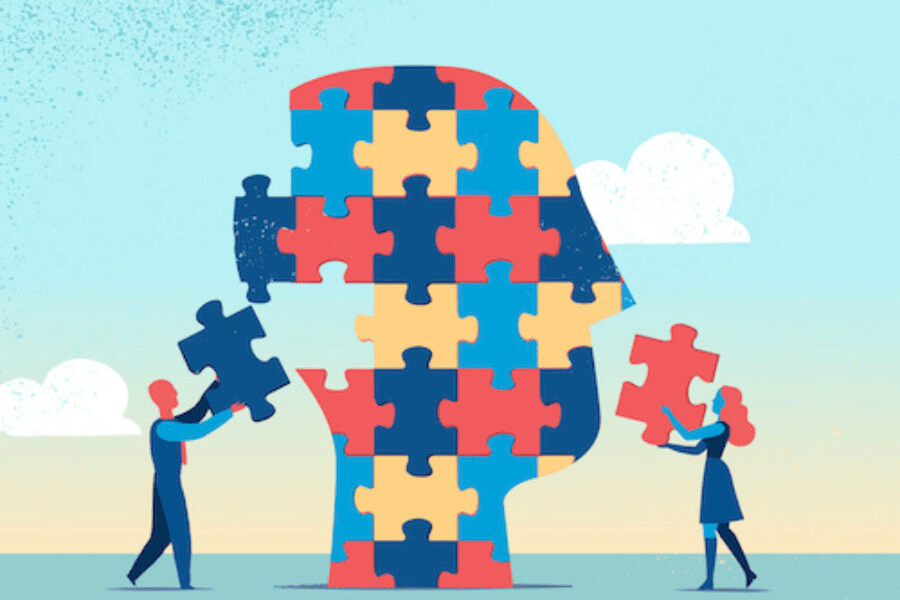
And maybe that is the real beauty. We are not defined by the parts we cannot explain. Instead, we are defined by the meaning we learn to create from them. Every time you step forward, you add a piece to your ever-growing puzzle. It does not matter if you don’t see the full picture yet, because, truth is, life wasn’t made to make sense from the inside.

So if you feel unfinished, good. It means there is space to grow toward a self that feels honest. It means you still have room for new light. It means the story is unfolding and you are awake inside it.

You are allowed to be a work in progress. You are allowed to be a constellation still forming. You are allowed to discover who you are by living, not by knowing.

And that is enough.


Written by Mason Lai, a California high schooler.