

Inside Out: The Discipline of Feeling

Daily writing prompt
When are you most happy?

Pixar’s Inside Out is often praised for making emotions legible, by color-coding them, naming them, and placing them neatly at their respective spots at a control panel. While it may be easy to watch the movie and believe its message is the value of emotional mastery, this surface clarity reveals a more unsettling argument. Inside Out attempts instead to reveal the value of emotional tolerance. Its deepest claim is not that happiness comes from managing feelings well, but that constant contradiction of emotion is necessary to create identity.

I. Continuity

Joy begins the film as the keeper of continuity. She treats Riley’s inner life as something to be curated, and protected from contamination. Sadness, in her view, corrodes life. If sadness touches a memory, the memory changes, so Joy fears this potential narrative fracture. However, this fear is prevalent in modern culture. We believe happiness to be stability; we believe it to be a consistent mood, a smooth trajectory. Self-help language also reinforces this fantasy by encouraging us to “protect our peace” as though peace were a fragile artifact rather than a dynamic process. At the beginning of the movie, Joy embodies this impulse, believing that if the right emotions remain in charge, the self will remain intact.

II. Sadness

But Inside Out dismantles this belief. When Sadness touches Riley’s memories, they don’t crack or fracture; rather, they deepen. Riley’s joyful recollections of childhood play become tinged with grief, but not because the joy was false; that grief comes from the memories belonging to a time that cannot be recovered, something we have all experienced. The memory gains depth and complexity, and with that comes narrative truth. What Joy interprets as damage is really just maturation.

The film suggests that unpleasant emotions like sadness are necessary to complete meaning. Only through sadness can experience remain emotionally legible over time. Without it, memories become artifacts, forever frozen, incapable of accommodating change. Riley’s crisis emerges when her emotional system can no longer pretend that continuity is possible. Moving cities disrupt her internal story. Her old sources of meaning, her friends, routines, and landscapes, shift apart. And the attempt to remain cheerful under these conditions produces emotional turmoil.

III. Growing

The ultimate resolution to this crisis is not the restoration of Joy’s authority, but a deeper understanding of the emotional hierarchy. When Sadness is allowed to speak, Riley’s pain becomes shareable. The problem isn’t solved, but her parents can help because the problem has been named.

In this sense, Inside Out offers a corrective view to a culture obsessed with emotional optimization. It suggests that unlike popular belief, psychological health is not achieved by minimizing negative states, but by allowing them to rise up to construct meaning. The film implies that identity is a dynamic system that must remain open to revision.

IV. Conclusion

The film ends with memories that shimmer with multiple emotional hues, refusing closure. Riley’s inner life becomes more difficult to map out, but it becomes more real. Every emotion evolves together. If Inside Out has a lesson, it is not that sadness is good, or that joy is naive. The lesson lies in the fact that a self that insists on feeling only one thing at a time will eventually lose the ability to feel anything honestly at all. Emotional maturity, like narrative truth, requires the courage to let experiences change us. Even if it’s hard. Even if it disrupts the story we carry of ourselves. Because to live is to keep becoming, again and again.


Why I Never Make Wishes

I want my experience to guide me, not undeserved freebies.

Daily writing prompt
What is one thing you would change about yourself?

I never make wishes. Not because I lack desire, or because I am practical in a boring sense, but because I want the arc of my life to emerge from my choices and mistakes, not from a free handout from the universe. A wish, by its nature, is a shortcut. An attempt to acquire a future without traversing the path that shapes the self along the way. I am more interested in that shaping than in the outcome itself.

Neuroscience

Neuroscience gives a strange kind of validation to this intuition. The brain learns most deeply through effort through what researchers call prediction error, the moment when expectation meets reality and the system adapts. Dopamine spikes which respond to effortful achievement serve to reinforce connections in the prefrontal cortex and striatum, helping us encode both skill and memory. If wishes were real, they would bypass that process. In a sense, it deprives the nervous system of experience, its most potent teacher.

Consider the subtle difference between a student who struggles for months to master a piece of music and one who magically acquires the ability with a single wish. Both may be able to play the notes, but only the first has undergone the kind of plasticity that transforms the mind. The hippocampus consolidates memories, the motor cortex refines its output, and the brain’s error-monitoring circuits, especially in the anterior cingulate cortex, learn to adapt. The journey, not the shortcut, builds agency. The wish, however tempting, is neurologically inert. Sorry, Aladdin. It asks nothing and returns nothing of value beyond the superficial.

Philosophy

Philosophically, my aversion to wishing aligns with existentialist thought. Kierkegaard wrote about authentic existence as reliant on decision, risk, and reflection. To hand over the authorship of your future, even symbolically, to some external wish is to abdicate the very process that makes life meaningful. Wishing collapses experience into instant gratification; it divorces outcome from effort, action from responsibility. And the self, stripped of its formative trials, becomes lighter, but also emptier.

Stories like Aladdin illustrate a subtle truth about wishing and effort. Aladdin becomes wealthy, meets the princess, and transforms his life, but only because the narrative allows him access to opportunity. In real life, outcomes are far less generous. Contemporary philosophy and social thought remind us that effort alone does not guarantee escape from suffering. Structural barriers, resources, and circumstance shape who can act on their potential and who remains constrained, no matter how hard they try. Refusing shortcuts or wishes is therefore a personal ethical choice because it shapes the kind of person you become, but it cannot erase the imbalances of reality. What we gain from experience is valuable, but it is never distributed evenly.

Therefore, this is not to romanticize suffering or struggle. I am not advocating for unnecessary pain or the glorification of difficulty. But I do believe that real growth requires living inside the friction of consequence and choice.

Ethics

There is also a subtle ethical dimension. When we wish for unearned advantages, we are implicitly saying that we value our own gain above the discipline of learning or merit. By refusing to wish, I am also, in a small way, refusing to outsource my development to luck. I am committing to a life where reward is proportional to engagement, where consequence is respected, and where experience remains my guide.

The Reality

Sometimes life is harder, slower, and less immediately satisfying than it would be if wishes were real. I miss opportunities that might have arrived on a whim. I watch others take shortcuts and sometimes envy their efficiency.

And yet, I want my story written in synapses that were built in response to challenge, not circumstantial fortune. I want my character shaped by choices that left a mark both on my mind and on my life. The wish tempts me with speed, but I choose depth. I choose learning. I choose experience.

Because in the end, it is experience, not magic, that teaches us who we are.


Written by Mason Lai, a California high schooler.

Are Night Owls or Morning People Healthier? Neuroscience Reveals a Surprising Winner

Daily writing prompt
Are you more of a night or morning person?

Your body has a schedule, but are you listening?

You do not simply wake when you want to. You wake when your suprachiasmatic nucleus (a cluster of about 20,000 neurons in the hypothalamus) decides your internal clock has finished its nightly cycle (or just when your alarm goes off). You feel alert or sluggish depending on where you fall in a chronotype, a biologically influenced timing profile that shapes energy, mood, cognition, and metabolism.

We talk about morning people and night people as if they are personality traits, but neuroscience urges us to consider them as deep physiological patterns. The surprise is that neither chronotype is objectively “better.” The advantage depends on what modern life demands of you as well as how well your internal rhythms align with those demands.

Here is a more grounded look at what your body is actually doing.


I: What Chronotypes Really Are

Your circadian rhythm runs at about twenty-four hours depending on genetic architecture. The PER3, CLOCK, and BMAL1 genes help determine whether you drift earlier or later. About 40 percent of people lean morning, 30 percent lean evening, and the rest fall somewhere in the middle.

The timing affects more than just sleep. Research from the University of Birmingham and University of Surrey shows that chronotype predicts peak cognitive performance windows with real precision. Morning types perform best earlier in the day, with sharper working memory and mental stability. Evening types peak later, showing enhanced creativity and divergent thinking in the late afternoon and night.

Therefore, what you must consider is whether your schedule matches your internal timing.


II: The Neuroscience of Night Owls

Night owls tend to have delayed melatonin release, slower buildup of homeostatic sleep pressure, and greater resilience to sleep restriction in the late hours. They maintain higher activity in the reward circuitry during the evening, which has both benefits and risks.

Advantages

  • Peak creativity in non-standard hours. Several studies (including a 2020 paper in Personality and Individual Differences) show that evening types outperform morning types on divergent thinking tasks when tested in the late hours.
  • Flexible attention patterns. EEG recordings show that evening types maintain frontal-parietal connectivity later at night, supporting sustained attention into irregular hours.
  • Greater innovation under low structure. Environments that reward autonomy often see night-leaning individuals excel.

Drawbacks

  • Social jet lag. If society demands morning schedules, night owls experience chronic circadian misalignment, correlating with higher cortisol levels, impaired glucose regulation, and increased depressive symptoms.
  • Cognitive penalties early in the day. Working memory and decision-making dip sharply in morning hours for night types. (I can relate.)

So night owl advantages only fully show up when life allows a shifted schedule. Without that, the biological rhythm becomes a liability.


III: The Neuroscience of Morning Types

Morning people have earlier circadian anchors, in melatonin rising earlier, core body temperature peaking earlier, and cortisol following a strong morning surge that supports task initiation.

Advantages backed by research

  • Better synchronization with societal structure. Most schools and jobs begin early. Morning types rarely experience circadian misalignment.
  • Improved long-term health outcomes. Studies in Sleep Medicine Reviews link early chronotypes with lower obesity rates, more stable glucose metabolism, and reduced cardiovascular risk.
  • More consistent mood regulation. Morning types show stronger connectivity in the frontal control networks early in the day, which buffers emotional volatility.

Costs to consider

  • Lower creativity in late-day conditions. Evening testing often reveals reduced flexibility and weaker associative thinking.
  • Greater fatigue in late hours. Cognitive performance drops sharply past evening for early chronotypes.
  • Rigid energy curves. Morning types sometimes struggle with unpredictable schedule demands, late shifts, or creative tasks that require extended ideation windows.

Morningness thrives in structured worlds. It can falter in environments requiring spontaneity or irregularity in patterns.


IV: So Who Is “Better” Off?

Here is the actual scientific answer:
You do better when the world matches your chronotype.

The most consistent finding across chronobiology is the cost of forcing an internal rhythm to fit an external schedule. Researchers call this circadian misalignment, and it functions like internal jet lag every day. It impairs memory formation, increases inflammation, disrupts metabolic hormones, affects cardiovascular function, and even shifts risk-taking tendencies.

Night owls suffer more because modern society is built around morning expectations, but they thrive in environments where people can choose their hours.

A 2021 University of Melbourne study found that when allowed to select their own sleep–wake windows, evening types perform as well as or better than morning types on executive function tasks.

The question is not “Which type is better?”
The question is “Does your environment punish your biology or support it?”


V: The Nuanced Middle

Most people are intermediate types. The research calls this “neither type” or “mixed chronotype.” They tend to have flexible rhythms and benefit most from stable routines rather than extreme schedules.

The nuance is this:
The best schedule is the one that creates alignment between circadian biology and daily demand.
For some, that is a dawn-focused rhythm. For others, it is a late-evening flow state. For many, it is a middle ground with slight adjustments.


Conclusion: Consider yourself in rhythms

The rhythm in your brain is older than culture, older than electricity, older than cities. It evolved under open skies long before clocks existed. So follow your rhythm.

This does not mean abandoning discipline. It means using discipline to protect the hours that work for you. If your peak focus arrives at 10 p.m., build your creative world around that window. If your clarity comes with first light, guard that time like a resource. Chronotype does not decide what you can achieve. It only decides when your work can feel less like a fight.

Productivity culture loves to shame the tired and praise the early. Neuroscience suggests something gentler: you are not lazy, disorganized, or poorly optimized. You are rhythmic. And when you move with your rhythm instead of against it, getting started on your to-do list becomes less about squeezing output from a fatigued mind and more about allowing your best self to arrive on schedule.

If You Could Skip Sleep: What the Latest Brain Science Says You’re Really Losing

Daily writing prompt
If you didn’t need sleep, what would you do with all the extra time?
A neuroscience and philosophy guide to the hidden work your brain performs at night and what happens to identity when those hours disappear.

Imagine waking up tomorrow and discovering that you no longer need sleep. Without drowsiness, dream cycles, hours lost to the dark… At first this feels like freedom, like more time to learn. More time to create. Like more life packed into the same number of days.
But current neuroscience suggests a stranger truth. The most important parts of your identity happen while you are unconscious. Rewrite the night, and you rewrite yourself.

Your Brain Uses Sleep to Rewrite You

Modern sleep science shows that the brain works through the night to revise your experiences.

Targeted Memory Reactivation (TMR) research from 2024 demonstrates that memories cued during slow wave sleep become more stable and less emotionally reactive. Scientists played sounds tied to negative autobiographical events while participants slept and found that the next day, those memories carried lower stress signatures.

• A 2025 REM sleep study found that reactivating negative memories with an odor increased neural processing of the memory the next morning. The increase was not emotional intensification. Instead, it reflected deeper integration of the event with existing memory networks.

• New findings on adult born hippocampal neurons show that only a small population of cells replays waking experiences during REM. When researchers disrupted the timing of these neurons in mice, memory recall collapsed. The lesson is simple. Quality of memory depends on precise replay, not raw wakeful time.

If you lost sleep, you would gain hours, but lose the nightly work your brain performs to organize your life into meaning.

Extra Time Without Sleep Is Not Extra Life

People often imagine sleeplessness as a path to greater productivity. Yet sleep loss does more than create fatigue; it also changes the way the brain forms judgements and regulates emotion.

Consider two areas:
Emotional regulation: Research from trauma therapy combined with TMR shows that sleep strengthens the results of therapeutic sessions. Patients who had sound cues replayed during sleep after EMDR showed reduced symptoms and increased slow oscillations that support emotional healing. Without sleep, emotional updates become inconsistent.
Identity formation: Philosophers describe the self as a narrative process. Neuroscience now supports this. Sleep is when the brain binds semantic, emotional, and autobiographical memory into a coherent structure. If you removed that editing phase, you would not simply feel tired. You would feel scattered.

If you suddenly gained seven more waking hours, you would lose the nightly sense-making that keeps your personality coherent.

What Would You Do With That Time

If you did not need sleep, you would probably begin by doing what you already enjoy. Studying. Creating. Thinking. Reading. But without the biological systems that maintain attention, regulate mood, and integrate memory, the quality of those extra hours would change.

Work would become impulsive, as learning would become shallow, and emotional life would lose its gradients. You could accumulate more experiences, but you would have fewer tools to understand them.

Neuroscience suggests that sleepless productivity is an illusion, because, like it or not, sleep is what gives your wakeful hours their clarity.

Conclusion

If I had the ability to live without sleep, I would fill the extra time with projects that matter. Yet the newest research makes something clear. The cost of sleepless life is the erosion of memory precision, emotional stability, and personal identity.

Without sleep, you could do more, but you would undoubtedly understand less.
You would live longer in hours, but shorter in meaning.

The Plastic Instinct

Who is Danny - stock.adobe.com

How instinct and intuition shape us, and how the nervous system allows us to rewrite our oldest impulses

Daily writing prompt
Do you trust your instincts?

We usually imagine instinct as something permanent, a force that precedes thought and resists revision, moves faster than reason, feels older than memory, and often arrives before we have a chance to interpret it.

A sudden flinch, a tightening in the chest, a hesitation in front of a crowd; these are signals from biology’s first draft of the self.

Intuition, by contrast, feels learned yet inexplicable. It is judgment from experience, from patterns we have absorbed but cannot fully articulate. The distinction seems clear: instinct is inherited, intuition is acquired. Yet according to neuroscience, they are closer than meets the eye.


I. Instinct as the First Draft

Neuroscience shows that instinctive circuits through the amygdala, periaqueductal gray, and other subcortical structures operate at speeds that bypass conscious thought (LeDoux, 1996) in order to guide us toward survival. Instinct carries ancient wisdom, but it is not absolute, and in modern life some consider it an outdated architecture.

Instinct can change. Neuroplasticity allows the nervous system to reshape itself in response to experience, so emotional memory can be updated each time it is recalled in a process called reconsolidation (Phelps et al., 2009). Fear responses once thought permanent can be weakened through repeated exposure. Prosocial impulses can be reinforced through practice.


II. Intuition as the Brain’s Ongoing Revision

Intuition is the mechanism through which these revisions emerge through pattern recognition: the brain compressing thousands of experiences into a single instant of guidance.

A seasoned firefighter senses a building is unsafe before assessing the evidence. A guitarist feels the right chord before theory explains it. These are instincts refined by experience and practice.

The distinction between instinct and intuition fades because both rely on the nervous system’s ability to encode and adapt information. What feels immediate is often the negotiation between our ancient foundations and modern experience.


III. Rewriting Instinct and the Responsibility of Freedom

The possibility of rewriting instinct raises ethical and philosophical questions. If our deepest reactions can be altered, we bear responsibility for which impulses we cultivate. If courage can be trained, empathy practiced, fear tempered, then nothing stops us from imagining “ideal” humans—creatures optimized for rationality, cooperation, or moral virtue. History brings up a cautionary lens. Communism and socialism were once heralded as systems that could perfect society, yet the unpredictability of human behavior and the complexity of the world made total control impossible. Even carefully designed utilitarian experiments struggle to account for the emergent consequences of individual choices and the infinite ways context shapes action.

Maladaptive environments, however, can carve unhealthy patterns into the nervous system just as easily. The plasticity of instinct is both liberating and fragile. It allows us to grow, but it is also inevitably shaped by forces outside conscious control. In this sense, instinct is less a fixed verdict than ongoing revision. Human potential will perhaps always remain uncertain. We cannot manufacture perfection, yet we can still strive. So, the work of shaping instinct cannot be absolute; rather it fluctuates between what can be trained and what must be lived.


IV. Living Between Draft and Revision

Instinct is the prewritten framework of the self, a set of impulses we inherit before we can interpret them. Intuition layers experience atop it, shaping quiet guidance we rarely notice. Conscious attention is the instrument of our change, refining and redirecting without ever fully controlling the story.

Reflex can become deliberate as reaction can become understanding. We are neither prisoners of our earliest wiring nor masters of its total rewriting.

Rewriting instinct carries ethical weight. If courage, empathy, or fear can be trained, shaping the impulses of others through education, culture, or biotechnology is imaginable. History reminds us that attempts to “perfect” humans or societies fail, as the world resists total control. Yet this imperfection also carries hope: the same plasticity that allows harm also allows care, reflection, and responsible guidance.

To trust instinct is to honor its voice while recognizing limits. To engage thoughtfully is to co-author the self. Living fully must mean navigating the tension between inherited and cultivated impulses, letting both guide us. But this responsibility extends beyond personal growth. How we train instinct shapes the ethical contours of who we become. Courage cultivated in adolescence can influence moral choices in adulthood. Empathy reinforced through social experience alters how we respond to strangers. Fear tempered through exposure can prevent harmful overreactions. Shaping instinct means editing our identity. The ethical dimension is unavoidable: the self is inseparable from the impulses we refine, and the values we choose to embed in them.


References

  • LeDoux, Joseph. The Emotional Brain. 1996
  • Kahneman, Daniel. Thinking, Fast and Slow. 2011
  • Damasio, Antonio. Descartes’ Error. 1994
  • Phelps, Elizabeth et al. Nature, 2009
  • Sapolsky, Robert. Why Zebras Do Not Get Ulcers. 1994

Written by Mason Lai, a California high schooler.

Should We Erase Painful Memories? The Neuroscience Behind Memory Editing

Quick Shot/ Shutterstock
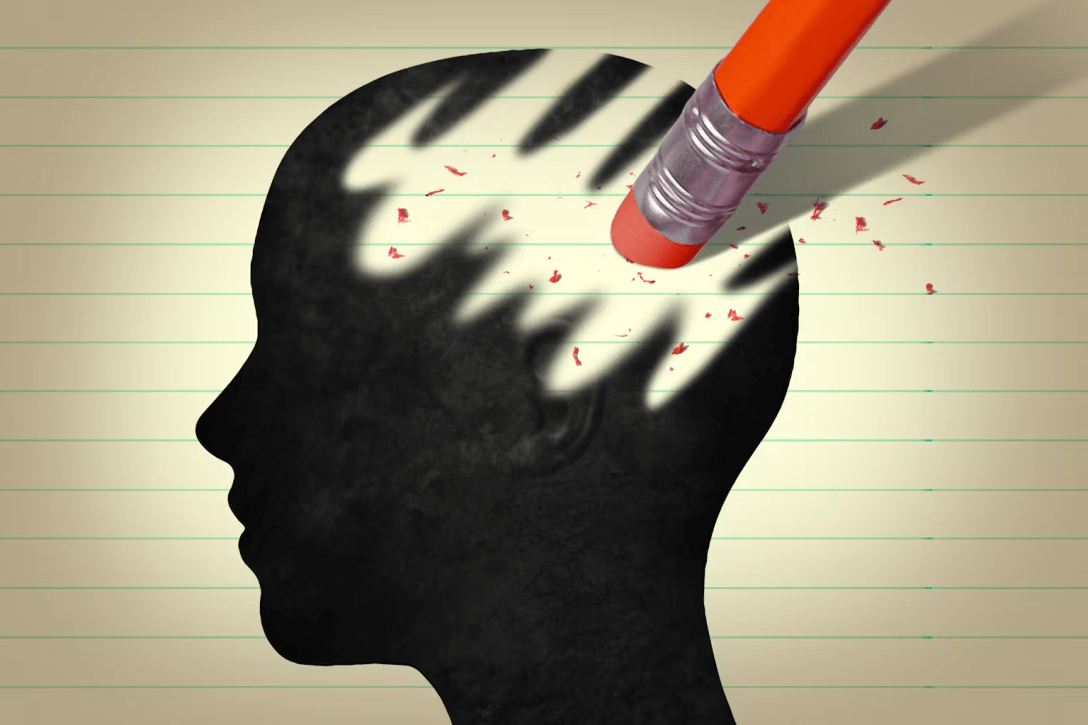
Memory-editing research is advancing fast. But removing our pain may also remove the person we became because of it.

There’s a question that keeps surfacing in neuroscience labs and ethical journals alike:
If we had the power to soften or erase painful memories, should we?

Researchers already know how to disrupt memory reconsolidation, which is the process by which a recalled memory becomes flexible before being stored again. Beta-blockers like propranolol have been shown to dampen the emotional intensity of traumatic recall in PTSD patients. Optogenetics experiments in mice have altered fear memories by re-tagging them with different emotional associations. Even human trials are exploring noninvasive stimulation to interrupt unwanted memories during sleep.

We are, quietly, entering an age where pain is editable.

But the more I read about these findings, the more a different question forms underneath the scientific one. Not Can we edit memory? But What happens to the self if we do?

The Problem with a Pain-Free Self

Memory is a fragile process, forever rewriting itself. Every time we remember something, we alter it slightly. Neuroscientists call this reconsolidation, but even without jargon, most of us know the feeling: a memory that once hurt becomes softer; another becomes sharper for reasons we can’t explain.

This plasticity is what makes memory-editing plausible, but it’s also what makes identity complicated. A life without painful memory might be easier, but would it still be yours?

Where Identity Lives

One of the more haunting ideas in cognitive science is that memory is less about accuracy and more about coherence. Rather than storing experiences like files; we reconstruct them to match who we believe we are now. The philosopher Daniel Dennett once suggested that the self is the “center of narrative gravity”, like a stabilizing illusion that helps us make sense of flux.

If that’s true, altering memory, scarily enough, changes the storyteller as much as the story itself.

A person who erases the memory of a betrayal becomes someone who never had to learn trust again.
A person who erases the memory of failure becomes someone without the quiet resolve that follows.
A person who erases grief becomes someone untouched by the shape love leaves behind.

One thing I continue to wonder is whether the edited self still be continuous with the original, or if the break in memory creates a break in identity too.

The Ethics of “Improvement”

There’s a moral seduction in self-editing. We are obsessed with optimization. Think better bodies, better habits, better productivity, everything in modern life. Why not better memories?

We know how important pain is, though. The fear of loss teaches us to hold people closer, and failure teaches us resilience. Even the most painful moments, those we’d give anything to erase, become part of how we find meaning again.

Neuroscientist Karim Nader, one of the pioneers of reconsolidation research, once said that memory’s primary function, surprisingly, is not to preserve facts, but to help us adapt. By that logic, even painful memories are functional. They help us navigate danger by recognizing patterns.

So when we “improve” ourselves by removing them, we risk becoming someone optimized, perhaps, but hollowed, a self that is easier to carry but harder to recognize.

The Risk of Losing the Lessons Without the Pain

The most compelling counterargument to memory-editing is not that it’s unnatural or reckless. It’s that we might remove the pain without keeping the wisdom.

In one study at NYU, rats whose fear memories were disrupted no longer avoided dangerous cues. They walked into places where they had once been shocked, oblivious to the threat. When we erase hurt, we erase the part of ourselves that learned how to endure.

A Different Kind of Healing

This isn’t an argument against treatment. For example, PTSD is more than just a memory; PTSD is a nervous system in overdrive, a life paused inside an unrelenting moment. In this case, damping the emotional intensity of those memories is more a form of liberation.

The ethical line appears not at the removal of unbearable pain, but at the removal of meaningful pain, a subtle difference.

So, scientific interventions can help us loosen trauma’s grip, but perhaps they should not offer us amnesia.

What We Stand to Lose

Every once in a while, when I think about memory alteration, I imagine a version of myself who never had to rebuild after loss. Someone lighter, less afraid, unburdened.

But that person would not know why loyalty matters, they would not understand the texture of fear or the softness that follows grief, and they would not know the cost of love. They would be me without the evidence that I have lived.

Maybe the Goal Isn’t Erasure

The goal is not to extract a memory as if it were a stain that can be lifted. Perhaps the goal is to reinhabit it in a new way, so that its emotional weight is redistributed and its meaning evolves rather than disappears. To reshape the experience without erasing the fact that it occurred.

Neuroscience may eventually offer the ability to select what we carry forward. Yet meaning is something we craft through engagement, not something we inherit passively or delete at will. The self grows through reinterpretation, revision, and integration, not through subtraction.

So, Is a Life Without Painful Memory Better?

It might be simpler, or lighter, but what makes a life whole is rarely what makes it easy. Pain itself is not the adversary. What harms us is the sense of being imprisoned by it, unable to move beyond its earliest form.

A life without painful memory may shield us from suffering, but one shaped through painful memory gives rise to everything that matters.

Most of us live somewhere between those two possibilities. We carry moments that hurt but keep learning how to carry them differently. In that ongoing process, memory acts as a teacher, and the self becomes something we build rather than something we escape.

That is where the story, no matter how tragic, ends, and growth begins.


Written by Mason Lai, a California high schooler.

Frames of Identity

Hurca! - Stock Adobe
Daily writing prompt
What’s the first impression you want to give people?
Hurca! - Stock Adobe
The first impression you give someone feels simple.

A glance, a phrase, the slight tilt of your voice as it tries to decide whether to sound confident or careful. But beneath that moment sits a truth most people never notice. It may be easy forget that others never gain awareness of the full architecture you are. Rather, a moment of awareness is simply one frame in a long sequence, and your brain rushes to stitch these frames together so you can believe there is a solid self living behind your eyes.

Identity is not what we think. I understand it as a continuity the brain desperately creates from separate moments to make sense of the movement of our lives. Neuroscientist Anil Seth calls this a controlled hallucination. The mind fills the gaps so you do not feel the gaps. It connects the flicker of one second to another until the whole thing seems unbroken, like a film reel running just fast enough to appear real.

We like to believe we are consistent people. Yet the research on memory says otherwise. We are creatures of reconstruction. Every remembered version of yourself is edited, packaged for memory, and rearranged. The brain rewrites the story so you can wake up each morning and believe today follows yesterday. This introduces a unique conundrum. Rather than storing identity, we regenerate it every day.

So when someone asks what first impression you want to give, the real question is much, much stranger, and it sounds something like this:

Which version of yourself do you choose to step into the next moment of your life? Which frame do you choose as the doorway?

This is where things shift from science to philosophy. Time feels like a flowing river, but psychologists who study chronostasis suggest that much of time is perception layered on top of uncertainty. The brain inserts its own continuity to prevent us from feeling the world as a collection of tiny, isolated pulses. If we experienced pure discontinuity, we would lose our sense of self within days.

Identity is the story your brain tells so you can stay afloat.

And yet there is something quite beautiful in that. If the self is an invention, it means you are not trapped by whatever story you once believed. You have a say in how the next frame develops. The first impression you offer someone is a creative act rather than a performance. It is the moment you decide which what stays, and what goes.

The poet Ocean Vuong once wrote that memory is a story we carry in order to survive. I think identity is similar. A living thing. An ongoing choice. A narrative held together not by perfect accuracy but by the desire to be understood.

So when someone meets you for the first time, they encounter a glimpse. A soft outline of a self that is always shifting. You might wish people could see the fuller version of you, the one that carries all your experiences and contradictions and small private joys. But this gentle incompleteness is part of what makes human connection meaningful. We meet one another through keyholes. We will never know the full interior, so we stay curious, listening. We keep evolving our impression of each other.

The mind protects us from the terror of a fractured reality by mashing together all the sense-datum we receive each day into something that seems continuous. Our task is just to participate in that creation with care and to let ourselves change while accepting that others will only ever see fragments.

Identity behaves a little like starlight. From a distance you see a single shimmer and assume it is the whole story. If you could travel closer, you would find a roaring furnace made of collisions, and pressure, and centuries of change. The light you see from afar, while seemingly false, is simply the only version that can cross the distance. It gives you a place to aim your attention.

A first impression works the same way. It is the part of you that travels. The part that reaches others first. The person you are is not the glow but the whole constellation of experiences that shaped it. And the self beneath all of that, the one even you struggle to map, is the vast system of forces and history that the mind is still learning to name.

The good thing about all this is that identity does not need to be solved. You do not have to know exactly who you are to live as someone real. You can be in motion, gathering pieces, setting others down, changing shape without warning. For you were never meant to be a statue.

Even scientists who study memory admit that the brain edits and revises and rearranges our story. If the mind keeps rewriting you, then you are allowed to participate in that creation. You are allowed to change your mind about yourself. You are allowed to hold uncertainty without feeling lost.

There is nothing weak about that. There is nothing broken about being unfinished.

Identity is a conversation between what made you and what you choose next. It is a bridge you are always building, even when the blueprint is unclear. The gaps are not failures. The gaps are invitations. They ask you to imagine, to choose, to become.

And maybe that is the real beauty. We are not defined by the parts we cannot explain. Instead, we are defined by the meaning we learn to create from them. Every time you step forward, you add a piece to your ever-growing puzzle. It does not matter if you don’t see the full picture yet, because, truth is, life wasn’t made to make sense from the inside.

So if you feel unfinished, good. It means there is space to grow toward a self that feels honest. It means you still have room for new light. It means the story is unfolding and you are awake inside it.

You are allowed to be a work in progress. You are allowed to be a constellation still forming. You are allowed to discover who you are by living, not by knowing.

And that is enough.


Written by Mason Lai, a California high schooler.

Why Forgetting Might Be the Most Human Thing We Do

We like to think of memory as proof of who we are. The things we remember become the architecture of our identity, yet beneath that structure lies something quieter, more fragile, and perhaps more vital: the things we forget.

Forgetting has always been treated as the mind’s flaw. A smudge in the lens. But what if it’s the very process that keeps the lens clear?


The Brain’s Gentle Refusal

Neuroscience describes memory as a process of constant revision. The hippocampus stores and reshapes what we take in, then loosens its grip when something no longer serves the present (Squire, 2009).

Researchers in Toronto proposed that the brain forgets to survive. Without that ability, consciousness would collapse under its own weight (Bjork, 1975). We would be unable to tell what matters. The mind that never forgets cannot change its mind.

Every day, thousands of synaptic connections fade, but traces remain as pathways that strengthen when we return to them. The rest dissolve into the white noise of experience, making room for new learning, new meaning, and new selves (Kandel, 2006).


The Poetry of Impermanence

When we revisit a memory, we rewrite it. The scene shifts, colors dull or brighten, dialogue rearranges itself (Loftus, 2005). What we call memory is really imagination tethered to a few truths.

There is something sacred about this impermanence. It protects us from being trapped in yesterday’s version of ourselves. It allows pain to lose its sharpness, allows love to change shape without vanishing. Forgetting is not the opposite of remembering; it is how remembering stays bearable (Hardt, 2008).


A Mind that Learns to Release

To live fully may mean learning to let thoughts fade without resistance. We do not abandon what we forget; we carry the echo of it. The brain understands this long before we do. It edits with care, choosing what we are ready to carry forward (McGaugh, 2000).

Some cultures have long understood this rhythm. The Japanese concept of mono no aware—the bittersweet awareness of impermanence—captures the beauty of forgetting. The ancient Greeks linked memory to Mnemosyne, the mother of the Muses, yet they also revered Lethe, the river of forgetting, as the path to peace (Assmann, 2011).

The self that remembers everything would have no room to grow, and the one who forgets too easily would lose coherence. So we exist between the two in a delicate equilibrium of holding and release.


The Human Art of Letting Go

Forgetting is not a failure of intellect but a condition of grace. It gives us the courage to begin again, to rebuild understanding without the burden of total recall. The mind renews itself in the spaces it empties.

Perhaps this is what it means to be human: to remember just enough to love the world, and to forget just enough to forgive it.


References

Squire, L. R. (2009). Memory and Brain. Oxford University Press.

Assmann, J. (2011). Cultural Memory and Early Civilization: Writing, Remembrance, and Political Imagination. Cambridge University Press.

Bjork, R. A. (1975). Retrieval as a memory modifier: An interpretation of negative recency and related phenomena. In J. Brown (Ed.), Recall and Recognition (pp. 123–144). London: Wiley.

Hardt, O., Nader, K., & Nadel, L. (2008). Decay happens: The role of reconsolidation in memory. Trends in Neurosciences, 31(8), 374–380.

Kandel, E. R. (2006). In Search of Memory: The Emergence of a New Science of Mind. W. W. Norton & Company.

Loftus, E. F. (2005). Planting misinformation in the human mind: A 30-year investigation of the malleability of memory. Learning & Memory, 12(4), 361–366.

McGaugh, J. L. (2000). Memory–a century of consolidation. Science, 287(5451), 248–251.

Schacter, D. L. (2001). The Seven Sins of Memory: How the Mind Forgets and Remembers. Houghton Mifflin.


Written by Mason Lai, a California high schooler.

The Zeigarnik Effect: Why Unfinished Tasks Stay in Your Head

I. The Weight of the Unfinished

You open your phone to check one thing. Fifteen minutes later, you’ve replied to two texts, saved a recipe, watched half a video, and somehow never done what you meant to do in the first place. When you finally put it down, your mind still hums with half-formed tasks.

Our brains were never built to live in open tabs.

Psychologists call this the Zeigarnik Effect: the tendency to remember unfinished or interrupted tasks more vividly than completed ones. It’s why a forgotten to-do list nags at you more than the dozens of items you’ve already crossed off. The mind craves closure the way the lungs crave air.

But because our world never truly ends, that craving becomes a quiet torment.


II. The Zeigarnik Effect: The Brain’s Unfinished Symphony

In the 1920s, psychologist Bluma Zeigarnik noticed something curious: waiters remembered unpaid orders better than completed ones. Once the bill was settled, the details seemed to vanish from memory.

Modern neuroscience has since confirmed her insight. Our brains generate dopaminergic tension when something is incomplete, which is a kind of cognitive itch that pushes us toward resolution. Completion relieves the tension, but only for a moment. Soon the mind looks for the next unfinished thing to chase.

The internet runs on this loop. “Next episode” buttons, red notification dots, infinite scrolls, and each one a tiny cliffhanger engineered to keep us suspended in the half-finished.


III. Decision Fatigue: The Cost of Constant Choice

Every unfinished thought competes for energy. Add a thousand small choices, what to wear, text, eat, or watch, and the brain begins to tire. The result is decision fatigue, the invisible tax of modern life.

Research by Roy Baumeister and colleagues shows that every decision draws from the same cognitive pool we use for focus and self-control. As the day goes on, that pool drains.

We call it burnout or lack of motivation, but really it’s just the cost of too many open tabs.
Every half-done task is a leak in the mind’s attention, and we are slowly running dry.


IV. The Digital Age: Infinite Loops, Finite Minds

Our devices have become machines for fragmentation.

Psychologists describe something called cognitive residue, the trace of attention left on a task even after we’ve moved on. Each switch between apps or thoughts leaves behind a faint echo, blurring our focus until nothing feels whole.

This state of half-presence has a name: psychological entropy. It’s the discomfort that arises when the mind’s order dissolves into chaos. Modern media feeds that entropy, keeping us suspended in the tension of what’s next.

In the economy of attention, our unfinished thoughts have become the most valuable commodity.


V. Creativity and the Gift of the Unfinished

Not all incompletion is a curse. The same tension that drives distraction can also spark creativity.

Writers, scientists, and musicians have long relied on the “productive pause”, defined as the act of stepping away to let the subconscious take over. Neuroscience calls this the incubation effect, and it’s tied to the default mode network, the system that activates when we rest, wander, or daydream.

Unfinished ideas incubate. They evolve in silence. They grow roots while we sleep or walk or stare into space.
To pause is to make room for the unseen work of the mind.


VI. The Youth Paradox: Overstimulated and Underslept

For teens and young adults, this cycle is especially intense. School, social media, and constant performance pressure combine into a mental marathon without finish lines. Every notification and assignment becomes another open loop.

This chronic stimulation bleeds into sleep, disrupting the brain’s nightly ritual of sorting, storing, and restoring. During REM and slow-wave sleep, the brain organizes memory, cleanses itself of metabolic waste, and closes the loops we left open during the day.

When sleep is cut short, those loops remain unclosed. We wake up cluttered and foggy in a generation living in mental overdrive yet feeling perpetually unfinished.

We fall asleep simply to tidy the chaos our waking minds cannot.


VII. Closing the Loop: The Art of Choosing Less

The great misconception, especially among the young and ambitious, is that mental toughness means constant motion. In reality, clarity often comes from subtraction.

Choosing less doesn’t equate to caring less. It is just to care more precisely.

We can’t close every loop, nor should we. The goal is to know which ones deserve our attention and which can remain gracefully unfinished. The brain, after all, thrives on both tension and rest. One highly effective habit you can try is to establish some sort of “second brain” for yourself; a notebook, a note-taking app, or a post it that holds all the daily scribbles you realize you must accomplish at some point.

To live deliberately is to choose which threads to tie and which to let drift, trusting that some of life’s most meaningful work happens in the quiet space between.

In a world obsessed with doing more, perhaps the wisest act is simply to finish less, but in doing so, finish more fully.


Written by Mason Lai, a California high schooler.

How to Rewire Your Brain in the Last 60 Days of 2025

Sixty days left in 2025. That’s enough time to either coast through the end of the year or to reprogram how you think, focus, and act. The truth is, your brain remains remarkably adaptable.

This is not about resolutions. It is about neuroscience and the quiet biological fact that change is built on repetition and reflection.


1. The Myth of the Big Reset

We love the fantasy of transformation: new notebooks, gym sign-ups, the illusion that change begins on command. But real rewiring does not happen that way.

Neuroscience shows growth is not a switch but a slow layering of signals. Every day your brain listens to your behavior and adjusts. Patterns of thought and action, repeated often enough, become automatic pathways. You do not “flip” into a new self. You train your neurons into one.

Mindset shift: Stop thinking in resolutions. Start thinking in repetitions.

The 1% Rule

Improve by one percent each day – one percent more focus, one percent more rest, one percent more presence. After sixty days, that is not sixty percent improvement. Compounded, it is exponential. Neural networks strengthen with consistency, not drama.


2. The Science of Rhythm: Finding Your Neural Schedule

Your perfect day is already coded into your biology. The brain runs on circadian (daily) and ultradian (hourly) rhythms that govern alertness, creativity, and fatigue. Ignoring those rhythms is like rowing against a current: possible, but exhausting.

The Focus Framework

  • Track your natural peaks for three days. Note when your brain feels sharpest and when it fogs.
  • Protect your high-focus window for deep work – writing, studying, thinking.
  • Use low-focus hours for logistical tasks and errands.
  • Rest every 90 minutes to align with attention cycles and help neurotransmitters reset.

Once you align your schedule to your neural rhythm, productivity will come more easily, not just from sheer willpower.


3. The Novelty Principle: Reawakening Dormant Circuits

The brain thrives on surprise. Novelty (new experiences, ideas, or environments) activates dopamine pathways tied to curiosity and learning. When everything feels repetitive, the brain goes into predictive mode and attention fades.

Novelty is not merely entertainment. It is biological nutrition for attention.

Small Ways to Add Novelty

  • Change your study or commute route.
  • Read an author or genre you rarely choose.
  • Listen to a podcast outside your usual subjects.
  • Rearrange your workspace or swap your morning routine.

Each small disruption forces your sensory and motor cortices to re-coordinate, for more whimsy in life.


4. The Attention Economy and the Art of Recovery

Your attention is your most limited neural currency. Every task switch or phone check spends dopamine and glucose, the fuels of focus. Constant context switching leads to micro self-interruption that accumulates fatigue.

The Two-Window Method

  1. Deep Work Window: One 90-minute period daily for immersion. One task, zero notifications.
  2. Restorative Window: 20 minutes of real rest after deep work: walking, breathing, or silent reflection. No screens.

During rest, your brain consolidates learning.


5. Sleep: The Night Shift of the Brain

Sleep is not optional. During deep sleep, brain cleaning processes remove metabolic waste. During REM sleep, emotional and sensory memories get integrated into long-term patterns.

The Rewind Ritual

  • Thirty minutes before bed, dim lights and screens.
  • Write three lines about what you learned or noticed today.
  • Visualize your brain sorting and storing those experiences overnight.

After sixty days, this simple ritual strengthens hippocampal memory consolidation and emotional balance.


6. The Emotional Brain: Reframing Stress

Stress in small doses sharpens focus and motivation; chronic stress is what harms the brain. The trick is to reframe stress as signal, not threat.

The Stress Reframe

  • Name it: say to yourself, “My body is preparing me.”
  • Breathe in for four counts, out for six to activate the calm response.
  • Turn the task into curiosity: ask, “What is this trying to teach me?”

This practice trains the prefrontal cortex to interpret pressure as stimulation. Over time, that narrative becomes automatic and resilience grows at the circuit level.


7. Reflection: The Architecture of Identity

Your brain learns not only from action, but from what it notices about action.

The Nightly Check-In

  • What did I learn today about the world or about myself?
  • What felt meaningful?
  • What drained me, and why?
  • Who made me smile?

Five minutes of nightly journaling rewires self-awareness. You begin to see patterns in the quiet beginning of self-creation.


8. The 60-Day Framework for Lasting Change

Use this structure to make the final sixty days of 2025 transformative without theatrics or burnout.

SystemActionNeural Benefit
FocusOne 90-minute deep work block dailyStrengthens prefrontal control
Recovery20-minute restorative breakResets dopamine and consolidates learning
SleepConsistent bedtime and Rewind RitualEnhances memory and mood stability
NoveltyOne new experience weeklyActivates neuroplasticity
Reflection5-minute nightly journalingStrengthens self-awareness circuits

9. The Quiet Revolution

When the year ends, the world may look the same. But beneath the surface, your brain will have changed. You will return to focus faster. You will respond to stress with more equanimity. You will notice life more clearly.

That is the real miracle of the human brain: it is always becoming. And sixty days is enough time to begin again.

You got this. Now take the steps, no matter how small, and finish the year strong.


Written by Mason Lai, a California high schooler.