Frames of Identity

Hurca! - Stock Adobe
Daily writing prompt
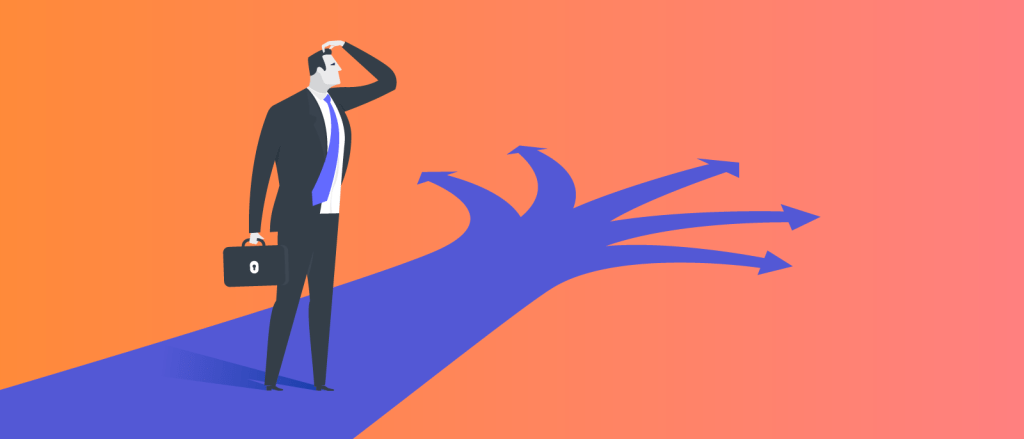
What’s the first impression you want to give people?
Hurca! - Stock Adobe
The first impression you give someone feels simple.

A glance, a phrase, the slight tilt of your voice as it tries to decide whether to sound confident or careful. But beneath that moment sits a truth most people never notice. It may be easy forget that others never gain awareness of the full architecture you are. Rather, a moment of awareness is simply one frame in a long sequence, and your brain rushes to stitch these frames together so you can believe there is a solid self living behind your eyes.

Identity is not what we think. I understand it as a continuity the brain desperately creates from separate moments to make sense of the movement of our lives. Neuroscientist Anil Seth calls this a controlled hallucination. The mind fills the gaps so you do not feel the gaps. It connects the flicker of one second to another until the whole thing seems unbroken, like a film reel running just fast enough to appear real.

We like to believe we are consistent people. Yet the research on memory says otherwise. We are creatures of reconstruction. Every remembered version of yourself is edited, packaged for memory, and rearranged. The brain rewrites the story so you can wake up each morning and believe today follows yesterday. This introduces a unique conundrum. Rather than storing identity, we regenerate it every day.

So when someone asks what first impression you want to give, the real question is much, much stranger, and it sounds something like this:

Which version of yourself do you choose to step into the next moment of your life? Which frame do you choose as the doorway?

This is where things shift from science to philosophy. Time feels like a flowing river, but psychologists who study chronostasis suggest that much of time is perception layered on top of uncertainty. The brain inserts its own continuity to prevent us from feeling the world as a collection of tiny, isolated pulses. If we experienced pure discontinuity, we would lose our sense of self within days.

Identity is the story your brain tells so you can stay afloat.

And yet there is something quite beautiful in that. If the self is an invention, it means you are not trapped by whatever story you once believed. You have a say in how the next frame develops. The first impression you offer someone is a creative act rather than a performance. It is the moment you decide which what stays, and what goes.

The poet Ocean Vuong once wrote that memory is a story we carry in order to survive. I think identity is similar. A living thing. An ongoing choice. A narrative held together not by perfect accuracy but by the desire to be understood.

So when someone meets you for the first time, they encounter a glimpse. A soft outline of a self that is always shifting. You might wish people could see the fuller version of you, the one that carries all your experiences and contradictions and small private joys. But this gentle incompleteness is part of what makes human connection meaningful. We meet one another through keyholes. We will never know the full interior, so we stay curious, listening. We keep evolving our impression of each other.

The mind protects us from the terror of a fractured reality by mashing together all the sense-datum we receive each day into something that seems continuous. Our task is just to participate in that creation with care and to let ourselves change while accepting that others will only ever see fragments.

Identity behaves a little like starlight. From a distance you see a single shimmer and assume it is the whole story. If you could travel closer, you would find a roaring furnace made of collisions, and pressure, and centuries of change. The light you see from afar, while seemingly false, is simply the only version that can cross the distance. It gives you a place to aim your attention.

A first impression works the same way. It is the part of you that travels. The part that reaches others first. The person you are is not the glow but the whole constellation of experiences that shaped it. And the self beneath all of that, the one even you struggle to map, is the vast system of forces and history that the mind is still learning to name.

The good thing about all this is that identity does not need to be solved. You do not have to know exactly who you are to live as someone real. You can be in motion, gathering pieces, setting others down, changing shape without warning. For you were never meant to be a statue.

Even scientists who study memory admit that the brain edits and revises and rearranges our story. If the mind keeps rewriting you, then you are allowed to participate in that creation. You are allowed to change your mind about yourself. You are allowed to hold uncertainty without feeling lost.

There is nothing weak about that. There is nothing broken about being unfinished.

Identity is a conversation between what made you and what you choose next. It is a bridge you are always building, even when the blueprint is unclear. The gaps are not failures. The gaps are invitations. They ask you to imagine, to choose, to become.

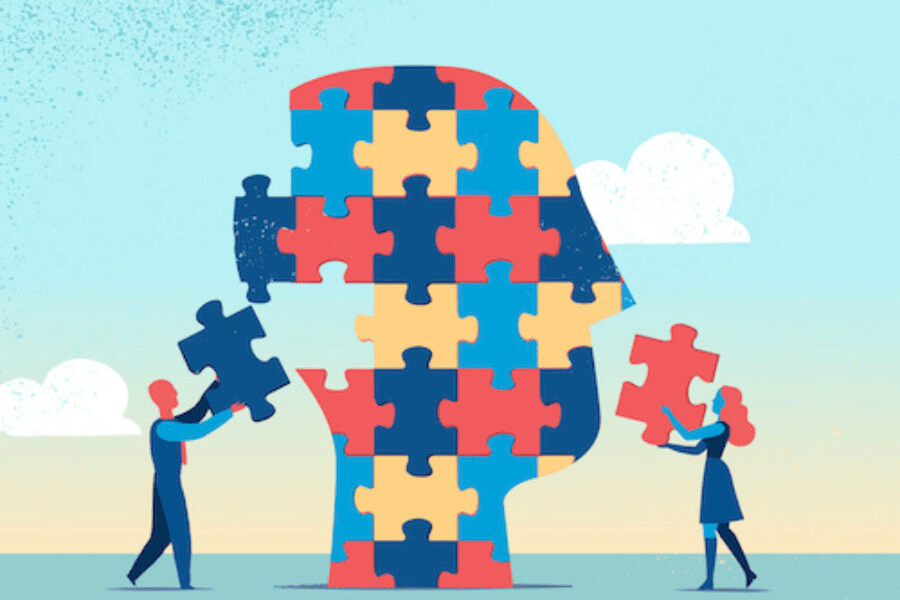
And maybe that is the real beauty. We are not defined by the parts we cannot explain. Instead, we are defined by the meaning we learn to create from them. Every time you step forward, you add a piece to your ever-growing puzzle. It does not matter if you don’t see the full picture yet, because, truth is, life wasn’t made to make sense from the inside.

So if you feel unfinished, good. It means there is space to grow toward a self that feels honest. It means you still have room for new light. It means the story is unfolding and you are awake inside it.

You are allowed to be a work in progress. You are allowed to be a constellation still forming. You are allowed to discover who you are by living, not by knowing.

And that is enough.


Written by Mason Lai, a California high schooler.
The Neuroscience of Decision Fatigue: Why Choosing Dinner Feels Impossible Sometimes

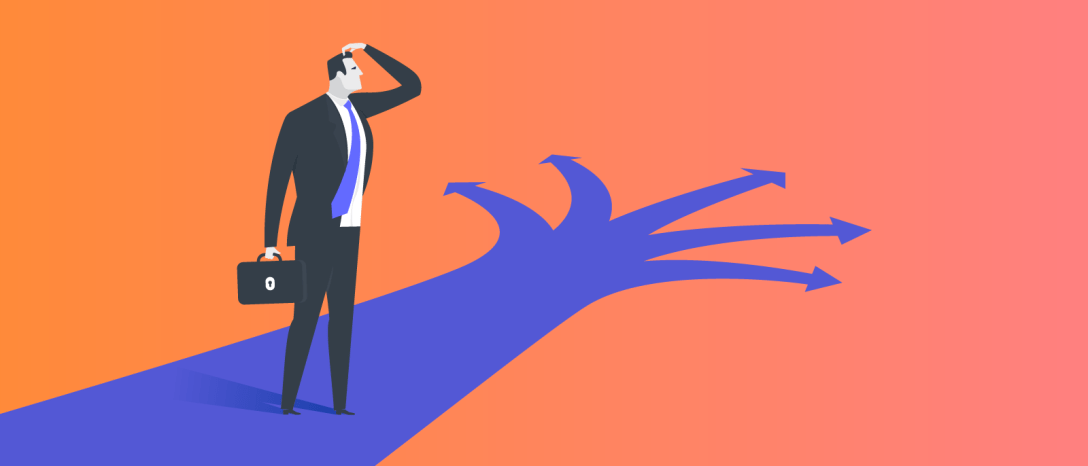
You open the fridge, determined to make something healthy. Ten minutes later, you’re staring at leftovers, wondering if cereal counts as dinner.

It’s not laziness or indecision, it’s biology. Every choice you make throughout the day, from what to wear to which email to answer first, draws from a limited supply of mental energy. By evening, your brain is running on fumes.

This invisible drain, known as decision fatigue, reveals something fascinating about how the human brain works. At it’s core, decision fatigue is not a failure of willpower but a natural consequence of how our neurons process choices. The problem is that modern life was not built with that biology in mind.

Understanding decision fatigue is not simply about improving productivity; it is about recognizing the biological limits of human cognition in a world that demands constant engagement.

The Brain’s Energy Economy

The human brain weighs roughly three pounds but consumes nearly 20% of the body’s energy at rest (Raichle & Gusnard, 2002). Most of this energy supports synaptic activity, which is the electrochemical communication between neurons we need for thought and judgement.

The prefrontal cortex, responsible for executive functions such as reasoning and self-control, is particularly energy-intensive. When glucose levels decline in this region, the brain’s capacity for self-regulation and decision-making drops sharply (Gailliot et al., 2007). Neuroscientist Matthew Lieberman describes this as a “neural budget” that depletes with use. Neural budget is a concept that many struggle with because they believe willpower will be enough for difficult tasks and maintaining drive throughout extended periods.

Every choice, even trivial ones like selecting a meal, engages these same neural pathways. As the day progresses, neurons in the prefrontal cortex communicate less efficiently, and the brain shifts from deliberate reasoning to what psychologists call heuristic processing, defined as simpler, faster decision-making strategies (Kahneman, 2011).

The Psychology of Overchoice

Furthermore, modern environments amplify this biologically induced limit of decision-making capacity. Psychologist Barry Schwartz famously described this as “The Paradox of Choice”. Essentially, the more options we face, the more anxious and dissatisfied we become (Schwartz, 2004).

Research at Stanford University found that individuals confronted with extensive choices, such as 24 flavors of jam, were significantly less likely to make a purchase than those offered only six options (Iyengar & Lepper, 2000). Each additional alternative increases cognitive load and prolongs the decision process, drawing more energy from an already taxed brain.

Unlike physical exhaustion, decision fatigue builds invisibly. It often manifests as irritability, procrastination, or emotional numbness. These are the quiet symptoms of a brain that has simply made too many choices.

The Dopamine Trap

Dopamine, the neurotransmitter responsible for motivation and reward, also plays a role in this cycle. Each decision completed, no matter how small, triggers a small release of dopamine, reinforcing the behavior (Berridge & Kringelbach, 2015). But when the brain faces an unrelenting stream of micro-decisions (for me, notifications, texts, playlists, which task to start first), its dopamine system becomes desensitized.

This desensitization blurs the line between meaningful and trivial choices, flattening emotional reward and leaving us less motivated. Satisfaction flatlines to dull routine, an effect researchers call hedonic adaptation (Brickman & Campbell, 1971). Thus, even enjoyable activities, like choosing what to eat out, begin to feel burdensome.

Modern Life as a Cognitive Overload Experiment

From an evolutionary perspective, the human brain evolved for scarcity, not abundance. Early humans only had to make a few high-stakes decisions per day: when to hunt, where to seek shelter, whom to trust. But today, an average person makes hundreds of decisions before noon. (Albeit not very high-stakes ones, but we are fooled into believing that they are.)

Cognitive neuroscientist Daniel Levitin argues that “each shift in attention sets off metabolic processes that deplete the brain’s neural resources.” (Levitin, 2014) In essence, the constant switching of modern life between countless microtasks induces a continuous state of mental taxation.

Modernity, then, has become a sort of cognitive overload experiment with us as the subjects. As a result, we are fatigued, less creative, less empathetic, and less patient overall. Our higher-order cognition is becoming subtly eroded.

The Case for Cognitive Minimalism

Emerging research suggests that the antidote to decision fatigue is not more efficency, but fewer choices. Cognitive minimalism, the deliberate simplification of daily decisions, conserves neural energy for more meaningful cognitive work (Goyal et al., 2018).

Small interventions, such as automating low-stakes tasks, like Einstein or Steve Jobs wearing the same outfits every day, can significantly reduce cognitive load. This aligns with neural conservation theory: the idea that the brain strategically limits effort to preserve long-term function (Kurzban et al., 2013).

Conclusion: When Simplicity Becomes Intelligence

In popular culture, especially among teenagers and young adults, mental endurance is often glorified as a sign of strength. The ability to “push through” fatigue, multitask endlessly, and make rapid decisions is frequently mistaken for resilience. Yet neuroscience paints a different picture.

Decision fatigue is more than a productivity challenge; it is a reflection of how our cognitive systems evolved. The mechanisms that once helped us survive now collide with an environment of endless stimulation.

This misunderstanding matters. Many young people internalize the idea that slowing down is a weakness, that stepping back means falling behind. In reality, the opposite is true. Rest, constraint, and deliberate choice are not escapes from mental rigor but expressions of it. Each time we choose less, whether by limiting options, simplifying routines, or pausing before the next decision, we conserve cognitive energy and restore clarity.

Ultimately, the neuroscience of decision fatigue reveals an overlooked truth: wisdom is not measured by how much we do, but by how thoughtfully we choose what to do next.


References

Berridge, K. C., & Kringelbach, M. L. (2015). Pleasure systems in the brain. Neuron, 86(3), 646–664.
Brickman, P., & Campbell, D. T. (1971). Hedonic relativism and planning the good society. Adaptation-level theory, 287–302.
Gailliot, M. T., Baumeister, R. F., DeWall, C. N., et al. (2007). Self-control relies on glucose as a limited energy source. Journal of Personality and Social Psychology, 92(2), 325–336.
Goyal, M., Singh, S., Sibinga, E. M. S., et al. (2018). Meditation programs for psychological stress and well-being. JAMA Internal Medicine, 174(3), 357–368.
Iyengar, S. S., & Lepper, M. R. (2000). When choice is demotivating. Journal of Personality and Social Psychology, 79(6), 995–1006.
Kahneman, D. (2011). Thinking, Fast and Slow. Farrar, Straus and Giroux.
Kurzban, R., Duckworth, A., Kable, J. W., & Myers, J. (2013). An opportunity cost model of subjective effort and task performance. Behavioral and Brain Sciences, 36(6), 661–726.
Levitin, D. J. (2014). The Organized Mind: Thinking Straight in the Age of Information Overload. Dutton.
Raichle, M. E., & Gusnard, D. A. (2002). Appraising the brain’s energy budget. PNAS, 99(16), 10237–10239.
Schwartz, B. (2004). The Paradox of Choice: Why More Is Less. HarperCollins.


Written by Mason Lai, a student researcher exploring the intersection of neuroscience, psychology, and modern life. Passionate about translating complex ideas into clear, human insights.