

The Philosophy of Calvin and Hobbes

Daily writing prompt
What’s your favorite cartoon?

Calvin doesn’t so much move across the page as erupt onto it. Like a small cyclone with boundless imagination and a staggering refusal to conform. Hobbes, on the other side, meets him with wit and affection and a philosophical steadiness that Calvin never quite attains. Their world often flashes to and fro between their backyard and the cosmos, between quiet suburbia and impossible fantasy, from nostalgia for a simpler time to the familiar anxieties of the modern psyche. Reading Calvin and Hobbes as a grade schooler, I treated the strip as pure fun and entertainment. But since then I’ve found it to be an unexpectedly rich index of the human condition refracted through Watterson’s lens of ink, play, and the irreverent honesty of a child.

To read the strip carefully is to see ourselves more clearly. To sit with it is to recognize the strange mixture of wonder and failure that defines humanity. And along the way, one gains appreciation for the fact that the most complex issues can sometimes be explained best in the simplest ways.

I. Daring to Imagine

Children imagine constantly, but Calvin imagines with unusual density and velocity. He becomes Spaceman Spiff, fleeing a pop quiz by recasting his teacher as an alien despot. He marshals snowmen into moral allegories and tiny apocalypses, like sculptures of doubt, dread, and delight that speak when he cannot. He turns a cardboard box into a transmogrifier, duplicator, time machine, and philosophical device depending on his mood.

His inner life becomes a kind of atlas for the rest of us. All his shenanigans remind us that our minds are a borderland where both truth and delusion reside. Watterson skips the lengthy dissection of this duality and instead illuminates it through a boy who cannot stop making worlds and a tiger who loves him enough to question each one.

II. Hobbes

Hobbes’s ambiguity is not a gimmick but a crack in the frame through which possibility spills. To adults he is cotton and stitching; to Calvin he is full of pulse and mischief. The strip leaves the interpretation open: imaginary friend, inner voice, independent soul, or evidence of how little adults understand the secret languages of children.

What matters is that Hobbes behaves like someone with a center of gravity all his own. Wry, affectionate, predatory in bursts, he occupies the space of a true companion. He spars verbally, punctures Calvin’s conceits, offers moral hesitation when it’s needed, and leaps into joy without hesitation.

Their relationship rejects the notion that children grow only under adult tutelage. Instead, it suggests that selfhood is a duet formed with the million interactions one has with others. If Calvin is the force of aspiration and unruliness, Hobbes is the counterforce that gives those energies shape.

Identity, the strip suggests, is not born alone.

III. Improvisation

Calvin is not on a quest to discover a “true self”; he is busy inventing one, then discarding it, then inventing again. Tracer Bullet, Stupendous Man, dinosaur, philosopher—each identity a doorway out of confinement and into possibility. Developmental psychology frames this as exploration, but Watterson frames it as resistance, as a refusal to be caught in the nets of labels and expectations. And Calvin is allergic to containment. His improvisational selves critique a culture devoted to categorization and clarity of purpose.

IV. Morality

Calvin’s morality varies in a polar manner. He’s cruel one moment, tender the next, and always capable of mischief. Hobbes compliments him by meeting Calvin where he is rather than where adults believe he should be. This flexible, relational ethics stands in contrast to the rigid structures Calvin resists: punitive school routines, arbitrary rules, the moralism of adults who cannot articulate their own logic.

The strip also subtly challenges the idea that morality should be instilled through rigid rules and external discipline. Calvin resists systems that feel hypocritical or authoritarian, becoming the vessel of Watterson’s critique, aimed not at morality itself but at the ways society attempts to impose it.

V. Emotion

Calvin experiences emotion with almost no moderation. A math test becomes a Lovecraftian nightmare. A snowy hill becomes a site of ecstatic danger. A family camping trip becomes an existential crisis about bugs, cold, and mortality.

Hobbes helps navigate this turbulence all the time. He mocks Calvin’s exaggerated fears, saying, “If you can’t stand the pressure, don’t be a kid”. He acknowledges Calvin’s genuine dread, and dives headlong alongside him into joy, like during their sled rides that inevitably end in catastrophe.

The strip thus critiques a society that rewards emotional suppression. Rather than simply dismissing them for their drama, Calvin’s extremes give insight into the intensity of human feeling, because we were all kids once too.

VI. Critique

Watterson uses Calvin’s world as a mirror held up to our own. School becomes a factory of compliance. Consumer culture turns imagination into merchandise. Suburban repetition blurs days into sameness. The media’s drone replaces attention with noise.

Calvin resists instinctively, questioning rules that feel hollow or hypocritical. His rebellion is imperfect and sometimes destructive, yet it serves to reveal how often adults surrender to systems simply because it is comforting to in their familiarity.

The strip’s critique is timeless not because it predicts the future but because it understands the present. It reminds us to regain some more creativity and sparks in our lives.

VII. What Each Last Panel Leaves Behind

Calvin and Hobbes endures because it captures a surprisingly wide span of human experience through the lens of childhood without romanticizing it.

Yet the strip’s critique of humanity is tempered by its affection for humanity. Yes, we standardize what should remain flexible. We suppress curiosity to maintain order. We abandon play for productivity.

But Watterson’s final panels remind readers that wonder is always recoverable. A sled ride through fresh snow, a philosophical aside about stars, or a simple moment of companionship between boy and tiger reopens the possibility of joy.

Humanity is flawed, and in that, it is—we are—magnificent. In their mischief, in their arguments, in their invented worlds, and in their shared astonishment at being alive, Calvin and Hobbes transports into a realm where we can see our limits, yes, but also respect the forgiveness that encourages us to try again.


Why I Never Make Wishes

I want my experience to guide me, not undeserved freebies.

Daily writing prompt
What is one thing you would change about yourself?

I never make wishes. Not because I lack desire, or because I am practical in a boring sense, but because I want the arc of my life to emerge from my choices and mistakes, not from a free handout from the universe. A wish, by its nature, is a shortcut. An attempt to acquire a future without traversing the path that shapes the self along the way. I am more interested in that shaping than in the outcome itself.

Neuroscience

Neuroscience gives a strange kind of validation to this intuition. The brain learns most deeply through effort through what researchers call prediction error, the moment when expectation meets reality and the system adapts. Dopamine spikes which respond to effortful achievement serve to reinforce connections in the prefrontal cortex and striatum, helping us encode both skill and memory. If wishes were real, they would bypass that process. In a sense, it deprives the nervous system of experience, its most potent teacher.

Consider the subtle difference between a student who struggles for months to master a piece of music and one who magically acquires the ability with a single wish. Both may be able to play the notes, but only the first has undergone the kind of plasticity that transforms the mind. The hippocampus consolidates memories, the motor cortex refines its output, and the brain’s error-monitoring circuits, especially in the anterior cingulate cortex, learn to adapt. The journey, not the shortcut, builds agency. The wish, however tempting, is neurologically inert. Sorry, Aladdin. It asks nothing and returns nothing of value beyond the superficial.

Philosophy

Philosophically, my aversion to wishing aligns with existentialist thought. Kierkegaard wrote about authentic existence as reliant on decision, risk, and reflection. To hand over the authorship of your future, even symbolically, to some external wish is to abdicate the very process that makes life meaningful. Wishing collapses experience into instant gratification; it divorces outcome from effort, action from responsibility. And the self, stripped of its formative trials, becomes lighter, but also emptier.

Stories like Aladdin illustrate a subtle truth about wishing and effort. Aladdin becomes wealthy, meets the princess, and transforms his life, but only because the narrative allows him access to opportunity. In real life, outcomes are far less generous. Contemporary philosophy and social thought remind us that effort alone does not guarantee escape from suffering. Structural barriers, resources, and circumstance shape who can act on their potential and who remains constrained, no matter how hard they try. Refusing shortcuts or wishes is therefore a personal ethical choice because it shapes the kind of person you become, but it cannot erase the imbalances of reality. What we gain from experience is valuable, but it is never distributed evenly.

Therefore, this is not to romanticize suffering or struggle. I am not advocating for unnecessary pain or the glorification of difficulty. But I do believe that real growth requires living inside the friction of consequence and choice.

Ethics

There is also a subtle ethical dimension. When we wish for unearned advantages, we are implicitly saying that we value our own gain above the discipline of learning or merit. By refusing to wish, I am also, in a small way, refusing to outsource my development to luck. I am committing to a life where reward is proportional to engagement, where consequence is respected, and where experience remains my guide.

The Reality

Sometimes life is harder, slower, and less immediately satisfying than it would be if wishes were real. I miss opportunities that might have arrived on a whim. I watch others take shortcuts and sometimes envy their efficiency.

And yet, I want my story written in synapses that were built in response to challenge, not circumstantial fortune. I want my character shaped by choices that left a mark both on my mind and on my life. The wish tempts me with speed, but I choose depth. I choose learning. I choose experience.

Because in the end, it is experience, not magic, that teaches us who we are.


Written by Mason Lai, a California high schooler.

Frames of Identity

Hurca! - Stock Adobe
Daily writing prompt
What’s the first impression you want to give people?
Hurca! - Stock Adobe
The first impression you give someone feels simple.

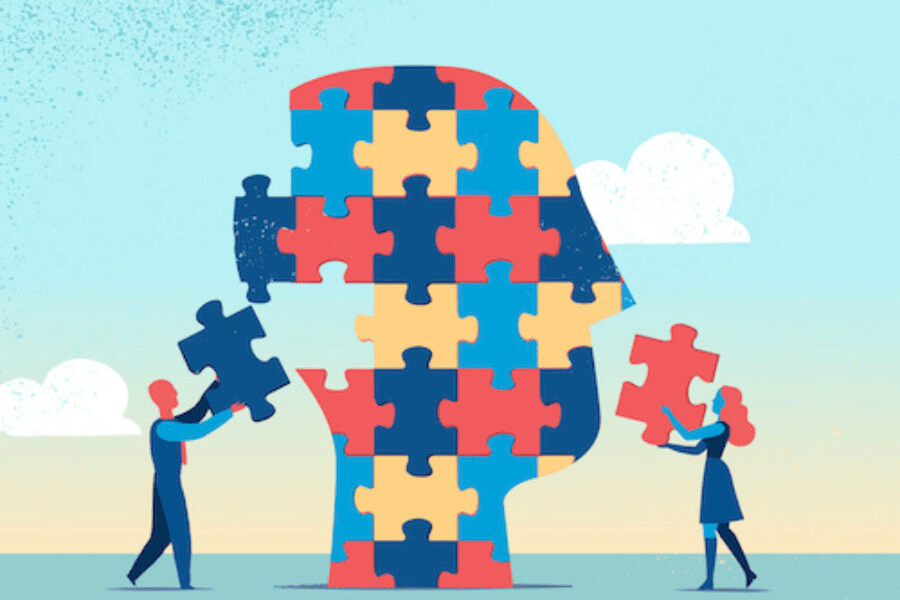
A glance, a phrase, the slight tilt of your voice as it tries to decide whether to sound confident or careful. But beneath that moment sits a truth most people never notice. It may be easy forget that others never gain awareness of the full architecture you are. Rather, a moment of awareness is simply one frame in a long sequence, and your brain rushes to stitch these frames together so you can believe there is a solid self living behind your eyes.

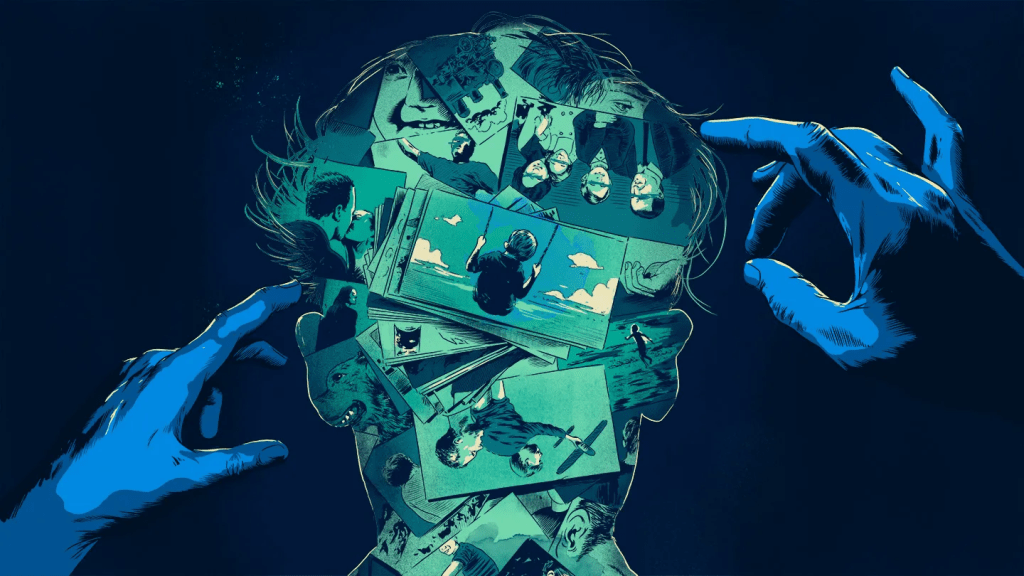
Identity is not what we think. I understand it as a continuity the brain desperately creates from separate moments to make sense of the movement of our lives. Neuroscientist Anil Seth calls this a controlled hallucination. The mind fills the gaps so you do not feel the gaps. It connects the flicker of one second to another until the whole thing seems unbroken, like a film reel running just fast enough to appear real.

We like to believe we are consistent people. Yet the research on memory says otherwise. We are creatures of reconstruction. Every remembered version of yourself is edited, packaged for memory, and rearranged. The brain rewrites the story so you can wake up each morning and believe today follows yesterday. This introduces a unique conundrum. Rather than storing identity, we regenerate it every day.

So when someone asks what first impression you want to give, the real question is much, much stranger, and it sounds something like this:

Which version of yourself do you choose to step into the next moment of your life? Which frame do you choose as the doorway?

This is where things shift from science to philosophy. Time feels like a flowing river, but psychologists who study chronostasis suggest that much of time is perception layered on top of uncertainty. The brain inserts its own continuity to prevent us from feeling the world as a collection of tiny, isolated pulses. If we experienced pure discontinuity, we would lose our sense of self within days.

Identity is the story your brain tells so you can stay afloat.

And yet there is something quite beautiful in that. If the self is an invention, it means you are not trapped by whatever story you once believed. You have a say in how the next frame develops. The first impression you offer someone is a creative act rather than a performance. It is the moment you decide which what stays, and what goes.

The poet Ocean Vuong once wrote that memory is a story we carry in order to survive. I think identity is similar. A living thing. An ongoing choice. A narrative held together not by perfect accuracy but by the desire to be understood.

So when someone meets you for the first time, they encounter a glimpse. A soft outline of a self that is always shifting. You might wish people could see the fuller version of you, the one that carries all your experiences and contradictions and small private joys. But this gentle incompleteness is part of what makes human connection meaningful. We meet one another through keyholes. We will never know the full interior, so we stay curious, listening. We keep evolving our impression of each other.

The mind protects us from the terror of a fractured reality by mashing together all the sense-datum we receive each day into something that seems continuous. Our task is just to participate in that creation with care and to let ourselves change while accepting that others will only ever see fragments.

Identity behaves a little like starlight. From a distance you see a single shimmer and assume it is the whole story. If you could travel closer, you would find a roaring furnace made of collisions, and pressure, and centuries of change. The light you see from afar, while seemingly false, is simply the only version that can cross the distance. It gives you a place to aim your attention.

A first impression works the same way. It is the part of you that travels. The part that reaches others first. The person you are is not the glow but the whole constellation of experiences that shaped it. And the self beneath all of that, the one even you struggle to map, is the vast system of forces and history that the mind is still learning to name.

The good thing about all this is that identity does not need to be solved. You do not have to know exactly who you are to live as someone real. You can be in motion, gathering pieces, setting others down, changing shape without warning. For you were never meant to be a statue.

Even scientists who study memory admit that the brain edits and revises and rearranges our story. If the mind keeps rewriting you, then you are allowed to participate in that creation. You are allowed to change your mind about yourself. You are allowed to hold uncertainty without feeling lost.

There is nothing weak about that. There is nothing broken about being unfinished.

Identity is a conversation between what made you and what you choose next. It is a bridge you are always building, even when the blueprint is unclear. The gaps are not failures. The gaps are invitations. They ask you to imagine, to choose, to become.

And maybe that is the real beauty. We are not defined by the parts we cannot explain. Instead, we are defined by the meaning we learn to create from them. Every time you step forward, you add a piece to your ever-growing puzzle. It does not matter if you don’t see the full picture yet, because, truth is, life wasn’t made to make sense from the inside.

So if you feel unfinished, good. It means there is space to grow toward a self that feels honest. It means you still have room for new light. It means the story is unfolding and you are awake inside it.

You are allowed to be a work in progress. You are allowed to be a constellation still forming. You are allowed to discover who you are by living, not by knowing.

And that is enough.


Written by Mason Lai, a California high schooler.

Why Forgetting Might Be the Most Human Thing We Do

We like to think of memory as proof of who we are. The things we remember become the architecture of our identity, yet beneath that structure lies something quieter, more fragile, and perhaps more vital: the things we forget.

Forgetting has always been treated as the mind’s flaw. A smudge in the lens. But what if it’s the very process that keeps the lens clear?


The Brain’s Gentle Refusal

Neuroscience describes memory as a process of constant revision. The hippocampus stores and reshapes what we take in, then loosens its grip when something no longer serves the present (Squire, 2009).

Researchers in Toronto proposed that the brain forgets to survive. Without that ability, consciousness would collapse under its own weight (Bjork, 1975). We would be unable to tell what matters. The mind that never forgets cannot change its mind.

Every day, thousands of synaptic connections fade, but traces remain as pathways that strengthen when we return to them. The rest dissolve into the white noise of experience, making room for new learning, new meaning, and new selves (Kandel, 2006).


The Poetry of Impermanence

When we revisit a memory, we rewrite it. The scene shifts, colors dull or brighten, dialogue rearranges itself (Loftus, 2005). What we call memory is really imagination tethered to a few truths.

There is something sacred about this impermanence. It protects us from being trapped in yesterday’s version of ourselves. It allows pain to lose its sharpness, allows love to change shape without vanishing. Forgetting is not the opposite of remembering; it is how remembering stays bearable (Hardt, 2008).


A Mind that Learns to Release

To live fully may mean learning to let thoughts fade without resistance. We do not abandon what we forget; we carry the echo of it. The brain understands this long before we do. It edits with care, choosing what we are ready to carry forward (McGaugh, 2000).

Some cultures have long understood this rhythm. The Japanese concept of mono no aware—the bittersweet awareness of impermanence—captures the beauty of forgetting. The ancient Greeks linked memory to Mnemosyne, the mother of the Muses, yet they also revered Lethe, the river of forgetting, as the path to peace (Assmann, 2011).

The self that remembers everything would have no room to grow, and the one who forgets too easily would lose coherence. So we exist between the two in a delicate equilibrium of holding and release.


The Human Art of Letting Go

Forgetting is not a failure of intellect but a condition of grace. It gives us the courage to begin again, to rebuild understanding without the burden of total recall. The mind renews itself in the spaces it empties.

Perhaps this is what it means to be human: to remember just enough to love the world, and to forget just enough to forgive it.


References

Squire, L. R. (2009). Memory and Brain. Oxford University Press.

Assmann, J. (2011). Cultural Memory and Early Civilization: Writing, Remembrance, and Political Imagination. Cambridge University Press.

Bjork, R. A. (1975). Retrieval as a memory modifier: An interpretation of negative recency and related phenomena. In J. Brown (Ed.), Recall and Recognition (pp. 123–144). London: Wiley.

Hardt, O., Nader, K., & Nadel, L. (2008). Decay happens: The role of reconsolidation in memory. Trends in Neurosciences, 31(8), 374–380.

Kandel, E. R. (2006). In Search of Memory: The Emergence of a New Science of Mind. W. W. Norton & Company.

Loftus, E. F. (2005). Planting misinformation in the human mind: A 30-year investigation of the malleability of memory. Learning & Memory, 12(4), 361–366.

McGaugh, J. L. (2000). Memory–a century of consolidation. Science, 287(5451), 248–251.

Schacter, D. L. (2001). The Seven Sins of Memory: How the Mind Forgets and Remembers. Houghton Mifflin.


Written by Mason Lai, a California high schooler.

The Zeigarnik Effect: Why Unfinished Tasks Stay in Your Head

I. The Weight of the Unfinished

You open your phone to check one thing. Fifteen minutes later, you’ve replied to two texts, saved a recipe, watched half a video, and somehow never done what you meant to do in the first place. When you finally put it down, your mind still hums with half-formed tasks.

Our brains were never built to live in open tabs.

Psychologists call this the Zeigarnik Effect: the tendency to remember unfinished or interrupted tasks more vividly than completed ones. It’s why a forgotten to-do list nags at you more than the dozens of items you’ve already crossed off. The mind craves closure the way the lungs crave air.

But because our world never truly ends, that craving becomes a quiet torment.


II. The Zeigarnik Effect: The Brain’s Unfinished Symphony

In the 1920s, psychologist Bluma Zeigarnik noticed something curious: waiters remembered unpaid orders better than completed ones. Once the bill was settled, the details seemed to vanish from memory.

Modern neuroscience has since confirmed her insight. Our brains generate dopaminergic tension when something is incomplete, which is a kind of cognitive itch that pushes us toward resolution. Completion relieves the tension, but only for a moment. Soon the mind looks for the next unfinished thing to chase.

The internet runs on this loop. “Next episode” buttons, red notification dots, infinite scrolls, and each one a tiny cliffhanger engineered to keep us suspended in the half-finished.


III. Decision Fatigue: The Cost of Constant Choice

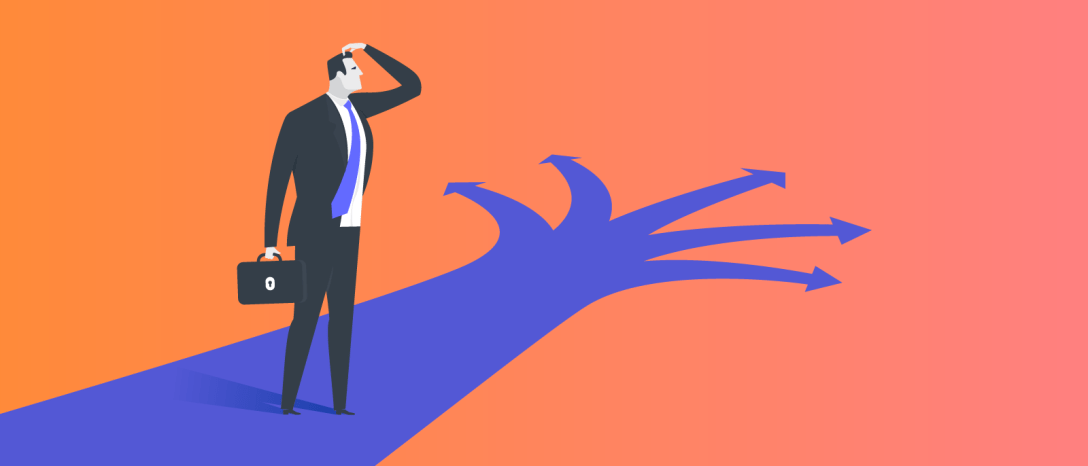
Every unfinished thought competes for energy. Add a thousand small choices, what to wear, text, eat, or watch, and the brain begins to tire. The result is decision fatigue, the invisible tax of modern life.

Research by Roy Baumeister and colleagues shows that every decision draws from the same cognitive pool we use for focus and self-control. As the day goes on, that pool drains.

We call it burnout or lack of motivation, but really it’s just the cost of too many open tabs.
Every half-done task is a leak in the mind’s attention, and we are slowly running dry.


IV. The Digital Age: Infinite Loops, Finite Minds

Our devices have become machines for fragmentation.

Psychologists describe something called cognitive residue, the trace of attention left on a task even after we’ve moved on. Each switch between apps or thoughts leaves behind a faint echo, blurring our focus until nothing feels whole.

This state of half-presence has a name: psychological entropy. It’s the discomfort that arises when the mind’s order dissolves into chaos. Modern media feeds that entropy, keeping us suspended in the tension of what’s next.

In the economy of attention, our unfinished thoughts have become the most valuable commodity.


V. Creativity and the Gift of the Unfinished

Not all incompletion is a curse. The same tension that drives distraction can also spark creativity.

Writers, scientists, and musicians have long relied on the “productive pause”, defined as the act of stepping away to let the subconscious take over. Neuroscience calls this the incubation effect, and it’s tied to the default mode network, the system that activates when we rest, wander, or daydream.

Unfinished ideas incubate. They evolve in silence. They grow roots while we sleep or walk or stare into space.
To pause is to make room for the unseen work of the mind.


VI. The Youth Paradox: Overstimulated and Underslept

For teens and young adults, this cycle is especially intense. School, social media, and constant performance pressure combine into a mental marathon without finish lines. Every notification and assignment becomes another open loop.

This chronic stimulation bleeds into sleep, disrupting the brain’s nightly ritual of sorting, storing, and restoring. During REM and slow-wave sleep, the brain organizes memory, cleanses itself of metabolic waste, and closes the loops we left open during the day.

When sleep is cut short, those loops remain unclosed. We wake up cluttered and foggy in a generation living in mental overdrive yet feeling perpetually unfinished.

We fall asleep simply to tidy the chaos our waking minds cannot.


VII. Closing the Loop: The Art of Choosing Less

The great misconception, especially among the young and ambitious, is that mental toughness means constant motion. In reality, clarity often comes from subtraction.

Choosing less doesn’t equate to caring less. It is just to care more precisely.

We can’t close every loop, nor should we. The goal is to know which ones deserve our attention and which can remain gracefully unfinished. The brain, after all, thrives on both tension and rest. One highly effective habit you can try is to establish some sort of “second brain” for yourself; a notebook, a note-taking app, or a post it that holds all the daily scribbles you realize you must accomplish at some point.

To live deliberately is to choose which threads to tie and which to let drift, trusting that some of life’s most meaningful work happens in the quiet space between.

In a world obsessed with doing more, perhaps the wisest act is simply to finish less, but in doing so, finish more fully.


Written by Mason Lai, a California high schooler.

The Neuroscience of Decision Fatigue: Why Choosing Dinner Feels Impossible Sometimes

You open the fridge, determined to make something healthy. Ten minutes later, you’re staring at leftovers, wondering if cereal counts as dinner.

It’s not laziness or indecision, it’s biology. Every choice you make throughout the day, from what to wear to which email to answer first, draws from a limited supply of mental energy. By evening, your brain is running on fumes.

This invisible drain, known as decision fatigue, reveals something fascinating about how the human brain works. At it’s core, decision fatigue is not a failure of willpower but a natural consequence of how our neurons process choices. The problem is that modern life was not built with that biology in mind.

Understanding decision fatigue is not simply about improving productivity; it is about recognizing the biological limits of human cognition in a world that demands constant engagement.

The Brain’s Energy Economy

The human brain weighs roughly three pounds but consumes nearly 20% of the body’s energy at rest (Raichle & Gusnard, 2002). Most of this energy supports synaptic activity, which is the electrochemical communication between neurons we need for thought and judgement.

The prefrontal cortex, responsible for executive functions such as reasoning and self-control, is particularly energy-intensive. When glucose levels decline in this region, the brain’s capacity for self-regulation and decision-making drops sharply (Gailliot et al., 2007). Neuroscientist Matthew Lieberman describes this as a “neural budget” that depletes with use. Neural budget is a concept that many struggle with because they believe willpower will be enough for difficult tasks and maintaining drive throughout extended periods.

Every choice, even trivial ones like selecting a meal, engages these same neural pathways. As the day progresses, neurons in the prefrontal cortex communicate less efficiently, and the brain shifts from deliberate reasoning to what psychologists call heuristic processing, defined as simpler, faster decision-making strategies (Kahneman, 2011).

The Psychology of Overchoice

Furthermore, modern environments amplify this biologically induced limit of decision-making capacity. Psychologist Barry Schwartz famously described this as “The Paradox of Choice”. Essentially, the more options we face, the more anxious and dissatisfied we become (Schwartz, 2004).

Research at Stanford University found that individuals confronted with extensive choices, such as 24 flavors of jam, were significantly less likely to make a purchase than those offered only six options (Iyengar & Lepper, 2000). Each additional alternative increases cognitive load and prolongs the decision process, drawing more energy from an already taxed brain.

Unlike physical exhaustion, decision fatigue builds invisibly. It often manifests as irritability, procrastination, or emotional numbness. These are the quiet symptoms of a brain that has simply made too many choices.

The Dopamine Trap

Dopamine, the neurotransmitter responsible for motivation and reward, also plays a role in this cycle. Each decision completed, no matter how small, triggers a small release of dopamine, reinforcing the behavior (Berridge & Kringelbach, 2015). But when the brain faces an unrelenting stream of micro-decisions (for me, notifications, texts, playlists, which task to start first), its dopamine system becomes desensitized.

This desensitization blurs the line between meaningful and trivial choices, flattening emotional reward and leaving us less motivated. Satisfaction flatlines to dull routine, an effect researchers call hedonic adaptation (Brickman & Campbell, 1971). Thus, even enjoyable activities, like choosing what to eat out, begin to feel burdensome.

Modern Life as a Cognitive Overload Experiment

From an evolutionary perspective, the human brain evolved for scarcity, not abundance. Early humans only had to make a few high-stakes decisions per day: when to hunt, where to seek shelter, whom to trust. But today, an average person makes hundreds of decisions before noon. (Albeit not very high-stakes ones, but we are fooled into believing that they are.)

Cognitive neuroscientist Daniel Levitin argues that “each shift in attention sets off metabolic processes that deplete the brain’s neural resources.” (Levitin, 2014) In essence, the constant switching of modern life between countless microtasks induces a continuous state of mental taxation.

Modernity, then, has become a sort of cognitive overload experiment with us as the subjects. As a result, we are fatigued, less creative, less empathetic, and less patient overall. Our higher-order cognition is becoming subtly eroded.

The Case for Cognitive Minimalism

Emerging research suggests that the antidote to decision fatigue is not more efficency, but fewer choices. Cognitive minimalism, the deliberate simplification of daily decisions, conserves neural energy for more meaningful cognitive work (Goyal et al., 2018).

Small interventions, such as automating low-stakes tasks, like Einstein or Steve Jobs wearing the same outfits every day, can significantly reduce cognitive load. This aligns with neural conservation theory: the idea that the brain strategically limits effort to preserve long-term function (Kurzban et al., 2013).

Conclusion: When Simplicity Becomes Intelligence

In popular culture, especially among teenagers and young adults, mental endurance is often glorified as a sign of strength. The ability to “push through” fatigue, multitask endlessly, and make rapid decisions is frequently mistaken for resilience. Yet neuroscience paints a different picture.

Decision fatigue is more than a productivity challenge; it is a reflection of how our cognitive systems evolved. The mechanisms that once helped us survive now collide with an environment of endless stimulation.

This misunderstanding matters. Many young people internalize the idea that slowing down is a weakness, that stepping back means falling behind. In reality, the opposite is true. Rest, constraint, and deliberate choice are not escapes from mental rigor but expressions of it. Each time we choose less, whether by limiting options, simplifying routines, or pausing before the next decision, we conserve cognitive energy and restore clarity.

Ultimately, the neuroscience of decision fatigue reveals an overlooked truth: wisdom is not measured by how much we do, but by how thoughtfully we choose what to do next.


References

Berridge, K. C., & Kringelbach, M. L. (2015). Pleasure systems in the brain. Neuron, 86(3), 646–664.
Brickman, P., & Campbell, D. T. (1971). Hedonic relativism and planning the good society. Adaptation-level theory, 287–302.
Gailliot, M. T., Baumeister, R. F., DeWall, C. N., et al. (2007). Self-control relies on glucose as a limited energy source. Journal of Personality and Social Psychology, 92(2), 325–336.
Goyal, M., Singh, S., Sibinga, E. M. S., et al. (2018). Meditation programs for psychological stress and well-being. JAMA Internal Medicine, 174(3), 357–368.
Iyengar, S. S., & Lepper, M. R. (2000). When choice is demotivating. Journal of Personality and Social Psychology, 79(6), 995–1006.
Kahneman, D. (2011). Thinking, Fast and Slow. Farrar, Straus and Giroux.
Kurzban, R., Duckworth, A., Kable, J. W., & Myers, J. (2013). An opportunity cost model of subjective effort and task performance. Behavioral and Brain Sciences, 36(6), 661–726.
Levitin, D. J. (2014). The Organized Mind: Thinking Straight in the Age of Information Overload. Dutton.
Raichle, M. E., & Gusnard, D. A. (2002). Appraising the brain’s energy budget. PNAS, 99(16), 10237–10239.
Schwartz, B. (2004). The Paradox of Choice: Why More Is Less. HarperCollins.


Written by Mason Lai, a student researcher exploring the intersection of neuroscience, psychology, and modern life. Passionate about translating complex ideas into clear, human insights.

A life without music

Daily writing prompt
What would your life be like without music?

Last week, I stopped listening to music in the car. Then I cut it out when I was studying. Eventually, I stopped listening altogether.

Not because I’m insane, but because I wanted to run a little experiment. I wondered how my mind would fill the silence. Could I sit without a soundtrack to my life? Could I stand the stillness? I’ve always used music as background as something to keep my thoughts company, to fill the time in between main acts.

Sitting alone in a mental room with nothing but my own thoughts, a new kind of music emerged. The birds outside my window sang louder than I ever remembered, chirping their little hearts out. I felt the hum of the motor each morning, the whoosh of air as I accelerated down empty roads. Walking, I heard the rustling of trees above and the crunch of my feet on leaves.

It’s strange to realize that there are so many little things that we fail to notice simply because we’ve become so accustomed to them. But by leaving my Airpods at home and turning off the radio, I found joy in noticing.

Now, I still enjoy listening to music. I still sing like a maniac alone in my car. But it’s comforting to know that these small sounds are always waiting for me to appreciate. Waiting for attention. Waiting for you to open your ears and let the music flow in.

It was always there.

I just wasn’t listening.