
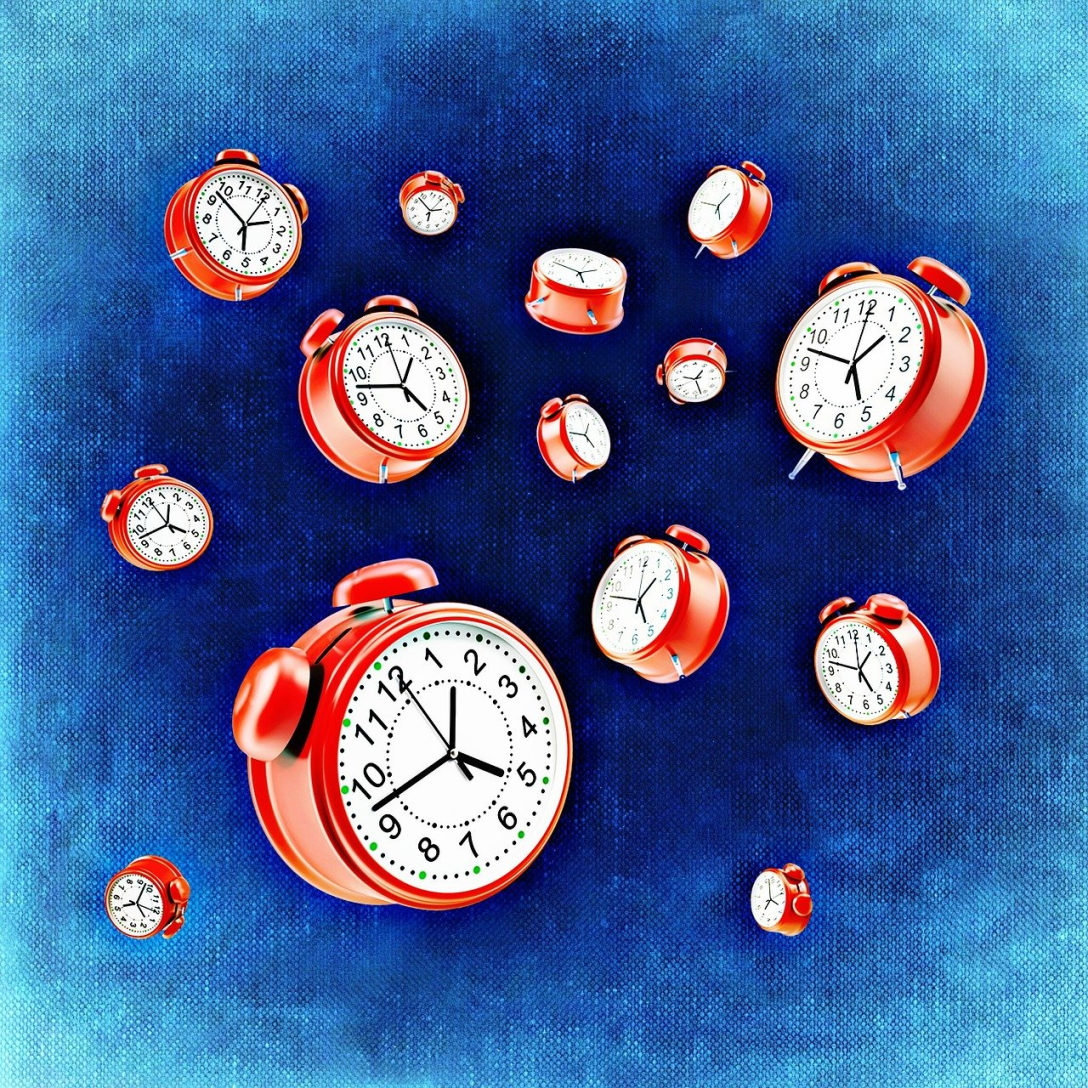


Your body has a schedule, but are you listening?
You do not simply wake when you want to. You wake when your suprachiasmatic nucleus (a cluster of about 20,000 neurons in the hypothalamus) decides your internal clock has finished its nightly cycle (or just when your alarm goes off). You feel alert or sluggish depending on where you fall in a chronotype, a biologically influenced timing profile that shapes energy, mood, cognition, and metabolism.
We talk about morning people and night people as if they are personality traits, but neuroscience urges us to consider them as deep physiological patterns. The surprise is that neither chronotype is objectively “better.” The advantage depends on what modern life demands of you as well as how well your internal rhythms align with those demands.
Here is a more grounded look at what your body is actually doing.
I: What Chronotypes Really Are
Your circadian rhythm runs at about twenty-four hours depending on genetic architecture. The PER3, CLOCK, and BMAL1 genes help determine whether you drift earlier or later. About 40 percent of people lean morning, 30 percent lean evening, and the rest fall somewhere in the middle.
The timing affects more than just sleep. Research from the University of Birmingham and University of Surrey shows that chronotype predicts peak cognitive performance windows with real precision. Morning types perform best earlier in the day, with sharper working memory and mental stability. Evening types peak later, showing enhanced creativity and divergent thinking in the late afternoon and night.
Therefore, what you must consider is whether your schedule matches your internal timing.
II: The Neuroscience of Night Owls
Night owls tend to have delayed melatonin release, slower buildup of homeostatic sleep pressure, and greater resilience to sleep restriction in the late hours. They maintain higher activity in the reward circuitry during the evening, which has both benefits and risks.
Advantages
- Peak creativity in non-standard hours. Several studies (including a 2020 paper in Personality and Individual Differences) show that evening types outperform morning types on divergent thinking tasks when tested in the late hours.
- Flexible attention patterns. EEG recordings show that evening types maintain frontal-parietal connectivity later at night, supporting sustained attention into irregular hours.
- Greater innovation under low structure. Environments that reward autonomy often see night-leaning individuals excel.
Drawbacks
- Social jet lag. If society demands morning schedules, night owls experience chronic circadian misalignment, correlating with higher cortisol levels, impaired glucose regulation, and increased depressive symptoms.
- Cognitive penalties early in the day. Working memory and decision-making dip sharply in morning hours for night types. (I can relate.)
So night owl advantages only fully show up when life allows a shifted schedule. Without that, the biological rhythm becomes a liability.
III: The Neuroscience of Morning Types
Morning people have earlier circadian anchors, in melatonin rising earlier, core body temperature peaking earlier, and cortisol following a strong morning surge that supports task initiation.
Advantages backed by research
- Better synchronization with societal structure. Most schools and jobs begin early. Morning types rarely experience circadian misalignment.
- Improved long-term health outcomes. Studies in Sleep Medicine Reviews link early chronotypes with lower obesity rates, more stable glucose metabolism, and reduced cardiovascular risk.
- More consistent mood regulation. Morning types show stronger connectivity in the frontal control networks early in the day, which buffers emotional volatility.
Costs to consider
- Lower creativity in late-day conditions. Evening testing often reveals reduced flexibility and weaker associative thinking.
- Greater fatigue in late hours. Cognitive performance drops sharply past evening for early chronotypes.
- Rigid energy curves. Morning types sometimes struggle with unpredictable schedule demands, late shifts, or creative tasks that require extended ideation windows.
Morningness thrives in structured worlds. It can falter in environments requiring spontaneity or irregularity in patterns.
IV: So Who Is “Better” Off?
Here is the actual scientific answer:
You do better when the world matches your chronotype.
The most consistent finding across chronobiology is the cost of forcing an internal rhythm to fit an external schedule. Researchers call this circadian misalignment, and it functions like internal jet lag every day. It impairs memory formation, increases inflammation, disrupts metabolic hormones, affects cardiovascular function, and even shifts risk-taking tendencies.
Night owls suffer more because modern society is built around morning expectations, but they thrive in environments where people can choose their hours.
A 2021 University of Melbourne study found that when allowed to select their own sleep–wake windows, evening types perform as well as or better than morning types on executive function tasks.
The question is not “Which type is better?”
The question is “Does your environment punish your biology or support it?”
V: The Nuanced Middle
Most people are intermediate types. The research calls this “neither type” or “mixed chronotype.” They tend to have flexible rhythms and benefit most from stable routines rather than extreme schedules.
The nuance is this:
The best schedule is the one that creates alignment between circadian biology and daily demand.
For some, that is a dawn-focused rhythm. For others, it is a late-evening flow state. For many, it is a middle ground with slight adjustments.
Conclusion: Consider yourself in rhythms
The rhythm in your brain is older than culture, older than electricity, older than cities. It evolved under open skies long before clocks existed. So follow your rhythm.
This does not mean abandoning discipline. It means using discipline to protect the hours that work for you. If your peak focus arrives at 10 p.m., build your creative world around that window. If your clarity comes with first light, guard that time like a resource. Chronotype does not decide what you can achieve. It only decides when your work can feel less like a fight.
Productivity culture loves to shame the tired and praise the early. Neuroscience suggests something gentler: you are not lazy, disorganized, or poorly optimized. You are rhythmic. And when you move with your rhythm instead of against it, getting started on your to-do list becomes less about squeezing output from a fatigued mind and more about allowing your best self to arrive on schedule.
 Mason Lai