“Be empty of worrying. Think of who created thought. Why do you stay in prison when the door is so wide open?” — Rumi
Hey friend, before you jump to the next thing on your list, before you check your phone again, let’s pause here together for a moment. You don’t need to fix anything right now. You don’t need to figure it all out. Just this breath, just this second, is enough.
The world moves fast, and it feels like you have to move just as fast. But right now, you get to rest. Notice your breath. Feel your body. Look around. Even for a minute, you are allowing your mind and heart to catch up.
This is mindfulness without effort. It’s a reminder that you don’t need a perfect meditation routine or a quiet room to be present. Every small pause counts. Every second you give yourself is a gift.
When you’re ready, you can go back to your day. But take a piece of this calm with you. The world can wait a little longer, and your mind will thank you for it.
Think multitasking makes you more productive? Think again. Here’s how switching between tasks is rewiring your brain, lowering focus, and raising stress (and how you can fix it, too).
Let’s be honest.
You probably have five tabs open right now. Maybe a podcast is playing in the background. Maybe you’re half-texting someone.
It feels like you’re getting a lot done, right? Like you’re maximizing your time. But here’s the truth: multitasking isn’t helping you. It’s actually training your brain to lose focus, remember less, and crave constant distraction.
Let’s unpack that quickly.
The Multitasking Myth
You’re not really multitasking. You’re task-switching. Every time you jump from one thing to another, your brain has to pause and reset.
Those tiny switches might only take a second, but they add up. Research shows that constant task-switching can slash productivity by up to 40%.
It’s like trying to run a marathon while stopping to tie your shoes every ten seconds.
What It’s Doing to Your Brain
Here’s where it gets wild. Multitasking physically changes your brain.
Less gray matter: Brain scans show that people who multitask a lot have less gray matter in the part of the brain responsible for focus and emotional control.
Worse memory: You’re training your mind to chase what’s new instead of digging deep into what matters.
More stress: Jumping between tasks keeps your brain in “fight or flight” mode. Cortisol (your stress hormone) stays high, and that drains your energy fast.
So yes, multitasking might make you feel busy, but it’s also reshaping your brain in ways that make it harder to focus later.
How To Reboot Your Focus
Good news is, your brain can rewire itself back.
Try these simple fixes:
Do one thing at a time. Close your extra tabs. Finish a task completely before moving to the next one.
Batch your distractions. Set times to check texts or emails instead of reacting all day long.
Practice deep work. Start with 20 minutes of uninterrupted focus. Add time as your brain adjusts.
Let yourself be bored. Boredom isn’t bad. It’s where creativity and clarity show up.
The Bottom Line
Multitasking isn’t a badge of honor. It’s a brain trap. The more you split your attention, the more your brain adapts to distraction.
If you want to think clearly, remember more, and actually finish what you start, then do one thing at a time.
I’m Not (Yet). But My Brain Is Growing Into Adulthood
When was the first time I truly felt like a grown-up? Honestly? I haven’t. Not fully. I’m a high school senior — standing on the edge of adulthood, but not quite there yet.
What Does It Even Mean to “Feel Like a Grown-Up”?
Is it about knowing exactly what you’re doing? If so, I’m not sure anyone ever really knows.
Maybe it’s about handling life’s challenges calmly, making decisions confidently, or feeling in control. But the truth is that our brains aren’t wired to feel “adult” just because we’ve hit a certain age.
The Brain Doesn’t Care About Legal Milestones
Legally, adulthood starts at 18 or 21, depending on where you live. Culturally, some say adulthood begins at 30. Some say earlier. But neuroscience tells a much more nuanced story.
The Prefrontal Cortex: Your Brain’s CEO
The prefrontal cortex (PFC) is like the CEO of your brain. It manages:
Impulse control
Emotional regulation
Long-term planning
Understanding others’ perspectives
Managing stress and discomfort
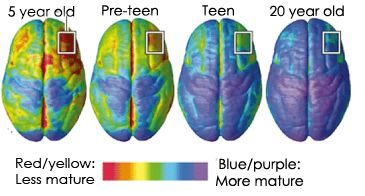
But here’s the thing: The PFC doesn’t fully mature until your late 20s or even early 30s.
Even more importantly, it’s not just the PFC on its own. We need to factor in how well it communicates with emotional centers like the amygdala that keeps improving well into adulthood (Casey, Tottenham & Liston, 2005).
Why Don’t I Always Feel Like an Adult?
Because feeling like an adult isn’t about your age or your achievements. It’s about your brain’s wiring and how your mind manages emotions and decisions.
What Happens When You Do?
Neuroscientifically speaking, it’s when your prefrontal cortex takes the lead and calms your amygdala in a process known as top-down regulation.
This means you regulate your own emotional response, which allows you to be fully present and supportive.
Dr. Dan Siegel calls this vertical integration: when higher brain functions sync harmoniously with emotional and physiological systems, creating balance and resilience.
This also ties into the dual-systems theory, which explains the balance between our fast, emotional “hot” brain and slower, thoughtful “cool” brain.
Adulthood Is a Process, Not a Moment
There are no fireworks or instant transformation.
Neurologically, adulting is about:
Neural integration — brain circuits learning to communicate and cooperate better.
Flexibility under pressure — choosing thoughtful responses over impulsive reactions.
Emotional presence — staying grounded even when things get tough.
The Takeaway
I’m not fully grown-up. Maybe you aren’t either.
Sometimes, my brain does act like it’s ready. And these quiet, uncelebrated moments are proof that adulthood is less a destination and more a gradual, ongoing process.
References
Siegel, D. J. (2012). The Developing Mind: How Relationships and the Brain Interact to Shape Who We Are.
Casey, B. J., Tottenham, N., & Liston, C. (2005). Imaging the developing brain: what have we learned about cognitive development? Trends in Cognitive Sciences, 9(3), 104–110.
“It is not enough to be busy. So are the ants. The question is: what are we busy about?” — Henry David Thoreau, Walden
I’ve been thinking about this a lot lately, how we’re always doing something. Scrolling, replying, running errands, checking notifications, planning the next step in our lives. There are no breaks in the modern way of life. Sometimes even when we try to slow down, our minds are still running at the same speed.
The weird part? Most of the time, I don’t even know what I’m chasing. This feeling is probably universal, right? (unless you’re totally unhinged, in which case… congrats?) Like you’re ticking off boxes, but you’re not sure where that list came from in the first place?
The other night I sat on my porch just for a few minutes with no phone, no agenda. Just sitting. I noticed the wind in the trees, a neighbor’s dog barking, the way the air felt a little cooler than usual. It wasn’t dramatic. No thunderbolt revelations. But I felt present in a such a way that it was almost a miracle.
Moments like those have made me realize that we were never built to be machines.
Yes, working hard has it’s place. But not all the time.
And definitely not at the cost of being alive to your own life.
I’ve made an effort to treat slower days and slower moments as the essential times they are. The little things, those things that give life its flavor (like smiling at someone in the morning, or the way your tea smells, or the color of the sky) are just as much a part of life as the big things we constantly chase.
The slow moments are where you digest the rest of your life.
So next time you’re wondering what to do, consider:













 Mason Lai