

Inside Out: The Discipline of Feeling

Daily writing prompt
When are you most happy?

Pixar’s Inside Out is often praised for making emotions legible, by color-coding them, naming them, and placing them neatly at their respective spots at a control panel. While it may be easy to watch the movie and believe its message is the value of emotional mastery, this surface clarity reveals a more unsettling argument. Inside Out attempts instead to reveal the value of emotional tolerance. Its deepest claim is not that happiness comes from managing feelings well, but that constant contradiction of emotion is necessary to create identity.

I. Continuity

Joy begins the film as the keeper of continuity. She treats Riley’s inner life as something to be curated, and protected from contamination. Sadness, in her view, corrodes life. If sadness touches a memory, the memory changes, so Joy fears this potential narrative fracture. However, this fear is prevalent in modern culture. We believe happiness to be stability; we believe it to be a consistent mood, a smooth trajectory. Self-help language also reinforces this fantasy by encouraging us to “protect our peace” as though peace were a fragile artifact rather than a dynamic process. At the beginning of the movie, Joy embodies this impulse, believing that if the right emotions remain in charge, the self will remain intact.

II. Sadness

But Inside Out dismantles this belief. When Sadness touches Riley’s memories, they don’t crack or fracture; rather, they deepen. Riley’s joyful recollections of childhood play become tinged with grief, but not because the joy was false; that grief comes from the memories belonging to a time that cannot be recovered, something we have all experienced. The memory gains depth and complexity, and with that comes narrative truth. What Joy interprets as damage is really just maturation.

The film suggests that unpleasant emotions like sadness are necessary to complete meaning. Only through sadness can experience remain emotionally legible over time. Without it, memories become artifacts, forever frozen, incapable of accommodating change. Riley’s crisis emerges when her emotional system can no longer pretend that continuity is possible. Moving cities disrupt her internal story. Her old sources of meaning, her friends, routines, and landscapes, shift apart. And the attempt to remain cheerful under these conditions produces emotional turmoil.

III. Growing

The ultimate resolution to this crisis is not the restoration of Joy’s authority, but a deeper understanding of the emotional hierarchy. When Sadness is allowed to speak, Riley’s pain becomes shareable. The problem isn’t solved, but her parents can help because the problem has been named.

In this sense, Inside Out offers a corrective view to a culture obsessed with emotional optimization. It suggests that unlike popular belief, psychological health is not achieved by minimizing negative states, but by allowing them to rise up to construct meaning. The film implies that identity is a dynamic system that must remain open to revision.

IV. Conclusion

The film ends with memories that shimmer with multiple emotional hues, refusing closure. Riley’s inner life becomes more difficult to map out, but it becomes more real. Every emotion evolves together. If Inside Out has a lesson, it is not that sadness is good, or that joy is naive. The lesson lies in the fact that a self that insists on feeling only one thing at a time will eventually lose the ability to feel anything honestly at all. Emotional maturity, like narrative truth, requires the courage to let experiences change us. Even if it’s hard. Even if it disrupts the story we carry of ourselves. Because to live is to keep becoming, again and again.


The Philosophy of Calvin and Hobbes

Daily writing prompt
What’s your favorite cartoon?

Calvin doesn’t so much move across the page as erupt onto it. Like a small cyclone with boundless imagination and a staggering refusal to conform. Hobbes, on the other side, meets him with wit and affection and a philosophical steadiness that Calvin never quite attains. Their world often flashes to and fro between their backyard and the cosmos, between quiet suburbia and impossible fantasy, from nostalgia for a simpler time to the familiar anxieties of the modern psyche. Reading Calvin and Hobbes as a grade schooler, I treated the strip as pure fun and entertainment. But since then I’ve found it to be an unexpectedly rich index of the human condition refracted through Watterson’s lens of ink, play, and the irreverent honesty of a child.

To read the strip carefully is to see ourselves more clearly. To sit with it is to recognize the strange mixture of wonder and failure that defines humanity. And along the way, one gains appreciation for the fact that the most complex issues can sometimes be explained best in the simplest ways.

I. Daring to Imagine

Children imagine constantly, but Calvin imagines with unusual density and velocity. He becomes Spaceman Spiff, fleeing a pop quiz by recasting his teacher as an alien despot. He marshals snowmen into moral allegories and tiny apocalypses, like sculptures of doubt, dread, and delight that speak when he cannot. He turns a cardboard box into a transmogrifier, duplicator, time machine, and philosophical device depending on his mood.

His inner life becomes a kind of atlas for the rest of us. All his shenanigans remind us that our minds are a borderland where both truth and delusion reside. Watterson skips the lengthy dissection of this duality and instead illuminates it through a boy who cannot stop making worlds and a tiger who loves him enough to question each one.

II. Hobbes

Hobbes’s ambiguity is not a gimmick but a crack in the frame through which possibility spills. To adults he is cotton and stitching; to Calvin he is full of pulse and mischief. The strip leaves the interpretation open: imaginary friend, inner voice, independent soul, or evidence of how little adults understand the secret languages of children.

What matters is that Hobbes behaves like someone with a center of gravity all his own. Wry, affectionate, predatory in bursts, he occupies the space of a true companion. He spars verbally, punctures Calvin’s conceits, offers moral hesitation when it’s needed, and leaps into joy without hesitation.

Their relationship rejects the notion that children grow only under adult tutelage. Instead, it suggests that selfhood is a duet formed with the million interactions one has with others. If Calvin is the force of aspiration and unruliness, Hobbes is the counterforce that gives those energies shape.

Identity, the strip suggests, is not born alone.

III. Improvisation

Calvin is not on a quest to discover a “true self”; he is busy inventing one, then discarding it, then inventing again. Tracer Bullet, Stupendous Man, dinosaur, philosopher—each identity a doorway out of confinement and into possibility. Developmental psychology frames this as exploration, but Watterson frames it as resistance, as a refusal to be caught in the nets of labels and expectations. And Calvin is allergic to containment. His improvisational selves critique a culture devoted to categorization and clarity of purpose.

IV. Morality

Calvin’s morality varies in a polar manner. He’s cruel one moment, tender the next, and always capable of mischief. Hobbes compliments him by meeting Calvin where he is rather than where adults believe he should be. This flexible, relational ethics stands in contrast to the rigid structures Calvin resists: punitive school routines, arbitrary rules, the moralism of adults who cannot articulate their own logic.

The strip also subtly challenges the idea that morality should be instilled through rigid rules and external discipline. Calvin resists systems that feel hypocritical or authoritarian, becoming the vessel of Watterson’s critique, aimed not at morality itself but at the ways society attempts to impose it.

V. Emotion

Calvin experiences emotion with almost no moderation. A math test becomes a Lovecraftian nightmare. A snowy hill becomes a site of ecstatic danger. A family camping trip becomes an existential crisis about bugs, cold, and mortality.

Hobbes helps navigate this turbulence all the time. He mocks Calvin’s exaggerated fears, saying, “If you can’t stand the pressure, don’t be a kid”. He acknowledges Calvin’s genuine dread, and dives headlong alongside him into joy, like during their sled rides that inevitably end in catastrophe.

The strip thus critiques a society that rewards emotional suppression. Rather than simply dismissing them for their drama, Calvin’s extremes give insight into the intensity of human feeling, because we were all kids once too.

VI. Critique

Watterson uses Calvin’s world as a mirror held up to our own. School becomes a factory of compliance. Consumer culture turns imagination into merchandise. Suburban repetition blurs days into sameness. The media’s drone replaces attention with noise.

Calvin resists instinctively, questioning rules that feel hollow or hypocritical. His rebellion is imperfect and sometimes destructive, yet it serves to reveal how often adults surrender to systems simply because it is comforting to in their familiarity.

The strip’s critique is timeless not because it predicts the future but because it understands the present. It reminds us to regain some more creativity and sparks in our lives.

VII. What Each Last Panel Leaves Behind

Calvin and Hobbes endures because it captures a surprisingly wide span of human experience through the lens of childhood without romanticizing it.

Yet the strip’s critique of humanity is tempered by its affection for humanity. Yes, we standardize what should remain flexible. We suppress curiosity to maintain order. We abandon play for productivity.

But Watterson’s final panels remind readers that wonder is always recoverable. A sled ride through fresh snow, a philosophical aside about stars, or a simple moment of companionship between boy and tiger reopens the possibility of joy.

Humanity is flawed, and in that, it is—we are—magnificent. In their mischief, in their arguments, in their invented worlds, and in their shared astonishment at being alive, Calvin and Hobbes transports into a realm where we can see our limits, yes, but also respect the forgiveness that encourages us to try again.

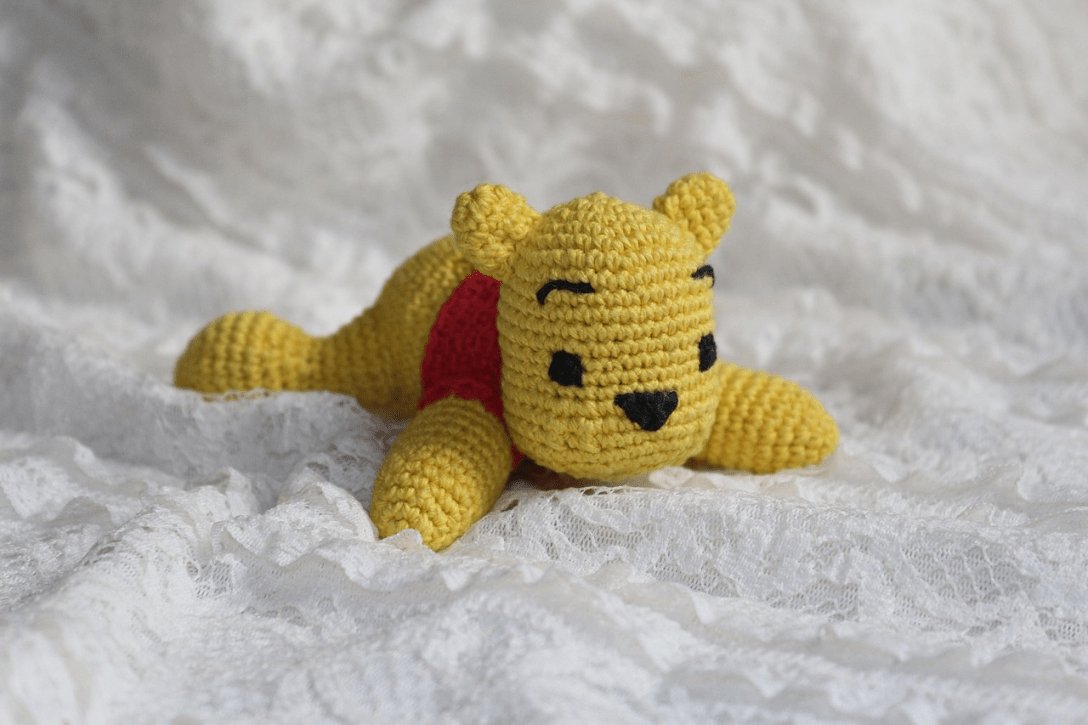
Winnie the Pooh and the Art of Being Fully Alive

https://pixabay.com/photos/bear-winnie-the-pooh-toy-2982809/

Daily writing prompt
What’s your favorite cartoon?

What a bear with very little brain can teach us about consciousness, mindfulness, and the ethics of care

At first glance, Pooh Bear seems simple. He walks slowly, he loves honey, and he forgets things. That’s it. Nothing complicated, nothing dramatic. And yet, the more you watch him, the more you notice: there’s a quiet wisdom in the way he inhabits his world.

Not wisdom in the “sage on a mountaintop” sense. Wisdom in the way he pays attention. The way he interacts with friends or navigates the small ups and downs of life.

The Power of Paying Attention

Pooh’s adventures are funny, but they also reveal a surprising truth about attention. Floating on a balloon to steal honey, he’s completely absorbed in the task, oblivious to how absurd it looks. Neuroscience tells us that attention is a finite resource.

We can’t multitask perfectly, and our brains are constantly prioritizing what matters. Pooh doesn’t “practice mindfulness” or meditate; he just throws himself into what’s in front of him. And he doesn’t overthink it. In doing so, he shows us how simple focus makes life richer.

And then there’s his forgetfulness. When Pooh tries to help Eeyore find his tail, he forgets details and causes a small ruckus. According to cognitive science, forgetting is normal. Research suggests that our brains prune memories to prevent overload and allow for more mental bandwidth for other things.

Care Without Drama

Pooh’s ethics are quiet. Checking on Piglet during a storm or helping friends in small ways, he makes the most of small actions rather than grand gestures.

Philosophers call this relational ethics, or care practiced in the moment rather than in theory. Pooh isn’t a moral model; he’s just kind because it feels natural. His friendships emphasize that being a good person is about the tiny, consistent ways we attend to others.

The Simple Joy of Desire

Pooh loves honey. It’s intense, sometimes compulsive, and it drives many of his adventures. From the perspective of affective neuroscience, desire and reward shape mood.

By grounding his happiness in something that he can get everyday (honey!), he lives a steady and reliable existence; he avoids the entrapment of the novel and the grand. In a world obsessed with achievement, Pooh’s satisfaction is a call to anchor our emotional lives in something familiar.

Lessons Without Preaching

Pooh, to put it simply, lives. The Hundred Acre Wood shows us that small acts of attention and care matter, that imperfection is human. And above all, that ordinary life can be magical.

You don’t think of a sage or an ideal when you think of Pooh Bear. But he sure is a good guide, a reminder that contentment often comes not from striving to be perfect, but from noticing the little things and caring too.

In his gentle simplicity there lies a lesson modern life sometimes makes us forget: you don’t need a lot to live well, you just need to be fully present for the small, sweet moments that surround you.


Written by Mason Lai, a California high schooler.

Why I Never Make Wishes

I want my experience to guide me, not undeserved freebies.

Daily writing prompt
What is one thing you would change about yourself?

I never make wishes. Not because I lack desire, or because I am practical in a boring sense, but because I want the arc of my life to emerge from my choices and mistakes, not from a free handout from the universe. A wish, by its nature, is a shortcut. An attempt to acquire a future without traversing the path that shapes the self along the way. I am more interested in that shaping than in the outcome itself.

Neuroscience

Neuroscience gives a strange kind of validation to this intuition. The brain learns most deeply through effort through what researchers call prediction error, the moment when expectation meets reality and the system adapts. Dopamine spikes which respond to effortful achievement serve to reinforce connections in the prefrontal cortex and striatum, helping us encode both skill and memory. If wishes were real, they would bypass that process. In a sense, it deprives the nervous system of experience, its most potent teacher.

Consider the subtle difference between a student who struggles for months to master a piece of music and one who magically acquires the ability with a single wish. Both may be able to play the notes, but only the first has undergone the kind of plasticity that transforms the mind. The hippocampus consolidates memories, the motor cortex refines its output, and the brain’s error-monitoring circuits, especially in the anterior cingulate cortex, learn to adapt. The journey, not the shortcut, builds agency. The wish, however tempting, is neurologically inert. Sorry, Aladdin. It asks nothing and returns nothing of value beyond the superficial.

Philosophy

Philosophically, my aversion to wishing aligns with existentialist thought. Kierkegaard wrote about authentic existence as reliant on decision, risk, and reflection. To hand over the authorship of your future, even symbolically, to some external wish is to abdicate the very process that makes life meaningful. Wishing collapses experience into instant gratification; it divorces outcome from effort, action from responsibility. And the self, stripped of its formative trials, becomes lighter, but also emptier.

Stories like Aladdin illustrate a subtle truth about wishing and effort. Aladdin becomes wealthy, meets the princess, and transforms his life, but only because the narrative allows him access to opportunity. In real life, outcomes are far less generous. Contemporary philosophy and social thought remind us that effort alone does not guarantee escape from suffering. Structural barriers, resources, and circumstance shape who can act on their potential and who remains constrained, no matter how hard they try. Refusing shortcuts or wishes is therefore a personal ethical choice because it shapes the kind of person you become, but it cannot erase the imbalances of reality. What we gain from experience is valuable, but it is never distributed evenly.

Therefore, this is not to romanticize suffering or struggle. I am not advocating for unnecessary pain or the glorification of difficulty. But I do believe that real growth requires living inside the friction of consequence and choice.

Ethics

There is also a subtle ethical dimension. When we wish for unearned advantages, we are implicitly saying that we value our own gain above the discipline of learning or merit. By refusing to wish, I am also, in a small way, refusing to outsource my development to luck. I am committing to a life where reward is proportional to engagement, where consequence is respected, and where experience remains my guide.

The Reality

Sometimes life is harder, slower, and less immediately satisfying than it would be if wishes were real. I miss opportunities that might have arrived on a whim. I watch others take shortcuts and sometimes envy their efficiency.

And yet, I want my story written in synapses that were built in response to challenge, not circumstantial fortune. I want my character shaped by choices that left a mark both on my mind and on my life. The wish tempts me with speed, but I choose depth. I choose learning. I choose experience.

Because in the end, it is experience, not magic, that teaches us who we are.


Written by Mason Lai, a California high schooler.

The Hardest Decision I Ever Made Was to Walk Away From the Life Everyone Expected of Me

https://pixabay.com/photos/stormtrooper-star-wars-lego-storm-2899982/
Daily writing prompt
What’s the hardest decision you’ve ever had to make? Why?

People assume the hardest decisions are big and dramatic. Breakups, career pivots, college choices.
Mine did not look like any of that.

It was quiet. Almost invisible from the outside.

The hardest decision I ever made was to stop living the version of myself other people seemed to expect.

It sounds simple. Let me tell you, it was not.


1. Your Brain Fights Change More Than You Think

Identity feels personal, but the brain has a strong influence because it likes patterns, predictability, familiar routines.

When I began realizing I needed to change in a real way, not just adjust a few habits, I felt this heavy resistance. A kind of internal message that said, “Do not move.”

It took me a long time to understand that the voice urging me to stay the same wasn’t some kind of subconscious wisdom.
It was just my brain protecting what it already knew.


2. Philosophy Saw This Long Before Modern Science

Kierkegaard wrote about people living as copies rather than originals. It sounded dramatic when I first read it, but eventually I realized I was quietly doing exactly that.

Psychologists now call it having a self-authored identity.
To me, it simply felt like waking up and realizing the path I was on no longer felt like mine.

There was no big turning point.
Just small moments, such as:

  • a class that suddenly felt wrong
  • conversations on Halloween night where I felt like I was acting
  • drifting from people I still cared about but no longer matched

It did not feel brave; rather, it felt like grief.


3. The Decision Happened in a Very Ordinary Moment

There was no epiphany.
Just me, sitting at my desk late at night, staring at a blank document and realizing I could not keep pretending.

I wanted something different.
Something I could not describe yet.
Something that did not fit the script I had been following.

The choice was simple but painful.
Stay where I understood who I was, or move toward a version of myself I had not met yet.

Both options hurt, but that’s how I knew it mattered.

Eventually the resistance eased, not completely, but just enough.


4. What Leaving Actually Felt Like

Quiet, rather than triumphant or cinematic.

It felt like saying, “Alright. I guess it is time.”

I did not suddenly become confident.
I simply felt aligned in a way that surprised me.

The fear stayed, but it shifted.
It stopped blocking me and started pushing from behind, almost like momentum.

I realized I did not need to feel ready.
I only needed to move.


5. What Hard Decisions Really Are

They are not choices between good and bad.
They are choices between familiarity and authenticity.

From the outside, they look small, but on the inside, they rearrange everything.

Choosing yourself, even quietly, reshapes how you think and what you want in an internal renovation.


6. A Question for You

What part of your life is still running on expectations you never agreed to?

And what might happen if you started rewriting that script?

Frames of Identity

Hurca! - Stock Adobe
Daily writing prompt
What’s the first impression you want to give people?
Hurca! - Stock Adobe
The first impression you give someone feels simple.

A glance, a phrase, the slight tilt of your voice as it tries to decide whether to sound confident or careful. But beneath that moment sits a truth most people never notice. It may be easy forget that others never gain awareness of the full architecture you are. Rather, a moment of awareness is simply one frame in a long sequence, and your brain rushes to stitch these frames together so you can believe there is a solid self living behind your eyes.

Identity is not what we think. I understand it as a continuity the brain desperately creates from separate moments to make sense of the movement of our lives. Neuroscientist Anil Seth calls this a controlled hallucination. The mind fills the gaps so you do not feel the gaps. It connects the flicker of one second to another until the whole thing seems unbroken, like a film reel running just fast enough to appear real.

We like to believe we are consistent people. Yet the research on memory says otherwise. We are creatures of reconstruction. Every remembered version of yourself is edited, packaged for memory, and rearranged. The brain rewrites the story so you can wake up each morning and believe today follows yesterday. This introduces a unique conundrum. Rather than storing identity, we regenerate it every day.

So when someone asks what first impression you want to give, the real question is much, much stranger, and it sounds something like this:

Which version of yourself do you choose to step into the next moment of your life? Which frame do you choose as the doorway?

This is where things shift from science to philosophy. Time feels like a flowing river, but psychologists who study chronostasis suggest that much of time is perception layered on top of uncertainty. The brain inserts its own continuity to prevent us from feeling the world as a collection of tiny, isolated pulses. If we experienced pure discontinuity, we would lose our sense of self within days.

Identity is the story your brain tells so you can stay afloat.

And yet there is something quite beautiful in that. If the self is an invention, it means you are not trapped by whatever story you once believed. You have a say in how the next frame develops. The first impression you offer someone is a creative act rather than a performance. It is the moment you decide which what stays, and what goes.

The poet Ocean Vuong once wrote that memory is a story we carry in order to survive. I think identity is similar. A living thing. An ongoing choice. A narrative held together not by perfect accuracy but by the desire to be understood.

So when someone meets you for the first time, they encounter a glimpse. A soft outline of a self that is always shifting. You might wish people could see the fuller version of you, the one that carries all your experiences and contradictions and small private joys. But this gentle incompleteness is part of what makes human connection meaningful. We meet one another through keyholes. We will never know the full interior, so we stay curious, listening. We keep evolving our impression of each other.

The mind protects us from the terror of a fractured reality by mashing together all the sense-datum we receive each day into something that seems continuous. Our task is just to participate in that creation with care and to let ourselves change while accepting that others will only ever see fragments.

Identity behaves a little like starlight. From a distance you see a single shimmer and assume it is the whole story. If you could travel closer, you would find a roaring furnace made of collisions, and pressure, and centuries of change. The light you see from afar, while seemingly false, is simply the only version that can cross the distance. It gives you a place to aim your attention.

A first impression works the same way. It is the part of you that travels. The part that reaches others first. The person you are is not the glow but the whole constellation of experiences that shaped it. And the self beneath all of that, the one even you struggle to map, is the vast system of forces and history that the mind is still learning to name.

The good thing about all this is that identity does not need to be solved. You do not have to know exactly who you are to live as someone real. You can be in motion, gathering pieces, setting others down, changing shape without warning. For you were never meant to be a statue.

Even scientists who study memory admit that the brain edits and revises and rearranges our story. If the mind keeps rewriting you, then you are allowed to participate in that creation. You are allowed to change your mind about yourself. You are allowed to hold uncertainty without feeling lost.

There is nothing weak about that. There is nothing broken about being unfinished.

Identity is a conversation between what made you and what you choose next. It is a bridge you are always building, even when the blueprint is unclear. The gaps are not failures. The gaps are invitations. They ask you to imagine, to choose, to become.

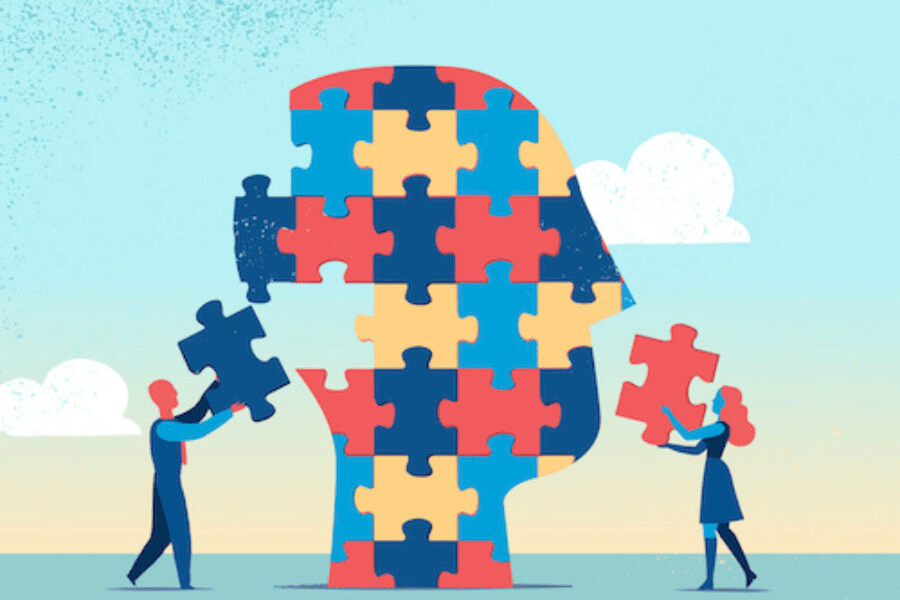
And maybe that is the real beauty. We are not defined by the parts we cannot explain. Instead, we are defined by the meaning we learn to create from them. Every time you step forward, you add a piece to your ever-growing puzzle. It does not matter if you don’t see the full picture yet, because, truth is, life wasn’t made to make sense from the inside.

So if you feel unfinished, good. It means there is space to grow toward a self that feels honest. It means you still have room for new light. It means the story is unfolding and you are awake inside it.

You are allowed to be a work in progress. You are allowed to be a constellation still forming. You are allowed to discover who you are by living, not by knowing.

And that is enough.


Written by Mason Lai, a California high schooler.

How to Rewire Your Brain in the Last 60 Days of 2025

Sixty days left in 2025. That’s enough time to either coast through the end of the year or to reprogram how you think, focus, and act. The truth is, your brain remains remarkably adaptable.

This is not about resolutions. It is about neuroscience and the quiet biological fact that change is built on repetition and reflection.


1. The Myth of the Big Reset

We love the fantasy of transformation: new notebooks, gym sign-ups, the illusion that change begins on command. But real rewiring does not happen that way.

Neuroscience shows growth is not a switch but a slow layering of signals. Every day your brain listens to your behavior and adjusts. Patterns of thought and action, repeated often enough, become automatic pathways. You do not “flip” into a new self. You train your neurons into one.

Mindset shift: Stop thinking in resolutions. Start thinking in repetitions.

The 1% Rule

Improve by one percent each day – one percent more focus, one percent more rest, one percent more presence. After sixty days, that is not sixty percent improvement. Compounded, it is exponential. Neural networks strengthen with consistency, not drama.


2. The Science of Rhythm: Finding Your Neural Schedule

Your perfect day is already coded into your biology. The brain runs on circadian (daily) and ultradian (hourly) rhythms that govern alertness, creativity, and fatigue. Ignoring those rhythms is like rowing against a current: possible, but exhausting.

The Focus Framework

  • Track your natural peaks for three days. Note when your brain feels sharpest and when it fogs.
  • Protect your high-focus window for deep work – writing, studying, thinking.
  • Use low-focus hours for logistical tasks and errands.
  • Rest every 90 minutes to align with attention cycles and help neurotransmitters reset.

Once you align your schedule to your neural rhythm, productivity will come more easily, not just from sheer willpower.


3. The Novelty Principle: Reawakening Dormant Circuits

The brain thrives on surprise. Novelty (new experiences, ideas, or environments) activates dopamine pathways tied to curiosity and learning. When everything feels repetitive, the brain goes into predictive mode and attention fades.

Novelty is not merely entertainment. It is biological nutrition for attention.

Small Ways to Add Novelty

  • Change your study or commute route.
  • Read an author or genre you rarely choose.
  • Listen to a podcast outside your usual subjects.
  • Rearrange your workspace or swap your morning routine.

Each small disruption forces your sensory and motor cortices to re-coordinate, for more whimsy in life.


4. The Attention Economy and the Art of Recovery

Your attention is your most limited neural currency. Every task switch or phone check spends dopamine and glucose, the fuels of focus. Constant context switching leads to micro self-interruption that accumulates fatigue.

The Two-Window Method

  1. Deep Work Window: One 90-minute period daily for immersion. One task, zero notifications.
  2. Restorative Window: 20 minutes of real rest after deep work: walking, breathing, or silent reflection. No screens.

During rest, your brain consolidates learning.


5. Sleep: The Night Shift of the Brain

Sleep is not optional. During deep sleep, brain cleaning processes remove metabolic waste. During REM sleep, emotional and sensory memories get integrated into long-term patterns.

The Rewind Ritual

  • Thirty minutes before bed, dim lights and screens.
  • Write three lines about what you learned or noticed today.
  • Visualize your brain sorting and storing those experiences overnight.

After sixty days, this simple ritual strengthens hippocampal memory consolidation and emotional balance.


6. The Emotional Brain: Reframing Stress

Stress in small doses sharpens focus and motivation; chronic stress is what harms the brain. The trick is to reframe stress as signal, not threat.

The Stress Reframe

  • Name it: say to yourself, “My body is preparing me.”
  • Breathe in for four counts, out for six to activate the calm response.
  • Turn the task into curiosity: ask, “What is this trying to teach me?”

This practice trains the prefrontal cortex to interpret pressure as stimulation. Over time, that narrative becomes automatic and resilience grows at the circuit level.


7. Reflection: The Architecture of Identity

Your brain learns not only from action, but from what it notices about action.

The Nightly Check-In

  • What did I learn today about the world or about myself?
  • What felt meaningful?
  • What drained me, and why?
  • Who made me smile?

Five minutes of nightly journaling rewires self-awareness. You begin to see patterns in the quiet beginning of self-creation.


8. The 60-Day Framework for Lasting Change

Use this structure to make the final sixty days of 2025 transformative without theatrics or burnout.

SystemActionNeural Benefit
FocusOne 90-minute deep work block dailyStrengthens prefrontal control
Recovery20-minute restorative breakResets dopamine and consolidates learning
SleepConsistent bedtime and Rewind RitualEnhances memory and mood stability
NoveltyOne new experience weeklyActivates neuroplasticity
Reflection5-minute nightly journalingStrengthens self-awareness circuits

9. The Quiet Revolution

When the year ends, the world may look the same. But beneath the surface, your brain will have changed. You will return to focus faster. You will respond to stress with more equanimity. You will notice life more clearly.

That is the real miracle of the human brain: it is always becoming. And sixty days is enough time to begin again.

You got this. Now take the steps, no matter how small, and finish the year strong.


Written by Mason Lai, a California high schooler.

Senior Year Crunch Time: The Final Stretch

Daily writing prompt
What have you been working on?
If you’ve been wondering what I’ve been up to lately, here’s the honest answer: college applications.

That’s it. That’s the post.

Okay, not really. But it certainly feels that way. Every day’s been a mix of writing essays, editing essays, thinking about essays, and then trying to remember what I was like as a human before essays existed.


What It’s Taught Me

Weirdly, the process has made me more organized than I’ve ever been. I’ve learned how to actually manage time. It’s an improvement over just making to-do lists that never end. I’ve learned how to tell my own story in a way that feels authentic instead of trying to sound impressive.

And I’ve learned that writing about yourself is harder than any AP class.


The Reality Check

It’s not glamorous. There are nights when I’m staring at my computer at 1 a.m. avoiding cliché words or phrases like the plague. There are days when I want to throw my laptop out the window.

But then there are also those small wins: when a sentence finally clicks, or when a teacher or friend gives you a pep talk.


Why It’s Worth It

Somewhere between the drafts and the deadlines, I’ve realized this isn’t just about getting into a school. It’s about slowing down and figuring out who I actually am when no one’s grading me for it.

So yeah. That’s what I’ve been working on.
A lot of writing.
A lot of reflecting.
And a lot of tea.

Hey friend, be empty of worrying.

“Be empty of worrying. Think of who created thought. Why do you stay in prison when the door is so wide open?”
Rumi

Hey friend, before you jump to the next thing on your list, before you check your phone again, let’s pause here together for a moment. You don’t need to fix anything right now. You don’t need to figure it all out. Just this breath, just this second, is enough.

The world moves fast, and it feels like you have to move just as fast. But right now, you get to rest. Notice your breath. Feel your body. Look around. Even for a minute, you are allowing your mind and heart to catch up.

This is mindfulness without effort. It’s a reminder that you don’t need a perfect meditation routine or a quiet room to be present. Every small pause counts. Every second you give yourself is a gift.

When you’re ready, you can go back to your day. But take a piece of this calm with you. The world can wait a little longer, and your mind will thank you for it.

Until next time.