There is a strange calm that washes over you when lo-fi beats fill your headphones while studying. There is an unspoken connection in a crowded concert hall when thousands sway together. These experiences are more than just beautiful; they are neural. Music has the power to synchronize brain activity within and across individuals, aligning thoughts, emotions, and attention in ways we are only beginning to understand.
Neural Synchronization
Neuroscientists call this neural synchronization. When your brain hears a beat, its neurons start to oscillate in rhythm with it. Note that this is not just happening in your auditory cortex; it spreads to motor regions, the cerebellum, and prefrontal areas involved in focus and expectation.
Even more fascinating, people listening to the same music often show inter-brain synchrony. Studies reveal that their brainwaves can match up in time and frequency, creating a subtle shared experience of connection (Lindenberger et al., 2009; Sänger et al., 2012). In a very real sense, music can make our minds move together.
Binaural Beats & the Brain’s Rhythmic Flexibility
Neural sync isn’t just for concerts. Binaural beats use two slightly different tones, one in each ear, tricking the brain into hearing a third, imagined beat. This auditory illusion can nudge your brain into different rhythms, from alpha waves that calm you to beta waves that sharpen your focus (Lane et al., 1998; Goodin et al., 2012).
Listening to binaural beats in specific frequency ranges can modulate brain states. Alpha-range beats (8–12 Hz) are associated with relaxation, while beta-range beats (13–30 Hz) may enhance focus or alertness (Lane et al., 1998; Goodin et al., 2012). While research is still exploring the effects, the principle is simple: our brains are rhythm machines, and sound is a powerful conductor.
Why It Matters
When our brainwaves align with others through shared sound, the boundaries of self and other blur. The same mechanisms that allow a drummer to keep time also underlie the neural foundations of empathy and cooperation. It explains why music feels social even in solitude. When our neurons align with rhythm, whether in a concert, a quiet practice session, or through binaural beats, we experience a sense of belonging.
Music organizes our inner worlds and aligns them with others, proving that even when we’re alone, our brains are seeking resonance.
References
Garcia-Argibay, M., Santed, M. A., & Reales, J. M. (2019). Efficacy of binaural auditory beats in cognition, anxiety, and pain perception: A meta-analysis. Psychological Research, 83(2), 357–372.
Goodin, P., Wildermuth, L., & Sumners, C. (2012). Binaural beat audio and cognitive performance: A review of the evidence and potential mechanisms. Frontiers in Human Neuroscience, 6, 44.
Lane, J. D., Kasian, S. J., Owens, J. E., & Marsh, G. R. (1998). Binaural auditory beats affect vigilance performance and mood. Physiology & Behavior, 63(2), 249–252.
Large, E. W., & Snyder, J. S. (2009). Pulse and meter as neural resonance. Annals of the New York Academy of Sciences, 1169(1), 46–57.
Lindenberger, U., Li, S.-C., Gruber, W., & Müller, V. (2009). Brains swinging in concert: Cortical phase synchronization while playing guitar. BMC Neuroscience, 10, 22.
Oster, G. (1973). Auditory beats in the brain. Scientific American, 229(4), 94–102.
Sänger, J., Müller, V., & Lindenberger, U. (2012). Intra- and interbrain synchronization and network properties when playing guitar in duets. Frontiers in Human Neuroscience, 6, 312.
Trainor, L. J., & Cirelli, L. (2015). Rhythm and interpersonal synchrony in early social development. Annals of the New York Academy of Sciences, 1337(1), 45–52.
Zatorre, R. J., Chen, J. L., & Penhune, V. B. (2007). When the brain plays music: Auditory–motor interactions in music perception and production. Nature Reviews Neuroscience, 8(7), 547–558.
You open the fridge, determined to make something healthy. Ten minutes later, you’re staring at leftovers, wondering if cereal counts as dinner.
It’s not laziness or indecision, it’s biology. Every choice you make throughout the day, from what to wear to which email to answer first, draws from a limited supply of mental energy. By evening, your brain is running on fumes.
This invisible drain, known as decision fatigue, reveals something fascinating about how the human brain works. At it’s core, decision fatigue is not a failure of willpower but a natural consequence of how our neurons process choices. The problem is that modern life was not built with that biology in mind.
Understanding decision fatigue is not simply about improving productivity; it is about recognizing the biological limits of human cognition in a world that demands constant engagement.
The Brain’s Energy Economy
The human brain weighs roughly three pounds but consumes nearly 20% of the body’s energy at rest (Raichle & Gusnard, 2002). Most of this energy supports synaptic activity, which is the electrochemical communication between neurons we need for thought and judgement.
The prefrontal cortex, responsible for executive functions such as reasoning and self-control, is particularly energy-intensive. When glucose levels decline in this region, the brain’s capacity for self-regulation and decision-making drops sharply (Gailliot et al., 2007). Neuroscientist Matthew Lieberman describes this as a “neural budget” that depletes with use. Neural budget is a concept that many struggle with because they believe willpower will be enough for difficult tasks and maintaining drive throughout extended periods.
Every choice, even trivial ones like selecting a meal, engages these same neural pathways. As the day progresses, neurons in the prefrontal cortex communicate less efficiently, and the brain shifts from deliberate reasoning to what psychologists call heuristic processing, defined as simpler, faster decision-making strategies (Kahneman, 2011).
The Psychology of Overchoice
Furthermore, modern environments amplify this biologically induced limit of decision-making capacity. Psychologist Barry Schwartz famously described this as “The Paradox of Choice”. Essentially, the more options we face, the more anxious and dissatisfied we become (Schwartz, 2004).
Research at Stanford University found that individuals confronted with extensive choices, such as 24 flavors of jam, were significantly less likely to make a purchase than those offered only six options (Iyengar & Lepper, 2000). Each additional alternative increases cognitive load and prolongs the decision process, drawing more energy from an already taxed brain.
Unlike physical exhaustion, decision fatigue builds invisibly. It often manifests as irritability, procrastination, or emotional numbness. These are the quiet symptoms of a brain that has simply made too many choices.
The Dopamine Trap
Dopamine, the neurotransmitter responsible for motivation and reward, also plays a role in this cycle. Each decision completed, no matter how small, triggers a small release of dopamine, reinforcing the behavior (Berridge & Kringelbach, 2015). But when the brain faces an unrelenting stream of micro-decisions (for me, notifications, texts, playlists, which task to start first), its dopamine system becomes desensitized.
This desensitization blurs the line between meaningful and trivial choices, flattening emotional reward and leaving us less motivated. Satisfaction flatlines to dull routine, an effect researchers call hedonic adaptation (Brickman & Campbell, 1971). Thus, even enjoyable activities, like choosing what to eat out, begin to feel burdensome.
Modern Life as a Cognitive Overload Experiment
From an evolutionary perspective, the human brain evolved for scarcity, not abundance. Early humans only had to make a few high-stakes decisions per day: when to hunt, where to seek shelter, whom to trust. But today, an average person makes hundreds of decisions before noon. (Albeit not very high-stakes ones, but we are fooled into believing that they are.)
Cognitive neuroscientist Daniel Levitin argues that “each shift in attention sets off metabolic processes that deplete the brain’s neural resources.” (Levitin, 2014) In essence, the constant switching of modern life between countless microtasks induces a continuous state of mental taxation.
Modernity, then, has become a sort of cognitive overload experiment with us as the subjects. As a result, we are fatigued, less creative, less empathetic, and less patient overall. Our higher-order cognition is becoming subtly eroded.
The Case for Cognitive Minimalism
Emerging research suggests that the antidote to decision fatigue is not more efficency, but fewer choices. Cognitive minimalism, the deliberate simplification of daily decisions, conserves neural energy for more meaningful cognitive work (Goyal et al., 2018).
Small interventions, such as automating low-stakes tasks, like Einstein or Steve Jobs wearing the same outfits every day, can significantly reduce cognitive load. This aligns with neural conservation theory: the idea that the brain strategically limits effort to preserve long-term function (Kurzban et al., 2013).
Conclusion: When Simplicity Becomes Intelligence
In popular culture, especially among teenagers and young adults, mental endurance is often glorified as a sign of strength. The ability to “push through” fatigue, multitask endlessly, and make rapid decisions is frequently mistaken for resilience. Yet neuroscience paints a different picture.
Decision fatigue is more than a productivity challenge; it is a reflection of how our cognitive systems evolved. The mechanisms that once helped us survive now collide with an environment of endless stimulation.
This misunderstanding matters. Many young people internalize the idea that slowing down is a weakness, that stepping back means falling behind. In reality, the opposite is true. Rest, constraint, and deliberate choice are not escapes from mental rigor but expressions of it. Each time we choose less, whether by limiting options, simplifying routines, or pausing before the next decision, we conserve cognitive energy and restore clarity.
Ultimately, the neuroscience of decision fatigue reveals an overlooked truth: wisdom is not measured by how much we do, but by how thoughtfully we choose what to do next.
References
Berridge, K. C., & Kringelbach, M. L. (2015). Pleasure systems in the brain. Neuron, 86(3), 646–664. Brickman, P., & Campbell, D. T. (1971). Hedonic relativism and planning the good society. Adaptation-level theory, 287–302. Gailliot, M. T., Baumeister, R. F., DeWall, C. N., et al. (2007). Self-control relies on glucose as a limited energy source. Journal of Personality and Social Psychology, 92(2), 325–336. Goyal, M., Singh, S., Sibinga, E. M. S., et al. (2018). Meditation programs for psychological stress and well-being. JAMA Internal Medicine, 174(3), 357–368. Iyengar, S. S., & Lepper, M. R. (2000). When choice is demotivating. Journal of Personality and Social Psychology, 79(6), 995–1006. Kahneman, D. (2011). Thinking, Fast and Slow. Farrar, Straus and Giroux. Kurzban, R., Duckworth, A., Kable, J. W., & Myers, J. (2013). An opportunity cost model of subjective effort and task performance. Behavioral and Brain Sciences, 36(6), 661–726. Levitin, D. J. (2014). The Organized Mind: Thinking Straight in the Age of Information Overload. Dutton. Raichle, M. E., & Gusnard, D. A. (2002). Appraising the brain’s energy budget. PNAS, 99(16), 10237–10239. Schwartz, B. (2004). The Paradox of Choice: Why More Is Less. HarperCollins.
Written by Mason Lai, a student researcher exploring the intersection of neuroscience, psychology, and modern life. Passionate about translating complex ideas into clear, human insights.
Think multitasking makes you more productive? Think again. Here’s how switching between tasks is rewiring your brain, lowering focus, and raising stress (and how you can fix it, too).
Let’s be honest.
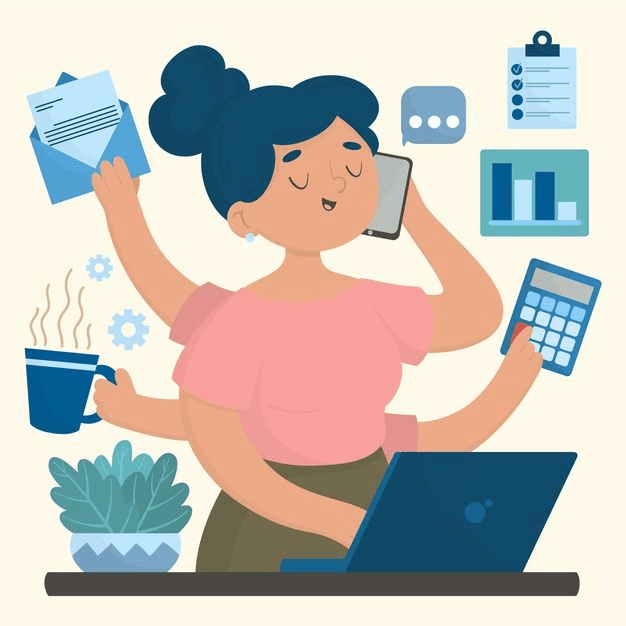
You probably have five tabs open right now. Maybe a podcast is playing in the background. Maybe you’re half-texting someone.
It feels like you’re getting a lot done, right? Like you’re maximizing your time. But here’s the truth: multitasking isn’t helping you. It’s actually training your brain to lose focus, remember less, and crave constant distraction.
Let’s unpack that quickly.
The Multitasking Myth
You’re not really multitasking. You’re task-switching. Every time you jump from one thing to another, your brain has to pause and reset.
Those tiny switches might only take a second, but they add up. Research shows that constant task-switching can slash productivity by up to 40%.
It’s like trying to run a marathon while stopping to tie your shoes every ten seconds.
What It’s Doing to Your Brain
Here’s where it gets wild. Multitasking physically changes your brain.
Less gray matter: Brain scans show that people who multitask a lot have less gray matter in the part of the brain responsible for focus and emotional control.
Worse memory: You’re training your mind to chase what’s new instead of digging deep into what matters.
More stress: Jumping between tasks keeps your brain in “fight or flight” mode. Cortisol (your stress hormone) stays high, and that drains your energy fast.
So yes, multitasking might make you feel busy, but it’s also reshaping your brain in ways that make it harder to focus later.
How To Reboot Your Focus
Good news is, your brain can rewire itself back.
Try these simple fixes:
Do one thing at a time. Close your extra tabs. Finish a task completely before moving to the next one.
Batch your distractions. Set times to check texts or emails instead of reacting all day long.
Practice deep work. Start with 20 minutes of uninterrupted focus. Add time as your brain adjusts.
Let yourself be bored. Boredom isn’t bad. It’s where creativity and clarity show up.
The Bottom Line
Multitasking isn’t a badge of honor. It’s a brain trap. The more you split your attention, the more your brain adapts to distraction.
If you want to think clearly, remember more, and actually finish what you start, then do one thing at a time.
I’m Not (Yet). But My Brain Is Growing Into Adulthood
When was the first time I truly felt like a grown-up? Honestly? I haven’t. Not fully. I’m a high school senior — standing on the edge of adulthood, but not quite there yet.
What Does It Even Mean to “Feel Like a Grown-Up”?
Is it about knowing exactly what you’re doing? If so, I’m not sure anyone ever really knows.
Maybe it’s about handling life’s challenges calmly, making decisions confidently, or feeling in control. But the truth is that our brains aren’t wired to feel “adult” just because we’ve hit a certain age.
The Brain Doesn’t Care About Legal Milestones
Legally, adulthood starts at 18 or 21, depending on where you live. Culturally, some say adulthood begins at 30. Some say earlier. But neuroscience tells a much more nuanced story.
The Prefrontal Cortex: Your Brain’s CEO
The prefrontal cortex (PFC) is like the CEO of your brain. It manages:
Impulse control
Emotional regulation
Long-term planning
Understanding others’ perspectives
Managing stress and discomfort
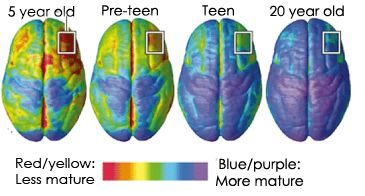
But here’s the thing: The PFC doesn’t fully mature until your late 20s or even early 30s.
Even more importantly, it’s not just the PFC on its own. We need to factor in how well it communicates with emotional centers like the amygdala that keeps improving well into adulthood (Casey, Tottenham & Liston, 2005).
Why Don’t I Always Feel Like an Adult?
Because feeling like an adult isn’t about your age or your achievements. It’s about your brain’s wiring and how your mind manages emotions and decisions.
What Happens When You Do?
Neuroscientifically speaking, it’s when your prefrontal cortex takes the lead and calms your amygdala in a process known as top-down regulation.
This means you regulate your own emotional response, which allows you to be fully present and supportive.
Dr. Dan Siegel calls this vertical integration: when higher brain functions sync harmoniously with emotional and physiological systems, creating balance and resilience.
This also ties into the dual-systems theory, which explains the balance between our fast, emotional “hot” brain and slower, thoughtful “cool” brain.
Adulthood Is a Process, Not a Moment
There are no fireworks or instant transformation.
Neurologically, adulting is about:
Neural integration — brain circuits learning to communicate and cooperate better.
Flexibility under pressure — choosing thoughtful responses over impulsive reactions.
Emotional presence — staying grounded even when things get tough.
The Takeaway
I’m not fully grown-up. Maybe you aren’t either.
Sometimes, my brain does act like it’s ready. And these quiet, uncelebrated moments are proof that adulthood is less a destination and more a gradual, ongoing process.
References
Siegel, D. J. (2012). The Developing Mind: How Relationships and the Brain Interact to Shape Who We Are.
Casey, B. J., Tottenham, N., & Liston, C. (2005). Imaging the developing brain: what have we learned about cognitive development? Trends in Cognitive Sciences, 9(3), 104–110.
One morning during a quiet surf session, one man stood out from the rest. He had a long, white, Gandalf-esque beard that dripped with seawater. Despite being more than 65 years old, he took waves with a grace that could only be mastered with years of his craft. And from that moment on, he was known to me as the legendary Santa Claus of the Sea.
He was graceful. But this image stands in stark contrast to the current dominant narrative of aging.
The Reality of Aging: Physical and Psychological Ailments
Many health professionals are familiar with the list of common aging-related challenges, including:
Sarcopenia (age-related muscle loss)
Impaired balance and proprioception
Increased risk of falls and fractures
Joint degeneration
Reduced cardiovascular endurance
Alongside these physiological changes, we see a rise in mental health challenges:
Social isolation
Depression
Loss of autonomy and identity
Cognitive decline
These factors compound each other. For example, a loss of balance leads to a fall, which results in injury, which leads to hospitalization, immobility, and sometimes institutionalization, which all accelerate decline.
Modern rehabilitation techniques try to interrupt this cycle, but traditional therapy methods, particularly in geriatric care, often rely on repetitive, low-engagement exercises: resistance bands, parallel bars, leg lifts in clinics. These are essential in many cases, but they’re not enough. My grandma was prescribed chair exercises, but I want her to be able to strengthen herself in practical ways.
Adherence is a chronic challenge. Motivation wanes. And much too often, patients disengage.
So what if we reframed therapy? What if we made it joyful?
Surf and Ocean Therapy: Reconnecting Mind, Body, and Environment
Surf therapy is a movement-based, nature-integrated intervention that merges physical rehabilitation with emotional renewal.
It may sound radical, even niche, but it can gain traction for good reason.
Surfing involves:
Dynamic balance — reacting to ever-changing surfaces
Core and limb strength — paddling, popping up, stabilizing
Coordination and reaction time — reading waves, adjusting positions
Cardiovascular exertion
Mental presence — engaging with unpredictability in real time
All of this takes place in a natural environment that stimulates the senses and evokes meaning: the ocean. The ocean is something that soothes the mind, the beach a bonding place for communities, and the water something that reminds people — especially older adults — that they are still capable and evolving.
Evidence Supporting Surf Therapy for Older Adults
Though still an emerging field, several pilot programs and studies are showing promising results — not only for youth and veterans, but also for older adults and people living with chronic conditions.
A few key findings:
Balance & Mobility: A 2019 study on ocean-based activities for older adults found significant improvements in static and dynamic balance over 12 weeks. Gains persisted at a 3-month follow-up.
Mood & Depression: Programs like Waves for Change and Ocean Therapy for Veterans report measurable decreases in depression and anxiety after just 4–6 weeks of sessions.
Social Connection: Group surf sessions foster community — essential for reducing isolation, a major risk factor for early mortality.
Self-Efficacy: Participants describe a new identity: not as “patients,” but as athletes, learners, or adventurers.
In this way, movement that is meaningful is more sustainable than movement that is merely prescribed.
“But Is It Safe?” — Managing Risks with Realism and Responsibility
“Isn’t surfing dangerous for older adults?”
Yes — and no.
All physical activity carries some level of risk. But so does inactivity.
In fact, sedentarism is one of the most dangerous behaviors for aging adults, associated with:
Heart disease and stroke
Type 2 diabetes
Depression
Cognitive decline
Frailty and loss of independence
Surf therapy programs reduce risk by including:
Soft-top boards and padded equipment
Shallow-water options and beach-based sessions
Certified adaptive surf instructors
Physical therapists on-site or in collaboration
Buoyancy aids and wetsuits
Environmental checks (tides, weather, currents)
Gradual progression, from tide pool to open ocean
Most participants start slowly: learning to float, sit on the board, or wade safely. Athleticism isn’t required. Just reconnecting with movement, shedding fear of it, and being open to growing from unfamiliar experiences.
Surf therapy doesn’t replace traditional rehab. It complements it by giving people a reason to get stronger. And even if it’s not surfing specifically, being outside and in the elements is the reward in it of itself.
Beyond the Clinic: Reimagining Geriatric Therapy
The big idea is this:
Therapy doesn’t have to feel like therapy.
It can feel like joy. Like renewal. Like living again.
Healthy movement shouldn’t be limited to lifelong athletes. The myth that older adults are fragile, disinterested, or unwilling is just that — a myth.
The Santa Claus of the Sea isn’t just a surfer. He’s a living contradiction to our ageist expectations.
So understanding that movement if life at any age, we must devise better plans for maintaining movement in seniors. And we can start by inviting more of our elders into the water.




 Mason Lai