Pixar’s Inside Out is often praised for making emotions legible, by color-coding them, naming them, and placing them neatly at their respective spots at a control panel. While it may be easy to watch the movie and believe its message is the value of emotional mastery, this surface clarity reveals a more unsettling argument. Inside Out attempts instead to reveal the value of emotional tolerance. Its deepest claim is not that happiness comes from managing feelings well, but that constant contradiction of emotion is necessary to create identity.
I. Continuity
Joy begins the film as the keeper of continuity. She treats Riley’s inner life as something to be curated, and protected from contamination. Sadness, in her view, corrodes life. If sadness touches a memory, the memory changes, so Joy fears this potential narrative fracture. However, this fear is prevalent in modern culture. We believe happiness to be stability; we believe it to be a consistent mood, a smooth trajectory. Self-help language also reinforces this fantasy by encouraging us to “protect our peace” as though peace were a fragile artifact rather than a dynamic process. At the beginning of the movie, Joy embodies this impulse, believing that if the right emotions remain in charge, the self will remain intact.
II. Sadness
But Inside Out dismantles this belief. When Sadness touches Riley’s memories, they don’t crack or fracture; rather, they deepen. Riley’s joyful recollections of childhood play become tinged with grief, but not because the joy was false; that grief comes from the memories belonging to a time that cannot be recovered, something we have all experienced. The memory gains depth and complexity, and with that comes narrative truth. What Joy interprets as damage is really just maturation.
The film suggests that unpleasant emotions like sadness are necessary to complete meaning. Only through sadness can experience remain emotionally legible over time. Without it, memories become artifacts, forever frozen, incapable of accommodating change. Riley’s crisis emerges when her emotional system can no longer pretend that continuity is possible. Moving cities disrupt her internal story. Her old sources of meaning, her friends, routines, and landscapes, shift apart. And the attempt to remain cheerful under these conditions produces emotional turmoil.
III. Growing
The ultimate resolution to this crisis is not the restoration of Joy’s authority, but a deeper understanding of the emotional hierarchy. When Sadness is allowed to speak, Riley’s pain becomes shareable. The problem isn’t solved, but her parents can help because the problem has been named.
In this sense, Inside Out offers a corrective view to a culture obsessed with emotional optimization. It suggests that unlike popular belief, psychological health is not achieved by minimizing negative states, but by allowing them to rise up to construct meaning. The film implies that identity is a dynamic system that must remain open to revision.
IV. Conclusion
The film ends with memories that shimmer with multiple emotional hues, refusing closure. Riley’s inner life becomes more difficult to map out, but it becomes more real. Every emotion evolves together. If Inside Out has a lesson, it is not that sadness is good, or that joy is naive. The lesson lies in the fact that a self that insists on feeling only one thing at a time will eventually lose the ability to feel anything honestly at all. Emotional maturity, like narrative truth, requires the courage to let experiences change us. Even if it’s hard. Even if it disrupts the story we carry of ourselves. Because to live is to keep becoming, again and again.
What a bear with very little brain can teach us about consciousness, mindfulness, and the ethics of care
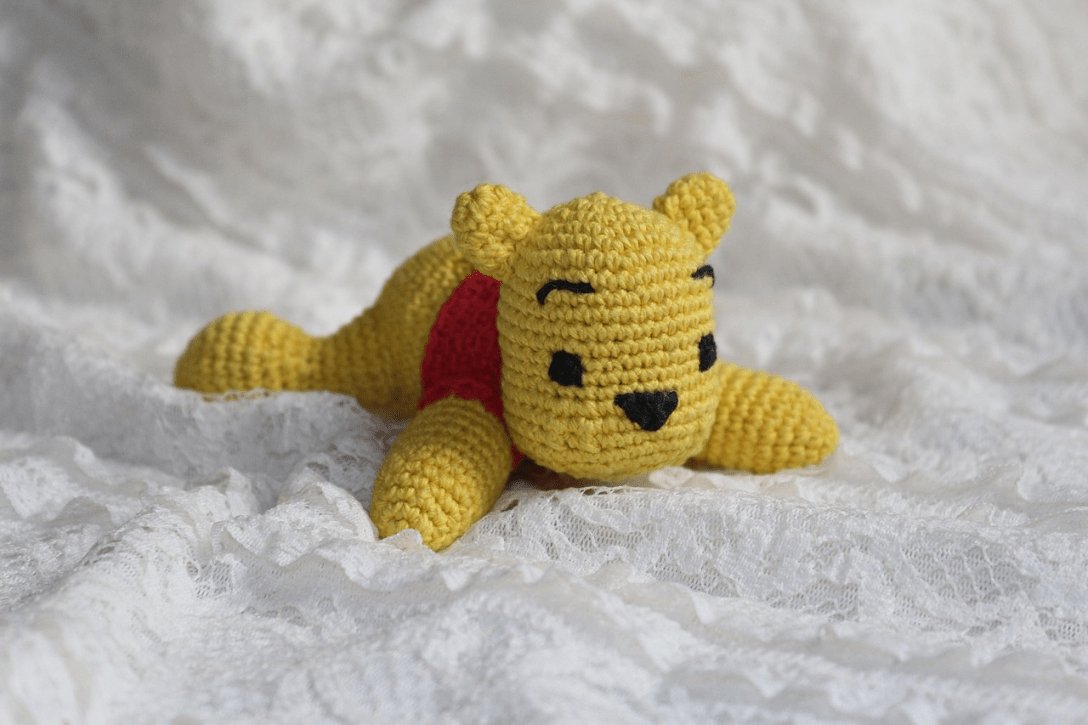
At first glance, Pooh Bear seems simple. He walks slowly, he loves honey, and he forgets things. That’s it. Nothing complicated, nothing dramatic. And yet, the more you watch him, the more you notice: there’s a quiet wisdom in the way he inhabits his world.
Not wisdom in the “sage on a mountaintop” sense. Wisdom in the way he pays attention. The way he interacts with friends or navigates the small ups and downs of life.
The Power of Paying Attention
Pooh’s adventures are funny, but they also reveal a surprising truth about attention. Floating on a balloon to steal honey, he’s completely absorbed in the task, oblivious to how absurd it looks. Neuroscience tells us that attention is a finite resource.
We can’t multitask perfectly, and our brains are constantly prioritizing what matters. Pooh doesn’t “practice mindfulness” or meditate; he just throws himself into what’s in front of him. And he doesn’t overthink it. In doing so, he shows us how simple focus makes life richer.
And then there’s his forgetfulness. When Pooh tries to help Eeyore find his tail, he forgets details and causes a small ruckus. According to cognitive science, forgetting is normal. Research suggests that our brains prune memories to prevent overload and allow for more mental bandwidth for other things.
Care Without Drama
Pooh’s ethics are quiet. Checking on Piglet during a storm or helping friends in small ways, he makes the most of small actions rather than grand gestures.
Philosophers call this relational ethics, or care practiced in the moment rather than in theory. Pooh isn’t a moral model; he’s just kind because it feels natural. His friendships emphasize that being a good person is about the tiny, consistent ways we attend to others.
The Simple Joy of Desire
Pooh loves honey. It’s intense, sometimes compulsive, and it drives many of his adventures. From the perspective of affective neuroscience, desire and reward shape mood.
By grounding his happiness in something that he can get everyday (honey!), he lives a steady and reliable existence; he avoids the entrapment of the novel and the grand. In a world obsessed with achievement, Pooh’s satisfaction is a call to anchor our emotional lives in something familiar.
Lessons Without Preaching
Pooh, to put it simply, lives. The Hundred Acre Wood shows us that small acts of attention and care matter, that imperfection is human. And above all, that ordinary life can be magical.
You don’t think of a sage or an ideal when you think of Pooh Bear. But he sure is a good guide, a reminder that contentment often comes not from striving to be perfect, but from noticing the little things and caring too.
In his gentle simplicity there lies a lesson modern life sometimes makes us forget: you don’t need a lot to live well, you just need to be fully present for the small, sweet moments that surround you.
I never make wishes. Not because I lack desire, or because I am practical in a boring sense, but because I want the arc of my life to emerge from my choices and mistakes, not from a free handout from the universe. A wish, by its nature, is a shortcut. An attempt to acquire a future without traversing the path that shapes the self along the way. I am more interested in that shaping than in the outcome itself.
Neuroscience
Neuroscience gives a strange kind of validation to this intuition. The brain learns most deeply through effort through what researchers call prediction error, the moment when expectation meets reality and the system adapts. Dopamine spikes which respond to effortful achievement serve to reinforce connections in the prefrontal cortex and striatum, helping us encode both skill and memory. If wishes were real, they would bypass that process. In a sense, it deprives the nervous system of experience, its most potent teacher.
Consider the subtle difference between a student who struggles for months to master a piece of music and one who magically acquires the ability with a single wish. Both may be able to play the notes, but only the first has undergone the kind of plasticity that transforms the mind. The hippocampus consolidates memories, the motor cortex refines its output, and the brain’s error-monitoring circuits, especially in the anterior cingulate cortex, learn to adapt. The journey, not the shortcut, builds agency. The wish, however tempting, is neurologically inert. Sorry, Aladdin. It asks nothing and returns nothing of value beyond the superficial.
Philosophy
Philosophically, my aversion to wishing aligns with existentialist thought. Kierkegaard wrote about authentic existence as reliant on decision, risk, and reflection. To hand over the authorship of your future, even symbolically, to some external wish is to abdicate the very process that makes life meaningful. Wishing collapses experience into instant gratification; it divorces outcome from effort, action from responsibility. And the self, stripped of its formative trials, becomes lighter, but also emptier.
Stories like Aladdin illustrate a subtle truth about wishing and effort. Aladdin becomes wealthy, meets the princess, and transforms his life, but only because the narrative allows him access to opportunity. In real life, outcomes are far less generous. Contemporary philosophy and social thought remind us that effort alone does not guarantee escape from suffering. Structural barriers, resources, and circumstance shape who can act on their potential and who remains constrained, no matter how hard they try. Refusing shortcuts or wishes is therefore a personal ethical choice because it shapes the kind of person you become, but it cannot erase the imbalances of reality. What we gain from experience is valuable, but it is never distributed evenly.
Therefore, this is not to romanticize suffering or struggle. I am not advocating for unnecessary pain or the glorification of difficulty. But I do believe that real growth requires living inside the friction of consequence and choice.
Ethics
There is also a subtle ethical dimension. When we wish for unearned advantages, we are implicitly saying that we value our own gain above the discipline of learning or merit. By refusing to wish, I am also, in a small way, refusing to outsource my development to luck. I am committing to a life where reward is proportional to engagement, where consequence is respected, and where experience remains my guide.
The Reality
Sometimes life is harder, slower, and less immediately satisfying than it would be if wishes were real. I miss opportunities that might have arrived on a whim. I watch others take shortcuts and sometimes envy their efficiency.
And yet, I want my story written in synapses that were built in response to challenge, not circumstantial fortune. I want my character shaped by choices that left a mark both on my mind and on my life. The wish tempts me with speed, but I choose depth. I choose learning. I choose experience.
Because in the end, it is experience, not magic, that teaches us who we are.
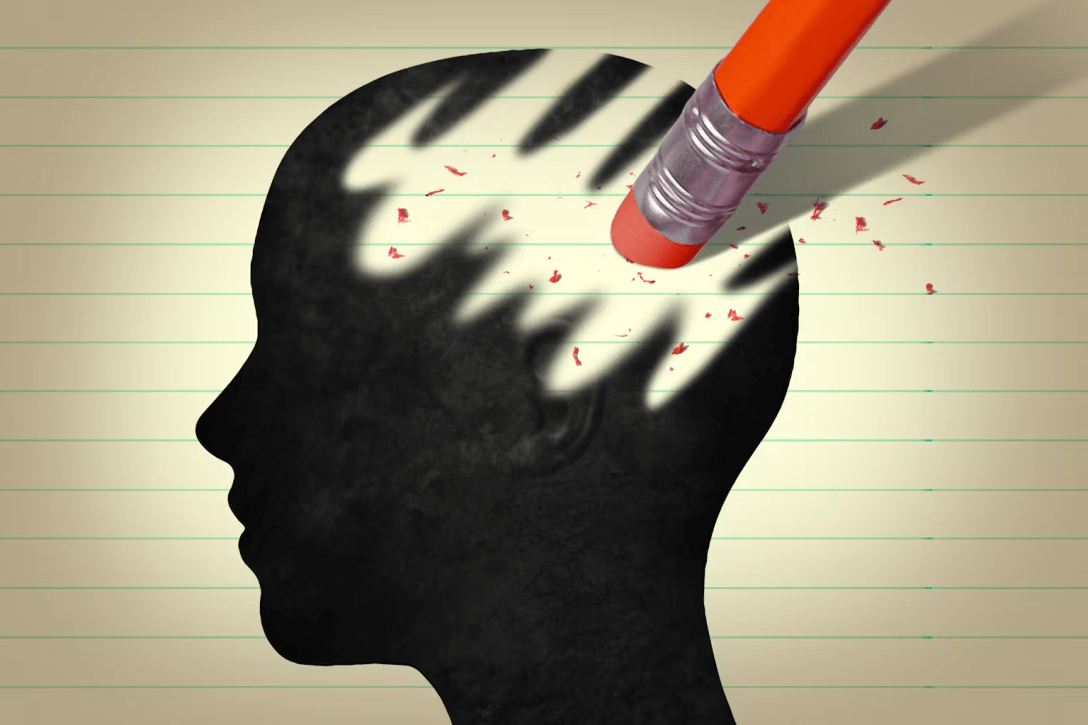
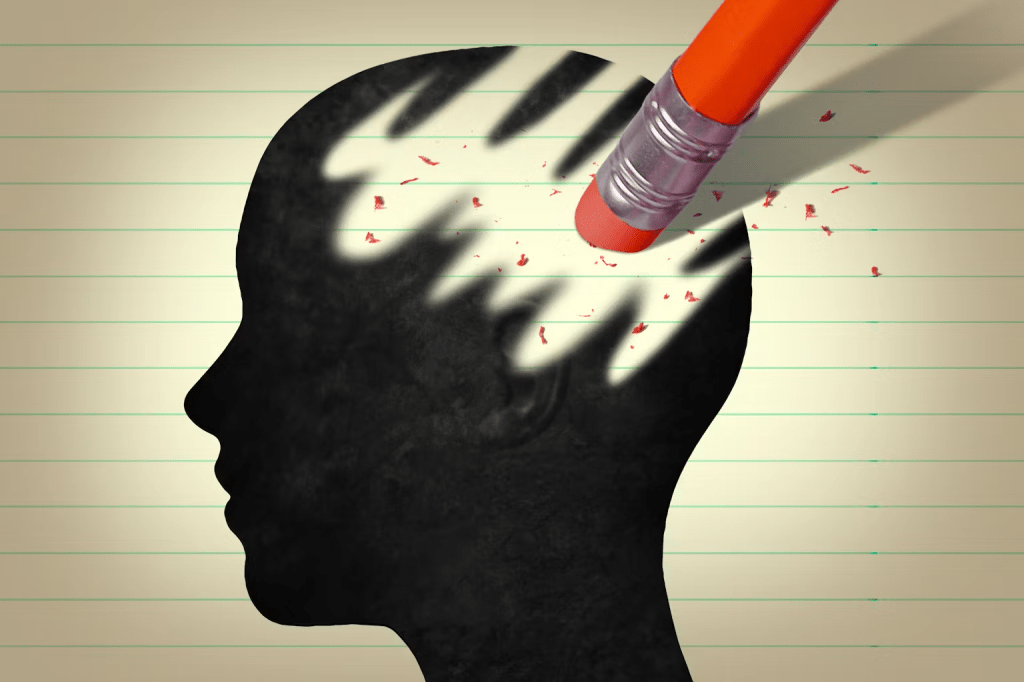
Memory-editing research is advancing fast. But removing our pain may also remove the person we became because of it.
There’s a question that keeps surfacing in neuroscience labs and ethical journals alike: If we had the power to soften or erase painful memories, should we?
Researchers already know how to disrupt memory reconsolidation, which is the process by which a recalled memory becomes flexible before being stored again. Beta-blockers like propranolol have been shown to dampen the emotional intensity of traumatic recall in PTSD patients. Optogenetics experiments in mice have altered fear memories by re-tagging them with different emotional associations. Even human trials are exploring noninvasive stimulation to interrupt unwanted memories during sleep.
We are, quietly, entering an age where pain is editable.
But the more I read about these findings, the more a different question forms underneath the scientific one. Not Can we edit memory? But What happens to the self if we do?
The Problem with a Pain-Free Self
Memory is a fragile process, forever rewriting itself. Every time we remember something, we alter it slightly. Neuroscientists call this reconsolidation, but even without jargon, most of us know the feeling: a memory that once hurt becomes softer; another becomes sharper for reasons we can’t explain.
This plasticity is what makes memory-editing plausible, but it’s also what makes identity complicated. A life without painful memory might be easier, but would it still be yours?
Where Identity Lives
One of the more haunting ideas in cognitive science is that memory is less about accuracy and more about coherence. Rather than storing experiences like files; we reconstruct them to match who we believe we are now. The philosopher Daniel Dennett once suggested that the self is the “center of narrative gravity”, like a stabilizing illusion that helps us make sense of flux.
If that’s true, altering memory, scarily enough, changes the storyteller as much as the story itself.
A person who erases the memory of a betrayal becomes someone who never had to learn trust again. A person who erases the memory of failure becomes someone without the quiet resolve that follows. A person who erases grief becomes someone untouched by the shape love leaves behind.
One thing I continue to wonder is whether the edited self still be continuous with the original, or if the break in memory creates a break in identity too.
The Ethics of “Improvement”
There’s a moral seduction in self-editing. We are obsessed with optimization. Think better bodies, better habits, better productivity, everything in modern life. Why not better memories?
We know how important pain is, though. The fear of loss teaches us to hold people closer, and failure teaches us resilience. Even the most painful moments, those we’d give anything to erase, become part of how we find meaning again.
Neuroscientist Karim Nader, one of the pioneers of reconsolidation research, once said that memory’s primary function, surprisingly, is not to preserve facts, but to help us adapt. By that logic, even painful memories are functional. They help us navigate danger by recognizing patterns.
So when we “improve” ourselves by removing them, we risk becoming someone optimized, perhaps, but hollowed, a self that is easier to carry but harder to recognize.
The Risk of Losing the Lessons Without the Pain
The most compelling counterargument to memory-editing is not that it’s unnatural or reckless. It’s that we might remove the pain without keeping the wisdom.
In one study at NYU, rats whose fear memories were disrupted no longer avoided dangerous cues. They walked into places where they had once been shocked, oblivious to the threat. When we erase hurt, we erase the part of ourselves that learned how to endure.
A Different Kind of Healing
This isn’t an argument against treatment. For example, PTSD is more than just a memory; PTSD is a nervous system in overdrive, a life paused inside an unrelenting moment. In this case, damping the emotional intensity of those memories is more a form of liberation.
The ethical line appears not at the removal of unbearable pain, but at the removal of meaningful pain, a subtle difference.
So, scientific interventions can help us loosen trauma’s grip, but perhaps they should not offer us amnesia.
What We Stand to Lose
Every once in a while, when I think about memory alteration, I imagine a version of myself who never had to rebuild after loss. Someone lighter, less afraid, unburdened.
But that person would not know why loyalty matters, they would not understand the texture of fear or the softness that follows grief, and they would not know the cost of love. They would be me without the evidence that I have lived.
Maybe the Goal Isn’t Erasure
The goal is not to extract a memory as if it were a stain that can be lifted. Perhaps the goal is to reinhabit it in a new way, so that its emotional weight is redistributed and its meaning evolves rather than disappears. To reshape the experience without erasing the fact that it occurred.
Neuroscience may eventually offer the ability to select what we carry forward. Yet meaning is something we craft through engagement, not something we inherit passively or delete at will. The self grows through reinterpretation, revision, and integration, not through subtraction.
So, Is a Life Without Painful Memory Better?
It might be simpler, or lighter, but what makes a life whole is rarely what makes it easy. Pain itself is not the adversary. What harms us is the sense of being imprisoned by it, unable to move beyond its earliest form.
A life without painful memory may shield us from suffering, but one shaped through painful memory gives rise to everything that matters.
Most of us live somewhere between those two possibilities. We carry moments that hurt but keep learning how to carry them differently. In that ongoing process, memory acts as a teacher, and the self becomes something we build rather than something we escape.
That is where the story, no matter how tragic, ends, and growth begins.
The first impression you give someone feels simple.
A glance, a phrase, the slight tilt of your voice as it tries to decide whether to sound confident or careful. But beneath that moment sits a truth most people never notice. It may be easy forget that others never gain awareness of the full architecture you are. Rather, a moment of awareness is simply one frame in a long sequence, and your brain rushes to stitch these frames together so you can believe there is a solid self living behind your eyes.
Identity is not what we think. I understand it as a continuity the brain desperately creates from separate moments to make sense of the movement of our lives. Neuroscientist Anil Seth calls this a controlled hallucination. The mind fills the gaps so you do not feel the gaps. It connects the flicker of one second to another until the whole thing seems unbroken, like a film reel running just fast enough to appear real.
We like to believe we are consistent people. Yet the research on memory says otherwise. We are creatures of reconstruction. Every remembered version of yourself is edited, packaged for memory, and rearranged. The brain rewrites the story so you can wake up each morning and believe today follows yesterday. This introduces a unique conundrum. Rather than storing identity, we regenerate it every day.
So when someone asks what first impression you want to give, the real question is much, much stranger, and it sounds something like this:
Which version of yourself do you choose to step into the next moment of your life? Which frame do you choose as the doorway?
This is where things shift from science to philosophy. Time feels like a flowing river, but psychologists who study chronostasis suggest that much of time is perception layered on top of uncertainty. The brain inserts its own continuity to prevent us from feeling the world as a collection of tiny, isolated pulses. If we experienced pure discontinuity, we would lose our sense of self within days.
Identity is the story your brain tells so you can stay afloat.
And yet there is something quite beautiful in that. If the self is an invention, it means you are not trapped by whatever story you once believed. You have a say in how the next frame develops. The first impression you offer someone is a creative act rather than a performance. It is the moment you decide which what stays, and what goes.
The poet Ocean Vuong once wrote that memory is a story we carry in order to survive. I think identity is similar. A living thing. An ongoing choice. A narrative held together not by perfect accuracy but by the desire to be understood.
So when someone meets you for the first time, they encounter a glimpse. A soft outline of a self that is always shifting. You might wish people could see the fuller version of you, the one that carries all your experiences and contradictions and small private joys. But this gentle incompleteness is part of what makes human connection meaningful. We meet one another through keyholes. We will never know the full interior, so we stay curious, listening. We keep evolving our impression of each other.
The mind protects us from the terror of a fractured reality by mashing together all the sense-datum we receive each day into something that seems continuous. Our task is just to participate in that creation with care and to let ourselves change while accepting that others will only ever see fragments.
Identity behaves a little like starlight. From a distance you see a single shimmer and assume it is the whole story. If you could travel closer, you would find a roaring furnace made of collisions, and pressure, and centuries of change. The light you see from afar, while seemingly false, is simply the only version that can cross the distance. It gives you a place to aim your attention.
A first impression works the same way. It is the part of you that travels. The part that reaches others first. The person you are is not the glow but the whole constellation of experiences that shaped it. And the self beneath all of that, the one even you struggle to map, is the vast system of forces and history that the mind is still learning to name.
The good thing about all this is that identity does not need to be solved. You do not have to know exactly who you are to live as someone real. You can be in motion, gathering pieces, setting others down, changing shape without warning. For you were never meant to be a statue.
Even scientists who study memory admit that the brain edits and revises and rearranges our story. If the mind keeps rewriting you, then you are allowed to participate in that creation. You are allowed to change your mind about yourself. You are allowed to hold uncertainty without feeling lost.
There is nothing weak about that. There is nothing broken about being unfinished.
Identity is a conversation between what made you and what you choose next. It is a bridge you are always building, even when the blueprint is unclear. The gaps are not failures. The gaps are invitations. They ask you to imagine, to choose, to become.
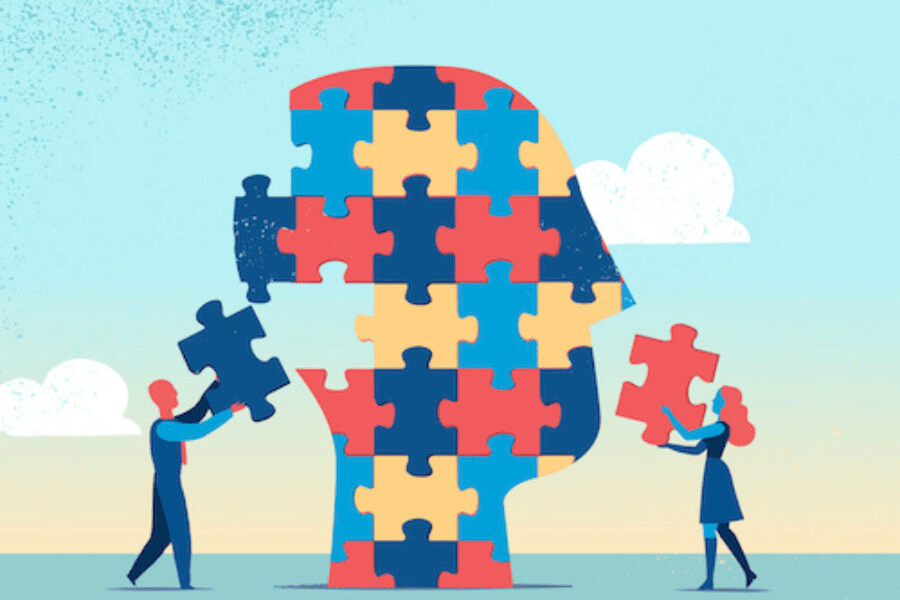
And maybe that is the real beauty. We are not defined by the parts we cannot explain. Instead, we are defined by the meaning we learn to create from them. Every time you step forward, you add a piece to your ever-growing puzzle. It does not matter if you don’t see the full picture yet, because, truth is, life wasn’t made to make sense from the inside.
So if you feel unfinished, good. It means there is space to grow toward a self that feels honest. It means you still have room for new light. It means the story is unfolding and you are awake inside it.
You are allowed to be a work in progress. You are allowed to be a constellation still forming. You are allowed to discover who you are by living, not by knowing.
Your perfect schedule is already built in to your brain, here’s how to find it.
Ever wonder what a perfect day would look like if your brain actually cooperated? As a student, I’ve spent countless mornings staring at my planner, wondering how to get everything done without going crazy. Between lectures, homework, and the never-ending influx of notifications, it often feels impossible to stay focused or energized. Luckily, neuroscience has some surprisingly practical answers, tools and insights you can actually use to design a day that works with your brain, not against it.
Sleep: The Non-Negotiable Starter
Your neurons are night-shift workers. They do not take coffee breaks. Deep sleep is when your brain consolidates memory, prunes connections, and basically declutters itself. Skipping it is like trying to run your laptop with twenty tabs open and battery at 10%. For students, this means late-night cramming is usually self-defeating. Your brain might get the homework done but it will forget half of it by tomorrow. I know it’s hard, but please aim for 7-9 hours and try to stick to a consistent schedule. Your future self will thank you.
Timing Matters
Your brain does not operate at full power all day. For most people, mornings are best for focus-heavy tasks like writing essays or solving math problems. Afternoons are better for lower-stakes or social tasks because your alertness naturally dips. Evenings, surprisingly, are when creativity peaks, making it the perfect time for brainstorming, art, or revising your philosophy blog. Mapping your most important tasks to your brain’s natural rhythms is like scheduling meetings with your most demanding client, which happens to be yourself.
Work in Bursts
Attention is a finite resource. The brain has ultradian rhythms, cycles of about 90-120 minutes of high alertness followed by a dip. Working for long stretches without a break is like driving a car without refueling. Try focusing for 25-50 minutes, then take a 5-10 minute break. Walk around, stretch, or just stare out the window. Your neurons actually perform better when given a pit stop.
Tiny Wins and Dopamine
Dopamine is the brain’s reward molecule. It helps you pay attention, remember things, and feel good while doing them. Checking your phone releases dopamine, which is why it’s so addictive. You can hack the system by rewarding yourself for small accomplishments. Finish a paragraph or send an important email, then treat yourself to a song or a snack. These micro-rewards keep motivation high without falling into the trap of procrastination disguised as productivity.
Flow Is Your Friend
Contrary to popular belief, your brain cannot multitask. It can only switch attention quickly, leaving a trail of incomplete thoughts. Flow happens when your skill level matches the challenge in front of you. That sweet spot where time disappears is the perfect zone for productivity. Batch similar tasks, eliminate notifications, and dive in without guilt. Flow loves focus, and your brain will thank you with higher quality work and less stress.
Move Your Body
Even a 10-minute walk or a few stretches trigger brain-derived neurotrophic factor, or BDNF. This protein helps neurons grow and stay flexible. Movement literally helps your brain work better. Try walking to class, stretching between study sessions, or even dancing in your room. It’s scientifically proven to reduce stress while boosting energy.
Reflect and Reset
Reflection is where your brain consolidates memory, processes mistakes, and primes itself for tomorrow. Journaling, meditating, or just mentally replaying the day helps you learn from experience. 5 minutes of reflection at the end of the day can provide actionable insights and make tomorrow feel a little less chaotic.
The Takeaway
A perfect day is not about cramming more hours into your schedule or pretending to be a productivity robot. It is about designing your environment, your tasks, and your mindset around how your brain actually works. Sleep, flow, movement, timing, rewards, and reflection are the ingredients. Layer them thoughtfully and your day becomes less of a struggle and more of a rhythm. With a little planning and a lot of understanding of your own brain, students (like you and me) can actually make each day feel productive, energizing, and maybe even a little magical.
You got this! Now go take the steps, no matter how small, to achieve your goals!
“I am a man because I err! You never reach any truth without making fourteen mistakes and very likely a hundred and fourteen… To go wrong in one’s own way is better than to go right in someone else’s. In the first case you are a man, in the second you’re no better than a bird.”
-Razumihin, Dostoyevsky’s Crime and Punishment, Constance Garnett Translation
Dostoyevsky, Fyodor. Crime and Punishment. Translated by Constance Garnett, The Macmillan Company, 1914.
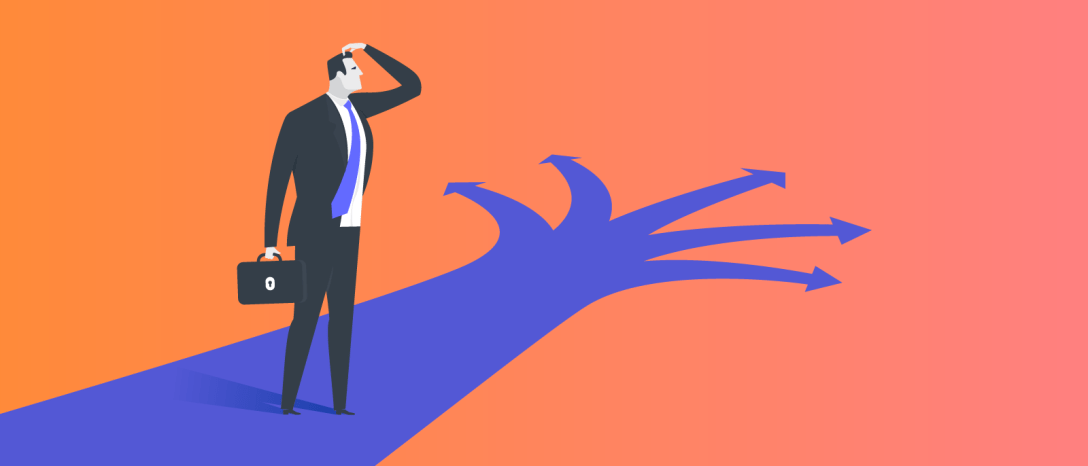
You open the fridge, determined to make something healthy. Ten minutes later, you’re staring at leftovers, wondering if cereal counts as dinner.
It’s not laziness or indecision, it’s biology. Every choice you make throughout the day, from what to wear to which email to answer first, draws from a limited supply of mental energy. By evening, your brain is running on fumes.
This invisible drain, known as decision fatigue, reveals something fascinating about how the human brain works. At it’s core, decision fatigue is not a failure of willpower but a natural consequence of how our neurons process choices. The problem is that modern life was not built with that biology in mind.
Understanding decision fatigue is not simply about improving productivity; it is about recognizing the biological limits of human cognition in a world that demands constant engagement.
The Brain’s Energy Economy
The human brain weighs roughly three pounds but consumes nearly 20% of the body’s energy at rest (Raichle & Gusnard, 2002). Most of this energy supports synaptic activity, which is the electrochemical communication between neurons we need for thought and judgement.
The prefrontal cortex, responsible for executive functions such as reasoning and self-control, is particularly energy-intensive. When glucose levels decline in this region, the brain’s capacity for self-regulation and decision-making drops sharply (Gailliot et al., 2007). Neuroscientist Matthew Lieberman describes this as a “neural budget” that depletes with use. Neural budget is a concept that many struggle with because they believe willpower will be enough for difficult tasks and maintaining drive throughout extended periods.
Every choice, even trivial ones like selecting a meal, engages these same neural pathways. As the day progresses, neurons in the prefrontal cortex communicate less efficiently, and the brain shifts from deliberate reasoning to what psychologists call heuristic processing, defined as simpler, faster decision-making strategies (Kahneman, 2011).
The Psychology of Overchoice
Furthermore, modern environments amplify this biologically induced limit of decision-making capacity. Psychologist Barry Schwartz famously described this as “The Paradox of Choice”. Essentially, the more options we face, the more anxious and dissatisfied we become (Schwartz, 2004).
Research at Stanford University found that individuals confronted with extensive choices, such as 24 flavors of jam, were significantly less likely to make a purchase than those offered only six options (Iyengar & Lepper, 2000). Each additional alternative increases cognitive load and prolongs the decision process, drawing more energy from an already taxed brain.
Unlike physical exhaustion, decision fatigue builds invisibly. It often manifests as irritability, procrastination, or emotional numbness. These are the quiet symptoms of a brain that has simply made too many choices.
The Dopamine Trap
Dopamine, the neurotransmitter responsible for motivation and reward, also plays a role in this cycle. Each decision completed, no matter how small, triggers a small release of dopamine, reinforcing the behavior (Berridge & Kringelbach, 2015). But when the brain faces an unrelenting stream of micro-decisions (for me, notifications, texts, playlists, which task to start first), its dopamine system becomes desensitized.
This desensitization blurs the line between meaningful and trivial choices, flattening emotional reward and leaving us less motivated. Satisfaction flatlines to dull routine, an effect researchers call hedonic adaptation (Brickman & Campbell, 1971). Thus, even enjoyable activities, like choosing what to eat out, begin to feel burdensome.
Modern Life as a Cognitive Overload Experiment
From an evolutionary perspective, the human brain evolved for scarcity, not abundance. Early humans only had to make a few high-stakes decisions per day: when to hunt, where to seek shelter, whom to trust. But today, an average person makes hundreds of decisions before noon. (Albeit not very high-stakes ones, but we are fooled into believing that they are.)
Cognitive neuroscientist Daniel Levitin argues that “each shift in attention sets off metabolic processes that deplete the brain’s neural resources.” (Levitin, 2014) In essence, the constant switching of modern life between countless microtasks induces a continuous state of mental taxation.
Modernity, then, has become a sort of cognitive overload experiment with us as the subjects. As a result, we are fatigued, less creative, less empathetic, and less patient overall. Our higher-order cognition is becoming subtly eroded.
The Case for Cognitive Minimalism
Emerging research suggests that the antidote to decision fatigue is not more efficency, but fewer choices. Cognitive minimalism, the deliberate simplification of daily decisions, conserves neural energy for more meaningful cognitive work (Goyal et al., 2018).
Small interventions, such as automating low-stakes tasks, like Einstein or Steve Jobs wearing the same outfits every day, can significantly reduce cognitive load. This aligns with neural conservation theory: the idea that the brain strategically limits effort to preserve long-term function (Kurzban et al., 2013).
Conclusion: When Simplicity Becomes Intelligence
In popular culture, especially among teenagers and young adults, mental endurance is often glorified as a sign of strength. The ability to “push through” fatigue, multitask endlessly, and make rapid decisions is frequently mistaken for resilience. Yet neuroscience paints a different picture.
Decision fatigue is more than a productivity challenge; it is a reflection of how our cognitive systems evolved. The mechanisms that once helped us survive now collide with an environment of endless stimulation.
This misunderstanding matters. Many young people internalize the idea that slowing down is a weakness, that stepping back means falling behind. In reality, the opposite is true. Rest, constraint, and deliberate choice are not escapes from mental rigor but expressions of it. Each time we choose less, whether by limiting options, simplifying routines, or pausing before the next decision, we conserve cognitive energy and restore clarity.
Ultimately, the neuroscience of decision fatigue reveals an overlooked truth: wisdom is not measured by how much we do, but by how thoughtfully we choose what to do next.
References
Berridge, K. C., & Kringelbach, M. L. (2015). Pleasure systems in the brain. Neuron, 86(3), 646–664. Brickman, P., & Campbell, D. T. (1971). Hedonic relativism and planning the good society. Adaptation-level theory, 287–302. Gailliot, M. T., Baumeister, R. F., DeWall, C. N., et al. (2007). Self-control relies on glucose as a limited energy source. Journal of Personality and Social Psychology, 92(2), 325–336. Goyal, M., Singh, S., Sibinga, E. M. S., et al. (2018). Meditation programs for psychological stress and well-being. JAMA Internal Medicine, 174(3), 357–368. Iyengar, S. S., & Lepper, M. R. (2000). When choice is demotivating. Journal of Personality and Social Psychology, 79(6), 995–1006. Kahneman, D. (2011). Thinking, Fast and Slow. Farrar, Straus and Giroux. Kurzban, R., Duckworth, A., Kable, J. W., & Myers, J. (2013). An opportunity cost model of subjective effort and task performance. Behavioral and Brain Sciences, 36(6), 661–726. Levitin, D. J. (2014). The Organized Mind: Thinking Straight in the Age of Information Overload. Dutton. Raichle, M. E., & Gusnard, D. A. (2002). Appraising the brain’s energy budget. PNAS, 99(16), 10237–10239. Schwartz, B. (2004). The Paradox of Choice: Why More Is Less. HarperCollins.
Written by Mason Lai, a student researcher exploring the intersection of neuroscience, psychology, and modern life. Passionate about translating complex ideas into clear, human insights.
If you’ve been wondering what I’ve been up to lately, here’s the honest answer: college applications.
That’s it. That’s the post.
Okay, not really. But it certainly feels that way. Every day’s been a mix of writing essays, editing essays, thinking about essays, and then trying to remember what I was like as a human before essays existed.
What It’s Taught Me
Weirdly, the process has made me more organized than I’ve ever been. I’ve learned how to actually manage time. It’s an improvement over just making to-do lists that never end. I’ve learned how to tell my own story in a way that feels authentic instead of trying to sound impressive.
And I’ve learned that writing about yourself is harder than any AP class.
The Reality Check
It’s not glamorous. There are nights when I’m staring at my computer at 1 a.m. avoiding cliché words or phrases like the plague. There are days when I want to throw my laptop out the window.
But then there are also those small wins: when a sentence finally clicks, or when a teacher or friend gives you a pep talk.
Why It’s Worth It
Somewhere between the drafts and the deadlines, I’ve realized this isn’t just about getting into a school. It’s about slowing down and figuring out who I actually am when no one’s grading me for it.
So yeah. That’s what I’ve been working on. A lot of writing. A lot of reflecting. And a lot of tea.
Think multitasking makes you more productive? Think again. Here’s how switching between tasks is rewiring your brain, lowering focus, and raising stress (and how you can fix it, too).
Let’s be honest.
You probably have five tabs open right now. Maybe a podcast is playing in the background. Maybe you’re half-texting someone.
It feels like you’re getting a lot done, right? Like you’re maximizing your time. But here’s the truth: multitasking isn’t helping you. It’s actually training your brain to lose focus, remember less, and crave constant distraction.
Let’s unpack that quickly.
The Multitasking Myth
You’re not really multitasking. You’re task-switching. Every time you jump from one thing to another, your brain has to pause and reset.
Those tiny switches might only take a second, but they add up. Research shows that constant task-switching can slash productivity by up to 40%.
It’s like trying to run a marathon while stopping to tie your shoes every ten seconds.
What It’s Doing to Your Brain
Here’s where it gets wild. Multitasking physically changes your brain.
Less gray matter: Brain scans show that people who multitask a lot have less gray matter in the part of the brain responsible for focus and emotional control.
Worse memory: You’re training your mind to chase what’s new instead of digging deep into what matters.
More stress: Jumping between tasks keeps your brain in “fight or flight” mode. Cortisol (your stress hormone) stays high, and that drains your energy fast.
So yes, multitasking might make you feel busy, but it’s also reshaping your brain in ways that make it harder to focus later.
How To Reboot Your Focus
Good news is, your brain can rewire itself back.
Try these simple fixes:
Do one thing at a time. Close your extra tabs. Finish a task completely before moving to the next one.
Batch your distractions. Set times to check texts or emails instead of reacting all day long.
Practice deep work. Start with 20 minutes of uninterrupted focus. Add time as your brain adjusts.
Let yourself be bored. Boredom isn’t bad. It’s where creativity and clarity show up.
The Bottom Line
Multitasking isn’t a badge of honor. It’s a brain trap. The more you split your attention, the more your brain adapts to distraction.
If you want to think clearly, remember more, and actually finish what you start, then do one thing at a time.


















 Mason Lai