

Why I Never Make Wishes

I want my experience to guide me, not undeserved freebies.

Daily writing prompt
What is one thing you would change about yourself?

I never make wishes. Not because I lack desire, or because I am practical in a boring sense, but because I want the arc of my life to emerge from my choices and mistakes, not from a free handout from the universe. A wish, by its nature, is a shortcut. An attempt to acquire a future without traversing the path that shapes the self along the way. I am more interested in that shaping than in the outcome itself.

Neuroscience

Neuroscience gives a strange kind of validation to this intuition. The brain learns most deeply through effort through what researchers call prediction error, the moment when expectation meets reality and the system adapts. Dopamine spikes which respond to effortful achievement serve to reinforce connections in the prefrontal cortex and striatum, helping us encode both skill and memory. If wishes were real, they would bypass that process. In a sense, it deprives the nervous system of experience, its most potent teacher.

Consider the subtle difference between a student who struggles for months to master a piece of music and one who magically acquires the ability with a single wish. Both may be able to play the notes, but only the first has undergone the kind of plasticity that transforms the mind. The hippocampus consolidates memories, the motor cortex refines its output, and the brain’s error-monitoring circuits, especially in the anterior cingulate cortex, learn to adapt. The journey, not the shortcut, builds agency. The wish, however tempting, is neurologically inert. Sorry, Aladdin. It asks nothing and returns nothing of value beyond the superficial.

Philosophy

Philosophically, my aversion to wishing aligns with existentialist thought. Kierkegaard wrote about authentic existence as reliant on decision, risk, and reflection. To hand over the authorship of your future, even symbolically, to some external wish is to abdicate the very process that makes life meaningful. Wishing collapses experience into instant gratification; it divorces outcome from effort, action from responsibility. And the self, stripped of its formative trials, becomes lighter, but also emptier.

Stories like Aladdin illustrate a subtle truth about wishing and effort. Aladdin becomes wealthy, meets the princess, and transforms his life, but only because the narrative allows him access to opportunity. In real life, outcomes are far less generous. Contemporary philosophy and social thought remind us that effort alone does not guarantee escape from suffering. Structural barriers, resources, and circumstance shape who can act on their potential and who remains constrained, no matter how hard they try. Refusing shortcuts or wishes is therefore a personal ethical choice because it shapes the kind of person you become, but it cannot erase the imbalances of reality. What we gain from experience is valuable, but it is never distributed evenly.

Therefore, this is not to romanticize suffering or struggle. I am not advocating for unnecessary pain or the glorification of difficulty. But I do believe that real growth requires living inside the friction of consequence and choice.

Ethics

There is also a subtle ethical dimension. When we wish for unearned advantages, we are implicitly saying that we value our own gain above the discipline of learning or merit. By refusing to wish, I am also, in a small way, refusing to outsource my development to luck. I am committing to a life where reward is proportional to engagement, where consequence is respected, and where experience remains my guide.

The Reality

Sometimes life is harder, slower, and less immediately satisfying than it would be if wishes were real. I miss opportunities that might have arrived on a whim. I watch others take shortcuts and sometimes envy their efficiency.

And yet, I want my story written in synapses that were built in response to challenge, not circumstantial fortune. I want my character shaped by choices that left a mark both on my mind and on my life. The wish tempts me with speed, but I choose depth. I choose learning. I choose experience.

Because in the end, it is experience, not magic, that teaches us who we are.


Written by Mason Lai, a California high schooler.
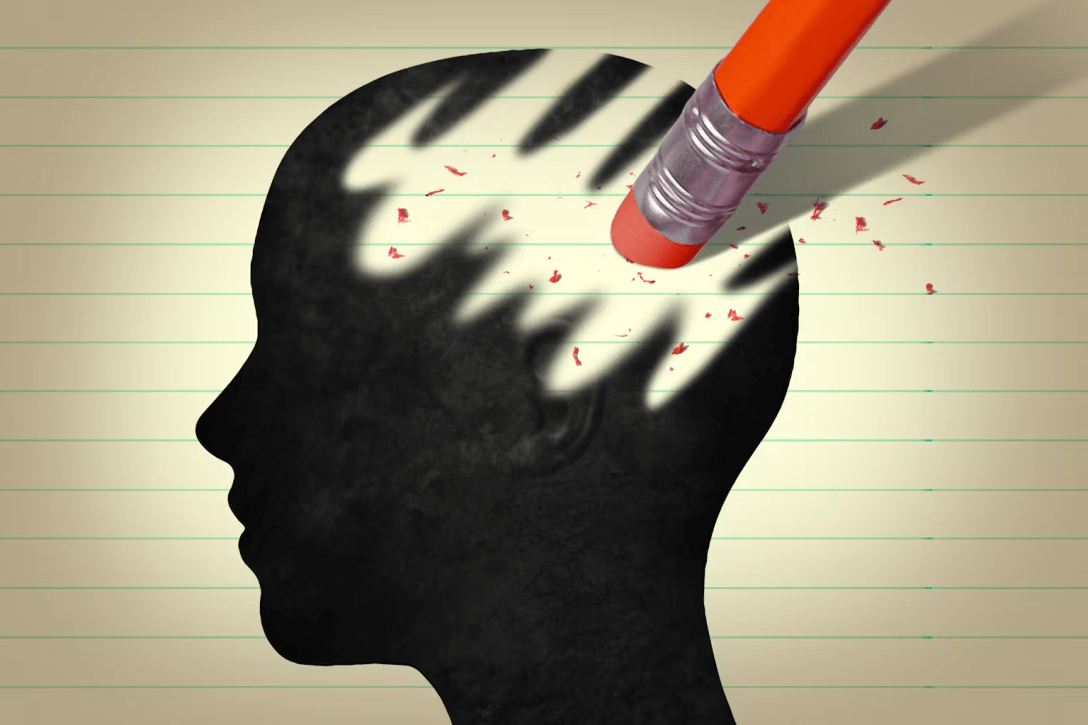
Should We Erase Painful Memories? The Neuroscience Behind Memory Editing

Quick Shot/ Shutterstock
Memory-editing research is advancing fast. But removing our pain may also remove the person we became because of it.

There’s a question that keeps surfacing in neuroscience labs and ethical journals alike:
If we had the power to soften or erase painful memories, should we?

Researchers already know how to disrupt memory reconsolidation, which is the process by which a recalled memory becomes flexible before being stored again. Beta-blockers like propranolol have been shown to dampen the emotional intensity of traumatic recall in PTSD patients. Optogenetics experiments in mice have altered fear memories by re-tagging them with different emotional associations. Even human trials are exploring noninvasive stimulation to interrupt unwanted memories during sleep.

We are, quietly, entering an age where pain is editable.

But the more I read about these findings, the more a different question forms underneath the scientific one. Not Can we edit memory? But What happens to the self if we do?

The Problem with a Pain-Free Self

Memory is a fragile process, forever rewriting itself. Every time we remember something, we alter it slightly. Neuroscientists call this reconsolidation, but even without jargon, most of us know the feeling: a memory that once hurt becomes softer; another becomes sharper for reasons we can’t explain.

This plasticity is what makes memory-editing plausible, but it’s also what makes identity complicated. A life without painful memory might be easier, but would it still be yours?

Where Identity Lives

One of the more haunting ideas in cognitive science is that memory is less about accuracy and more about coherence. Rather than storing experiences like files; we reconstruct them to match who we believe we are now. The philosopher Daniel Dennett once suggested that the self is the “center of narrative gravity”, like a stabilizing illusion that helps us make sense of flux.

If that’s true, altering memory, scarily enough, changes the storyteller as much as the story itself.

A person who erases the memory of a betrayal becomes someone who never had to learn trust again.
A person who erases the memory of failure becomes someone without the quiet resolve that follows.
A person who erases grief becomes someone untouched by the shape love leaves behind.

One thing I continue to wonder is whether the edited self still be continuous with the original, or if the break in memory creates a break in identity too.

The Ethics of “Improvement”

There’s a moral seduction in self-editing. We are obsessed with optimization. Think better bodies, better habits, better productivity, everything in modern life. Why not better memories?

We know how important pain is, though. The fear of loss teaches us to hold people closer, and failure teaches us resilience. Even the most painful moments, those we’d give anything to erase, become part of how we find meaning again.

Neuroscientist Karim Nader, one of the pioneers of reconsolidation research, once said that memory’s primary function, surprisingly, is not to preserve facts, but to help us adapt. By that logic, even painful memories are functional. They help us navigate danger by recognizing patterns.

So when we “improve” ourselves by removing them, we risk becoming someone optimized, perhaps, but hollowed, a self that is easier to carry but harder to recognize.

The Risk of Losing the Lessons Without the Pain

The most compelling counterargument to memory-editing is not that it’s unnatural or reckless. It’s that we might remove the pain without keeping the wisdom.

In one study at NYU, rats whose fear memories were disrupted no longer avoided dangerous cues. They walked into places where they had once been shocked, oblivious to the threat. When we erase hurt, we erase the part of ourselves that learned how to endure.

A Different Kind of Healing

This isn’t an argument against treatment. For example, PTSD is more than just a memory; PTSD is a nervous system in overdrive, a life paused inside an unrelenting moment. In this case, damping the emotional intensity of those memories is more a form of liberation.

The ethical line appears not at the removal of unbearable pain, but at the removal of meaningful pain, a subtle difference.

So, scientific interventions can help us loosen trauma’s grip, but perhaps they should not offer us amnesia.

What We Stand to Lose

Every once in a while, when I think about memory alteration, I imagine a version of myself who never had to rebuild after loss. Someone lighter, less afraid, unburdened.

But that person would not know why loyalty matters, they would not understand the texture of fear or the softness that follows grief, and they would not know the cost of love. They would be me without the evidence that I have lived.

Maybe the Goal Isn’t Erasure

The goal is not to extract a memory as if it were a stain that can be lifted. Perhaps the goal is to reinhabit it in a new way, so that its emotional weight is redistributed and its meaning evolves rather than disappears. To reshape the experience without erasing the fact that it occurred.

Neuroscience may eventually offer the ability to select what we carry forward. Yet meaning is something we craft through engagement, not something we inherit passively or delete at will. The self grows through reinterpretation, revision, and integration, not through subtraction.

So, Is a Life Without Painful Memory Better?

It might be simpler, or lighter, but what makes a life whole is rarely what makes it easy. Pain itself is not the adversary. What harms us is the sense of being imprisoned by it, unable to move beyond its earliest form.

A life without painful memory may shield us from suffering, but one shaped through painful memory gives rise to everything that matters.

Most of us live somewhere between those two possibilities. We carry moments that hurt but keep learning how to carry them differently. In that ongoing process, memory acts as a teacher, and the self becomes something we build rather than something we escape.

That is where the story, no matter how tragic, ends, and growth begins.


Written by Mason Lai, a California high schooler.
Frames of Identity

Hurca! - Stock Adobe
Daily writing prompt
What’s the first impression you want to give people?
Hurca! - Stock Adobe
The first impression you give someone feels simple.

A glance, a phrase, the slight tilt of your voice as it tries to decide whether to sound confident or careful. But beneath that moment sits a truth most people never notice. It may be easy forget that others never gain awareness of the full architecture you are. Rather, a moment of awareness is simply one frame in a long sequence, and your brain rushes to stitch these frames together so you can believe there is a solid self living behind your eyes.

Identity is not what we think. I understand it as a continuity the brain desperately creates from separate moments to make sense of the movement of our lives. Neuroscientist Anil Seth calls this a controlled hallucination. The mind fills the gaps so you do not feel the gaps. It connects the flicker of one second to another until the whole thing seems unbroken, like a film reel running just fast enough to appear real.

We like to believe we are consistent people. Yet the research on memory says otherwise. We are creatures of reconstruction. Every remembered version of yourself is edited, packaged for memory, and rearranged. The brain rewrites the story so you can wake up each morning and believe today follows yesterday. This introduces a unique conundrum. Rather than storing identity, we regenerate it every day.

So when someone asks what first impression you want to give, the real question is much, much stranger, and it sounds something like this:

Which version of yourself do you choose to step into the next moment of your life? Which frame do you choose as the doorway?

This is where things shift from science to philosophy. Time feels like a flowing river, but psychologists who study chronostasis suggest that much of time is perception layered on top of uncertainty. The brain inserts its own continuity to prevent us from feeling the world as a collection of tiny, isolated pulses. If we experienced pure discontinuity, we would lose our sense of self within days.

Identity is the story your brain tells so you can stay afloat.

And yet there is something quite beautiful in that. If the self is an invention, it means you are not trapped by whatever story you once believed. You have a say in how the next frame develops. The first impression you offer someone is a creative act rather than a performance. It is the moment you decide which what stays, and what goes.

The poet Ocean Vuong once wrote that memory is a story we carry in order to survive. I think identity is similar. A living thing. An ongoing choice. A narrative held together not by perfect accuracy but by the desire to be understood.

So when someone meets you for the first time, they encounter a glimpse. A soft outline of a self that is always shifting. You might wish people could see the fuller version of you, the one that carries all your experiences and contradictions and small private joys. But this gentle incompleteness is part of what makes human connection meaningful. We meet one another through keyholes. We will never know the full interior, so we stay curious, listening. We keep evolving our impression of each other.

The mind protects us from the terror of a fractured reality by mashing together all the sense-datum we receive each day into something that seems continuous. Our task is just to participate in that creation with care and to let ourselves change while accepting that others will only ever see fragments.

Identity behaves a little like starlight. From a distance you see a single shimmer and assume it is the whole story. If you could travel closer, you would find a roaring furnace made of collisions, and pressure, and centuries of change. The light you see from afar, while seemingly false, is simply the only version that can cross the distance. It gives you a place to aim your attention.

A first impression works the same way. It is the part of you that travels. The part that reaches others first. The person you are is not the glow but the whole constellation of experiences that shaped it. And the self beneath all of that, the one even you struggle to map, is the vast system of forces and history that the mind is still learning to name.

The good thing about all this is that identity does not need to be solved. You do not have to know exactly who you are to live as someone real. You can be in motion, gathering pieces, setting others down, changing shape without warning. For you were never meant to be a statue.

Even scientists who study memory admit that the brain edits and revises and rearranges our story. If the mind keeps rewriting you, then you are allowed to participate in that creation. You are allowed to change your mind about yourself. You are allowed to hold uncertainty without feeling lost.

There is nothing weak about that. There is nothing broken about being unfinished.

Identity is a conversation between what made you and what you choose next. It is a bridge you are always building, even when the blueprint is unclear. The gaps are not failures. The gaps are invitations. They ask you to imagine, to choose, to become.

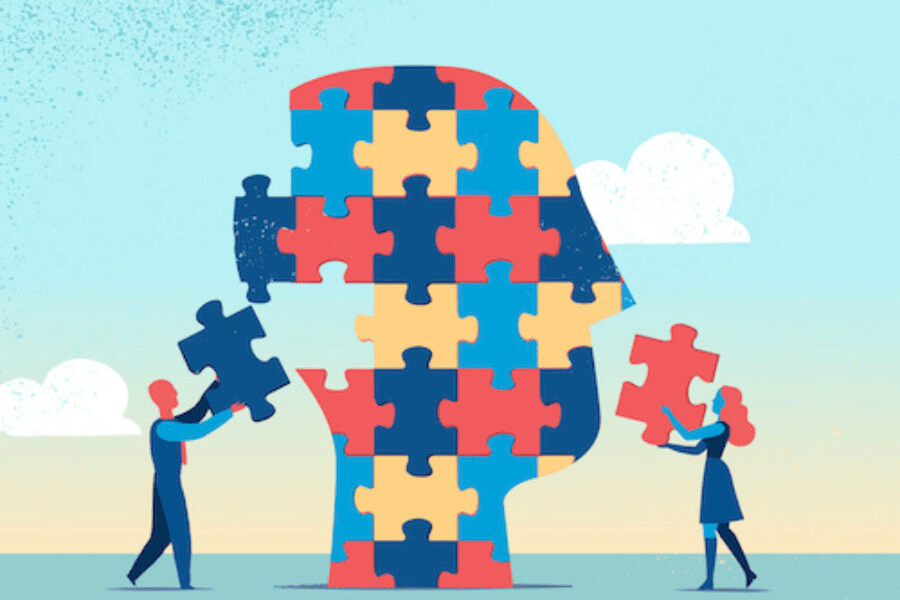
And maybe that is the real beauty. We are not defined by the parts we cannot explain. Instead, we are defined by the meaning we learn to create from them. Every time you step forward, you add a piece to your ever-growing puzzle. It does not matter if you don’t see the full picture yet, because, truth is, life wasn’t made to make sense from the inside.

So if you feel unfinished, good. It means there is space to grow toward a self that feels honest. It means you still have room for new light. It means the story is unfolding and you are awake inside it.

You are allowed to be a work in progress. You are allowed to be a constellation still forming. You are allowed to discover who you are by living, not by knowing.

And that is enough.


Written by Mason Lai, a California high schooler.
Senior Year Crunch Time: The Final Stretch

Daily writing prompt
What have you been working on?
If you’ve been wondering what I’ve been up to lately, here’s the honest answer: college applications.

That’s it. That’s the post.

Okay, not really. But it certainly feels that way. Every day’s been a mix of writing essays, editing essays, thinking about essays, and then trying to remember what I was like as a human before essays existed.


What It’s Taught Me

Weirdly, the process has made me more organized than I’ve ever been. I’ve learned how to actually manage time. It’s an improvement over just making to-do lists that never end. I’ve learned how to tell my own story in a way that feels authentic instead of trying to sound impressive.

And I’ve learned that writing about yourself is harder than any AP class.


The Reality Check

It’s not glamorous. There are nights when I’m staring at my computer at 1 a.m. avoiding cliché words or phrases like the plague. There are days when I want to throw my laptop out the window.

But then there are also those small wins: when a sentence finally clicks, or when a teacher or friend gives you a pep talk.


Why It’s Worth It

Somewhere between the drafts and the deadlines, I’ve realized this isn’t just about getting into a school. It’s about slowing down and figuring out who I actually am when no one’s grading me for it.

So yeah. That’s what I’ve been working on.
A lot of writing.
A lot of reflecting.
And a lot of tea.

Everything is Nothing. And Nothing is Everything.

Daily writing prompt
What details of your life could you pay more attention to?
A Moment of Silence — Retreat, Reflect, Renew

A Personal Meditation on the Overlooked

“It is not enough to be busy. So are the ants. The question is: what are we busy about?”
— Henry David Thoreau, Walden

I’ve been thinking about this a lot lately, how we’re always doing something. Scrolling, replying, running errands, checking notifications, planning the next step in our lives. There are no breaks in the modern way of life. Sometimes even when we try to slow down, our minds are still running at the same speed.

The weird part? Most of the time, I don’t even know what I’m chasing. This feeling is probably universal, right? (unless you’re totally unhinged, in which case… congrats?) Like you’re ticking off boxes, but you’re not sure where that list came from in the first place?

The other night I sat on my porch just for a few minutes with no phone, no agenda. Just sitting. I noticed the wind in the trees, a neighbor’s dog barking, the way the air felt a little cooler than usual. It wasn’t dramatic. No thunderbolt revelations. But I felt present in a such a way that it was almost a miracle.

Moments like those have made me realize that we were never built to be machines.

Yes, working hard has it’s place. But not all the time.

And definitely not at the cost of being alive to your own life.

I’ve made an effort to treat slower days and slower moments as the essential times they are. The little things, those things that give life its flavor (like smiling at someone in the morning, or the way your tea smells, or the color of the sky) are just as much a part of life as the big things we constantly chase.

The slow moments are where you digest the rest of your life.

So next time you’re wondering what to do, consider:

There’s nothing harmful in slowing down.

The answer isn’t always to do more.

Maybe it’s ok to pause.

To breathe.

To do “nothing.”

Because maybe that’s where everything is.